
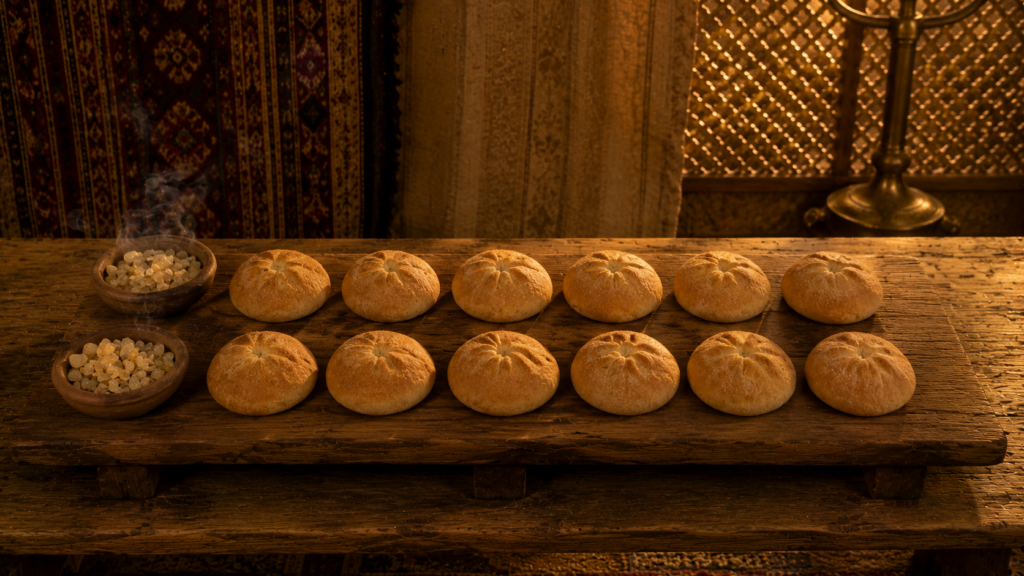
Leviticus 22 closes the priestly-holiness unit begun at chapter 21. Where chapter 21 addressed the priest’s body and family life, chapter 22 addresses the holy food and offerings the priest handles. The chapter sets out three concentric sets of rules: when the priest may approach the holy food (vv. 1-9), who may eat the priestly portion (vv. 10-16), and what kinds of offerings the priest may accept (vv. 17-25). The chapter closes with specific timing requirements (vv. 26-30) and the standard I am Yahweh exhortation that has run through the entire Holiness Code.
The chapter is the priestly counterpart to chapter 11 (the people’s food laws) and chapter 19 (the people’s economic justice). Where chapter 11 governs what the people eat, chapter 22 governs what the priests eat. Where chapter 19 specifies the people’s daily integrity, chapter 22 specifies the priests’ daily integrity. The chapter is the narrowing, again, of the Holiness Code from all the people (chs. 19-20) to the priests in particular.
The chapter’s deepest theological move comes at its very end. I am YHWH who sanctifies you, who brought you out of the land of Egypt, to be your God: I am YHWH (vv. 32-33). The chapter’s closing words tie the priestly-purity protocols of chapter 22 back to the Exodus itself. The protocols are not arbitrary religious customs; they are the appropriate response of a people YHWH rescued from slavery and made his own. Everything in the chapter — the priest’s careful purity, the family’s careful eating, the unblemished offering, the timing requirements — is the texture of life with the God who delivered Israel from Egypt.
A · Leviticus 22:1-16 · The priest’s purity and the priestly household
¹ Yahweh spoke to Moses, saying, ² “Tell Aaron and his sons to separate themselves from the holy things of the children of Israel, which they make holy to me, and that they not profane my holy name. I am Yahweh. ³ “Tell them, ‘If anyone of all your offspring throughout your generations approaches the holy things, which the children of Israel make holy to Yahweh, having his uncleanness on him, that soul shall be cut off from before me. I am Yahweh. ⁴ “‘Whoever of the offspring of Aaron is a leper or has an issue; he shall not eat of the holy things, until he is clean. Whoever touches anything that is unclean by the dead, or a man who has had a seminal emission; ⁵ or whoever touches any creeping thing, by which he may be made unclean, or a man of whom he may take uncleanness, whatever uncleanness he has; ⁶ the person that touches any such shall be unclean until the evening, and shall not eat of the holy things, unless he bathe his body in water. ⁷ When the sun is down, he shall be clean; and afterward he shall eat of the holy things, because it is his bread. ⁸ That which dies of itself, or is torn by animals, he shall not eat, defiling himself by it. I am Yahweh. ⁹ “‘They shall therefore follow my requirements, lest they bear sin for it, and die therein, if they profane it. I am Yahweh who sanctifies them. ¹⁰ “‘No stranger shall eat of the holy thing: a foreigner living with the priests, or a hired servant, shall not eat of the holy thing. ¹¹ But if a priest buys a slave, purchased by his money, he shall eat of it; and those who are born in his house, they shall eat of his bread. ¹² If a priest’s daughter is married to an outsider, she shall not eat of the heave offering of the holy things. ¹³ But if a priest’s daughter is a widow, or divorced, and has no child, and has returned to her father’s house, as in her youth, she may eat of her father’s bread: but no stranger shall eat any of it. ¹⁴ “‘If a man eats of the holy thing unwittingly, then he shall add the fifth part of its value to it, and shall give the holy thing to the priest. ¹⁵ The priests shall not profane the holy things of the children of Israel, which they offer to Yahweh, ¹⁶ and so cause them to bear the iniquity that brings guilt, when they eat their holy things: for I am Yahweh who sanctifies them.’”
- Tell Aaron and his sons to separate themselves from the holy things … that they not profane my holy name (v. 2). The chapter opens with the priestly responsibility for the integrity of the holy things. The Hebrew is veyinnazru mi-qodshei, “they shall separate themselves from the holy things” — that is, when they are in a state of impurity, they must refrain from approaching the holy food and the offerings. The chapter is teaching that separation from holy things during impure states is a positive act, not a punishment. The priest’s voluntary withdrawal protects both the sanctuary and the priest himself.
- Whoever of the offspring of Aaron is a leper or has an issue; he shall not eat of the holy things, until he is clean (v. 4). The chapter applies the temporary-impurity categories from chapters 13-15 to the priestly food access. A priest with tzaraat or with an issue or with corpse-contact must wait until evening (with a bath) before resuming holy-food eating. The chapter is not permanently restricting the priest’s access; it is preserving the standard purity protocols for the holy food.
- When the sun is down, he shall be clean; and afterward he shall eat of the holy things, because it is his bread (v. 7). The chapter’s most pastorally important single phrase in this section. Because it is his bread. The Hebrew is ki lachmo hu. The priest’s holy-food access is his daily bread — his actual nutrition, his actual sustenance. The chapter is teaching that the priestly purity protocols are not abstract religious rules; they are protections of the priest’s daily food supply. The whole later New Testament theology of give us this day our daily bread (Mt 6:11; Lk 11:3) reads forward from the chapter’s quiet lachmo — the bread that belongs to the one who serves at the altar.
- No stranger shall eat of the holy thing: a foreigner living with the priests, or a hired servant, shall not eat of the holy thing (v. 10). The chapter restricts the holy food to the priestly household strictly. A zar (an outsider, the same word the food-laws chapter uses for the forbidden category) cannot eat. The chapter is preserving the priestly food as the priests’ specific provision; it is not a charity-food that anyone in the camp can request.
- But if a priest buys a slave, purchased by his money, he shall eat of it; and those who are born in his house, they shall eat of his bread (v. 11). The chapter’s more surprising provision. The priest’s bondservants (Hebrew kinyan kaspo, his money-purchased property) can eat the holy food. The chapter is treating bondservants as household members, included in the priestly household’s food allocation. The whole Hebrew Bible’s careful theology of the bondservant as part of the household (Ex 20:10, where the Sabbath rest extends to your male and female servants; Deut 12:18, where servants share the household’s festal meals) reads forward from this verse. The chapter is not endorsing slavery as an institution in the modern sense; the Hebrew Bible’s eved-system operated very differently from later chattel slavery. But the chapter is treating the bondservant as a member of the priestly household with access to the household’s sustenance.
- If a priest’s daughter is married to an outsider, she shall not eat of the heave offering of the holy things. But if a priest’s daughter is a widow, or divorced, and has no child, and has returned to her father’s house … she may eat of her father’s bread (vv. 12-13). The chapter addresses the priest’s daughters’ marital situations. A daughter who marries out of the priestly family loses access. A daughter who returns to her father’s house in widowhood or divorce regains access. The chapter is preserving the return-home provision — the divorced or widowed priest’s daughter has somewhere to go. The chapter is not penalizing her; it is providing for her.
- If a man eats of the holy thing unwittingly, then he shall add the fifth part of its value to it, and shall give the holy thing to the priest (v. 14). The chapter’s asham-style restitution for inadvertent consumption of the holy food. The same principal-plus-twenty-percent formula from Lev 5:14-19 (see the kipper / atonement framework) applies. The chapter is teaching that even unintended misuse of the holy requires full restitution.
B · Leviticus 22:17-25 · Unblemished offerings
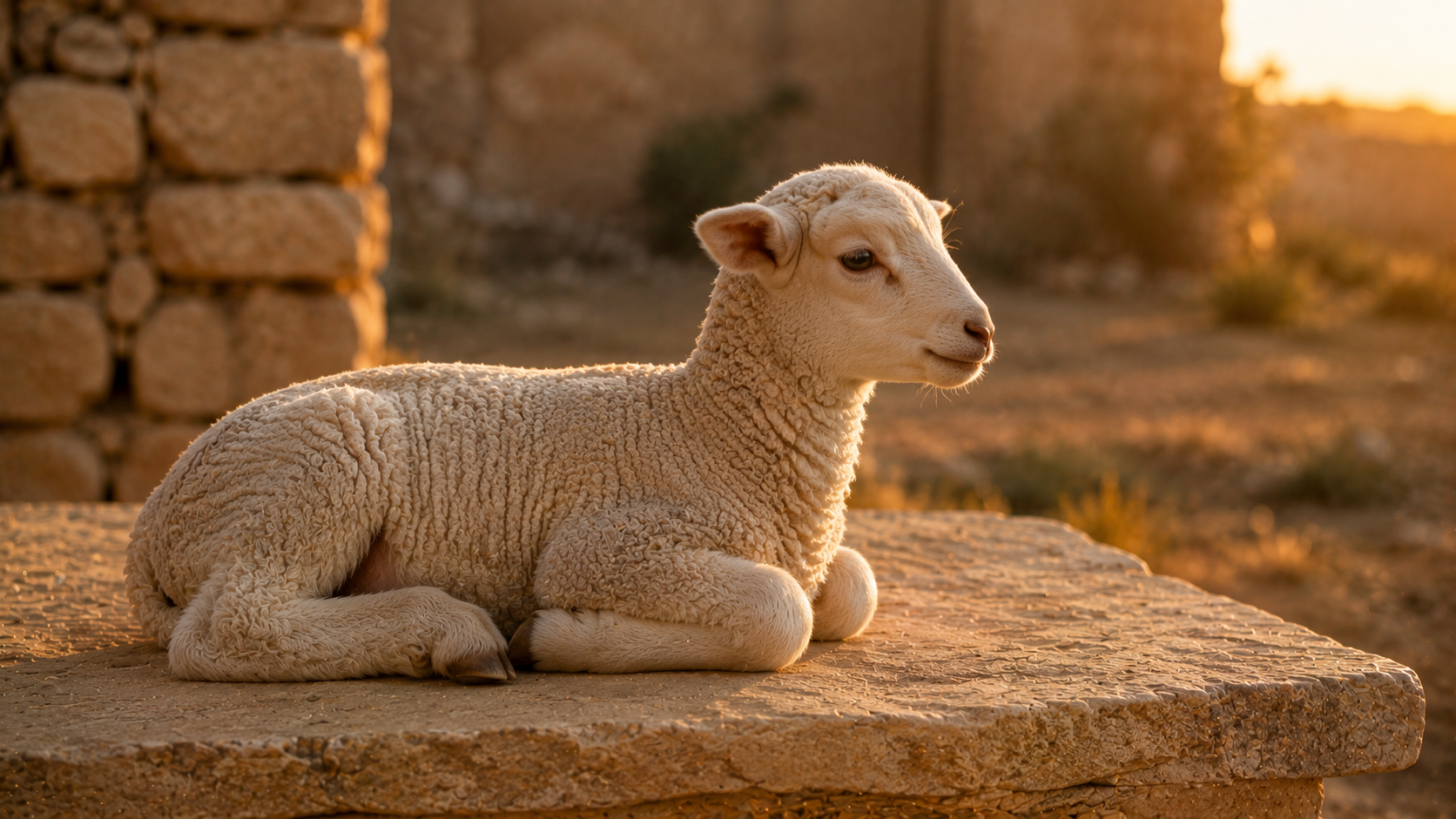
¹⁷ Yahweh spoke to Moses, saying, ¹⁸ “Speak to Aaron, and to his sons, and to all the children of Israel, and say to them, ‘Whoever is of the house of Israel, or of the foreigners in Israel, who offers his offering, whether it is any of their vows, or any of their freewill offerings, which they offer to Yahweh for a burnt offering; ¹⁹ that you may be accepted, you shall offer a male without defect, of the bulls, of the sheep, or of the goats. ²⁰ But whatever has a defect, that you shall not offer: for it shall not be acceptable for you. ²¹ Whoever offers a sacrifice of peace offerings to Yahweh to accomplish a vow, or for a freewill offering, of the herd or of the flock, it shall be perfect to be accepted; there shall be no defect therein. ²² Blind, injured, maimed, having a wart, festering, or having a running sore, you shall not offer these to Yahweh, nor make an offering by fire of them on the altar to Yahweh. ²³ Either a bull or a lamb that has any deformity or lacking in his parts, that you may offer for a freewill offering; but for a vow it shall not be accepted. ²⁴ That which has its testicles bruised, crushed, broken, or cut, you shall not offer to Yahweh; neither shall you do thus in your land. ²⁵ “‘Neither shall you offer the bread of your God from the hand of a foreigner of any of these; because their corruption is in them. There is a defect in them. They shall not be accepted for you.’”
- That you may be accepted, you shall offer a male without defect (v. 19). The chapter returns to the tamim (whole, unblemished) requirement first established at Lev 1:3. The chapter is teaching that what is offered to YHWH must be the good one, not the leftover. The principle applies equally to vows (offerings made in fulfillment of a previous promise) and freewill offerings (spontaneous gifts of devotion).
- Blind, injured, maimed, having a wart, festering, or having a running sore, you shall not offer these to Yahweh (v. 22). The chapter’s list of disqualifying conditions parallels the human-priest conditions of Lev 21:18-20. The same wholeness-of-the-offering principle that ran through the priestly disability passage runs through the animal disability passage. The chapter is consistent: what comes to the altar must be whole.
- Either a bull or a lamb that has any deformity or lacking in his parts, that you may offer for a freewill offering; but for a vow it shall not be accepted (v. 23). The chapter creates a lesser category. A slightly malformed animal can be offered as a freewill gift but cannot be used to fulfill a vow. The chapter’s logic: a vow is a specific promise and must be fulfilled with a fully acceptable animal; a freewill gift is spontaneous and can tolerate a degree of imperfection. The chapter is not relaxing the standard for the altar; it is relaxing the standard for the worshipper’s freedom in lesser categories.
- Neither shall you offer the bread of your God from the hand of a foreigner of any of these (v. 25). The chapter rules out the use of foreign-supplied defective animals as a workaround. A foreigner cannot supply the priest with a defective animal that an Israelite would have been prohibited from offering. The principle covers all sources. The whole later Hebrew Bible’s prophetic critique of Israel offering defective animals (Mal 1:6-14, when you offer the blind for sacrifice … is that not evil? … try it now offering it to your governor) reads forward from this verse.
C · Leviticus 22:26-33 · Timing and the closing exhortation
²⁶ Yahweh spoke to Moses, saying, ²⁷ “When a bull, or a sheep, or a goat, is born, then it shall remain seven days with its mother; and from the eighth day and onward it shall be accepted for the offering of an offering made by fire to Yahweh. ²⁸ Whether it is a cow or ewe, you shall not kill it and its young both in one day. ²⁹ “When you sacrifice a sacrifice of thanksgiving to Yahweh, you shall sacrifice it so that you may be accepted. ³⁰ It shall be eaten on the same day; you shall leave none of it until the morning. I am Yahweh. ³¹ “Therefore you shall keep my commandments, and do them. I am Yahweh. ³² You shall not profane my holy name, but I will be made holy among the children of Israel. I am Yahweh who makes you holy, ³³ who brought you out of the land of Egypt, to be your God. I am Yahweh.”
- When a bull, or a sheep, or a goat, is born, then it shall remain seven days with its mother; and from the eighth day and onward it shall be accepted (v. 27). The chapter’s eighth-day requirement for a newly born animal to be eligible for sacrifice. The same seven-plus-one pattern as the priestly ordination (Lev 8-9), the circumcised infant (Lev 12:3), the cleansed leper’s sanctuary return (Lev 14:10), and the resolved zav-condition’s offering (Lev 15:13-14). The chapter is teaching that the eighth-day pattern is consistent across the system: full readiness comes after a full week of waiting. (See the festival calendar framework for the broader pattern.)
- Whether it is a cow or ewe, you shall not kill it and its young both in one day (v. 28). The chapter’s most striking single ethical detail. The mother and offspring cannot be slaughtered on the same day. The chapter is preserving a minimal mercy even within the sacrificial economy: the mother and the young are not to be destroyed in the same act. The whole later Hebrew Bible’s humanitarian provisions for animals (Deut 22:6-7, the mother bird and her young; Deut 25:4, the unmuzzled ox; Prov 12:10, the righteous one cares for the life of his animal) reads forward from this verse.
- When you sacrifice a sacrifice of thanksgiving to Yahweh, you shall sacrifice it so that you may be accepted. It shall be eaten on the same day; you shall leave none of it until the morning (vv. 29-30). The chapter repeats the todah (thanksgiving offering, Lev 7:12-15) same-day-eating requirement. The thanksgiving meal is gathered immediately; the worshipper must invite the community to share the celebration now, not save the meat for later. The whole chapter 7 development of the todah as the seed of the eucharist (see the Zahnd callout there) is preserved here.
- I will be made holy among the children of Israel. I am Yahweh who makes you holy, who brought you out of the land of Egypt, to be your God (vv. 32-33). The chapter’s closing words. The Hebrew is aqqadesh betokh bnei-yisrael … ani YHWH meqaddishkhem ha-motzi etkhem me-eretz mitzrayim. Three theological claims interlocked: – YHWH will be made holy among the people (the passive verb form: it is YHWH’s holiness the people honor and protect). – YHWH is the one who makes them holy (the active participle: the people do not sanctify themselves). – YHWH is the one who brought them out of Egypt (the Exodus grounds the whole protocol). The chapter is grounding the chapter’s strict purity requirements in the gift-and-grace logic that has run through the whole Holiness Code: holiness is YHWH’s act, the people’s response, and the appropriate way of life for a people he rescued.
Influence callout: Sandra Richter (The Epic of Eden; the chapter as the priestly counterpart to the people’s holiness)
Richter’s reading of Leviticus 21-22 in The Epic of Eden (2008) places these two chapters inside the Holiness Code’s intentional structure. Chapter 19 addressed all the people; chapters 21-22 narrow the focus to the priests. But the same logic runs through both: holiness is YHWH’s gift, the daily protocols are the appropriate response, and the Exodus grounds the whole system. Richter’s pastoral payoff: modern readers who treat the priestly chapters as less relevant because we are not priests are missing the New Testament’s central claim that the whole church is a priesthood (1 Pet 2:9, a chosen race, a royal priesthood, a holy nation, a people for his own possession; Rev 1:6, a kingdom and priests). The chapter’s careful protocols for the priests’ daily food, the priestly household’s belonging, the priest’s voluntary withdrawal during impurity, and the unblemished gift all apply, in transformed form, to the whole church in the New Testament’s reading. Richter’s reading is consistent with the Solomon / Paul Within Judaism lane: the Hebrew Bible’s priesthood is not retired in Christ but expanded outward to include all who belong to the Messiah’s family. The chapter is the foreshadow of the church’s priestly identity.
Reflection prompts
- The chapter calls the holy food the priest’s bread — his actual daily sustenance, not an abstract religious category (v. 7). Where in your own ministry or work has the practical, concrete, daily-livelihood dimension of your calling been obscured by spiritual abstractions?
- The chapter requires the priest to voluntarily withdraw from holy things during periods of impurity. The withdrawal is a positive act, not a punishment. Where in your own life is deliberate temporary withdrawal from a function you usually perform actually the faithful response to a current condition, rather than a failure?
- The chapter closes by grounding all its protocols in the Exodus (I am YHWH who brought you out of the land of Egypt). The holiness code is not freestanding moral demand; it is the appropriate response to deliverance. Where in your own discipleship have you been responding to a moral demand when the chapter would have you respond to a deliverance?
Frameworks at play in this chapter: the five offerings, the kipper / atonement framework, the clean and unclean, the festival calendar, Paul Within Judaism.