
Chapter 20 is where the dying reaches the top. The book opens it with a single, stark line: Miriam died and was buried at Kadesh. By its end, Aaron has died on Mount Hor. And in between, Moses himself receives the sentence that he will not enter the land. The forty-year verdict of chapter 14 fell on the whole exodus generation; here it claims its greatest figures, including the two who led them out. No one is exempt. The generation that came out of Egypt, leaders and all, will be buried in the wilderness.
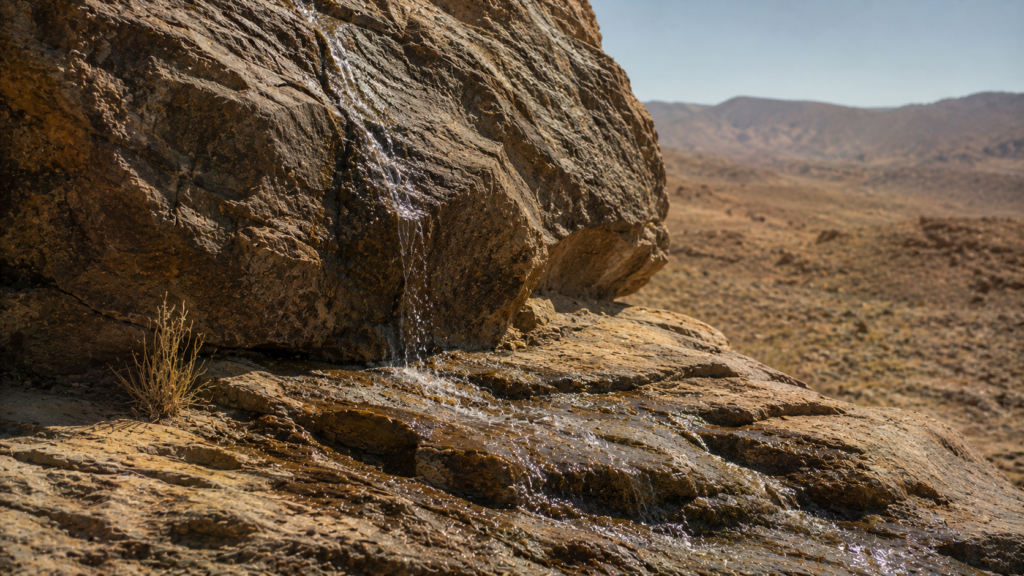
The hinge of the chapter is Moses’s failure at the waters of Meribah. The people quarrel over water yet again; God tells Moses to speak to the rock; Moses, worn down and angry, strikes it twice and snaps at the people, shall we bring water out of this rock for you? The water comes anyway, but the cost is enormous: Moses and Aaron are told they will not bring the assembly into the land, because you did not trust me, to treat me as holy in the eyes of the people. It is one of the most poignant judgments in Scripture, and it teaches the same hard lesson as chapter 14: God’s grace is real, and consequences are also real.
A · Numbers 20:1-13 · The waters of strife
¹⁰ Moses and Aaron gathered the assembly together before the rock, and he said to them, “Hear now, you rebels! Shall we bring water out of this rock for you?” ¹¹ Moses lifted up his hand, and struck the rock with his rod twice, and water came out abundantly… ¹² Yahweh said to Moses and Aaron, “Because you didn’t believe in me, to sanctify me in the eyes of the children of Israel, therefore you shall not bring this assembly into the land which I have given them.”
- Miriam died there (v. 1). The chapter opens with the death of the prophetess who watched over the infant Moses in the reeds and led Israel’s song at the sea (Exodus 15:20-21). No eulogy, no detail, just the fact. The old generation is passing, and the passing now reaches Moses’s own family. The mood of the chapter is set by this loss before a word is said about water.
- Speak to the rock (v. 8). The people quarrel over water (the place is named Meribah, “strife”), and God’s instruction is precise: take the staff, gather the people, and speak to the rock. This time the rock is not to be struck but addressed. At the first water-from-rock, years earlier, God told Moses to strike it (Exodus 17:6); now he says speak. The change matters.
- Hear now, you rebels! Shall we bring water? (v. 10). Moses, exhausted and furious, departs from the instruction on three fronts. He strikes the rock instead of speaking to it, and twice. He addresses the people with contempt (you rebels). And his words, shall we bring water out of this rock?, put himself and Aaron in God’s place, obscuring that the water is God’s gift, not the leaders’ feat. Interpreters debate which of these was the decisive sin, and the text does not isolate one. What God names is deeper than any single act.
- Because you did not trust me, to treat me as holy (v. 12). The charge is failure of trust and failure to sanctify God before the people. In a moment of pressure, Moses misrepresented God’s character to the very people whose whole vocation was to display it. The leader who carries God’s name before the nation made God look harsh and made the gift look like the leaders’ doing. The severity of the consequence is bound up with the height of the calling: those who represent God publicly are held to public account (compare James 3:1). The judgment is hard, and the chapter lets it be hard.
Word study: qadash (קָדַשׁ), “to be holy, to treat as holy, to sanctify”
God’s charge is that Moses and Aaron failed l’haqdisheni, “to sanctify me, to treat me as holy,” in the eyes of the people (v. 12). The verb qadash runs through the priestly world: God is holy, the sanctuary is made holy, the priests are consecrated. To sanctify God before the people is to represent his character truly, so that watching Israel sees who he actually is. The same root stands behind the first petition of the Lord’s Prayer, hallowed (let it be sanctified) be your name (Matthew 6:9), and behind the Jewish concept of kiddush hashem, sanctifying the Name (see bearing God’s name). Moses’s failure was not merely a procedural slip with a rock; it was a failure of kiddush hashem at the level of a national leader. In a flash of anger he made God appear other than he is. That is why the consequence is so weighty: the man who bore God’s name before Israel, in that moment, emptied it.
Influence callout: Paul and the rock that followed (1 Corinthians 10:4)
Paul, reading the wilderness story as a warning for the church, makes a startling claim about the water-giving rock: Israel drank from the spiritual rock that followed them, and the rock was Christ (1 Corinthians 10:4). Paul gathers the rock at Horeb (Exodus 17) and the rock at Meribah (Numbers 20) into a single typological figure: Christ, the source of living water sustaining his people through the wilderness. The early church pressed the typology further. At the first rock, God commanded Moses to strike it, and water flowed; here, God commanded him only to speak. Some patristic readers saw in this a figure of the cross: the rock is struck once, and that one striking is enough, so that ever after the people need only call on the One already struck. On that reading, Moses’s error in striking the rock a second time marred the picture, presuming to wound again the rock that needed wounding only once. The site offers this typology as the church has long heard it, while honoring the plain sense first: a worn-out leader, a moment of anger, and a holy God who will not let even Moses misrepresent him without consequence.
B · Numbers 20:14-21 · Edom’s refusal
²¹ Thus Edom refused to give Israel passage through his border, so Israel turned away from him.
- Let us pass through your land (vv. 14-17). Moses asks Edom for safe passage along the King’s Highway, invoking kinship: Edom descends from Esau, Jacob’s brother, so the Edomites are Israel’s relatives. The request is courteous and modest, promising to stay on the road and pay for water. It is the appeal of family to family.
- Edom came out against him with many people (vv. 18-21). Edom refuses, twice, and backs the refusal with an army. The kin who might have helped instead blocks the way, and Israel must take the long detour. The cold refusal of a brother-nation will echo through the prophets, who indict Edom precisely for standing aloof and hostile in the day of Israel’s need (Obadiah 10-14). The wilderness journey is lengthened not only by Israel’s own failures but by the hardness of others.
C · Numbers 20:22-29 · The death of Aaron
²⁸ Moses stripped Aaron of his garments, and put them on Eleazar his son. Aaron died there on the top of the mountain… ²⁹ When all the congregation saw that Aaron was dead, they wept for Aaron thirty days, even all the house of Israel.
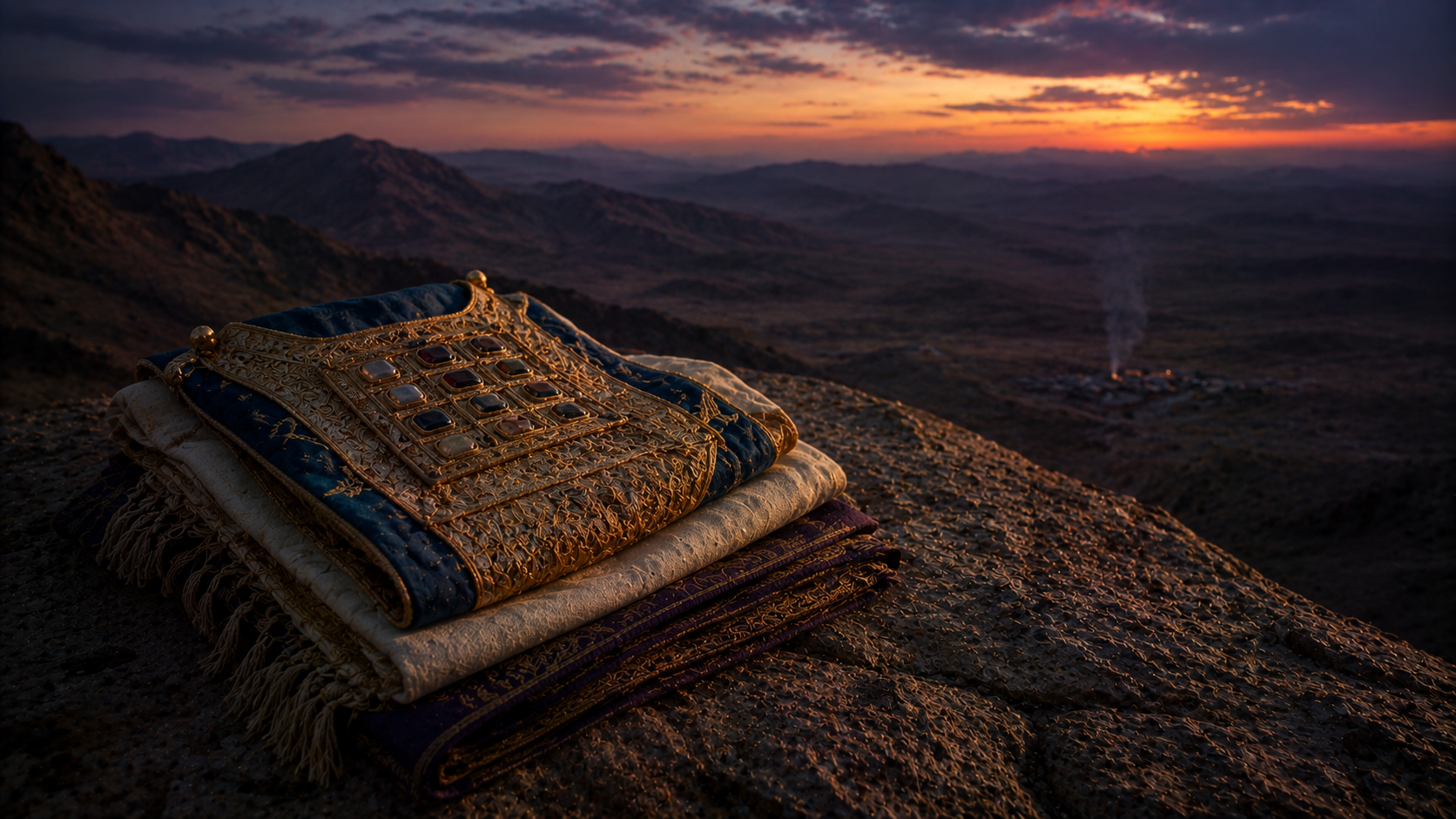
- Aaron died there on the top of the mountain (v. 28). At God’s word, Moses, Aaron, and Eleazar climb Mount Hor, and there the first high priest dies, barred like Moses from the land because of Meribah. The man who held the censer between the dead and the living (chapter 16), who bore the names of Israel on his shoulders, dies on a mountaintop short of the promise. The old generation’s greatest figures are falling one by one.
- Moses put the garments on Eleazar (v. 28). Before Aaron dies, his priestly vestments are transferred to his son Eleazar on the mountain. The priest dies; the priesthood continues. This is the chapter’s quiet hope amid the deaths: the office God established does not die with the man. The high-priestly line passes unbroken to the next generation, and the people will not be left without a mediator. Hebrews will later contrast exactly this with Christ, the high priest who continues forever and holds his priesthood permanently because he lives forever (Hebrews 7:23-25): where Aaron’s line had to keep handing the garments to a son because death kept interrupting it, Christ never hands them on, because death cannot interrupt him.
- They wept for Aaron thirty days (v. 29). The whole nation mourns. The chapter that began with Miriam’s unmarked grave ends with thirty days of public grief for Aaron. Between the two deaths sits Moses’s sentence. The reader is meant to feel the weight: the leaders who brought Israel out will not bring them in. The torch is passing, whether the old generation is ready or not (see the two generations).
Reflection prompts
- Moses fails not in a great rebellion but in a moment of exhaustion and anger, and it costs him dearly because of how publicly he represented God. Where does your own weariness most tempt you to misrepresent God’s character to the people watching you?
- God’s judgment on Moses is real, and so is God’s continued love for him (Moses still leads, still meets God face to face). How do you hold together being genuinely forgiven and still living with a consequence?
- Aaron’s garments pass to Eleazar before Aaron dies; the work outlives the worker. What are you carrying that will need to be handed on well? Are you preparing a successor, or assuming it depends on you forever?
Frameworks at play in this chapter: the two generations, wilderness and liminality, the cruciform hermeneutic.