

Hebrews 13 closes the book with practical pastoral exhortations and a final benediction. The chapter is the application section of the long sermon: now that the audience has heard the Christological argument, the new-covenant theology, the warnings, and the endurance call, the chapter names what life in that community looks like. The exhortations cover brotherly love, hospitality, prisoners, marriage, money, leadership, sacrifice, and contentment. Each is a concrete practice the audience is called to.
The chapter contains one of the New Testament’s most distinctive single images at v. 13: let us go to him outside the camp, bearing the reproach he endured. The image draws on Leviticus 16:27 (the Day of Atonement’s bull and goat carcasses burned outside the camp) and on the historical fact of Jesus’s crucifixion outside the city walls of Jerusalem. The audience is called to follow Christ outside the camp, taking up the reproach he endured. The verse is the cruciform call of the book in compressed form.
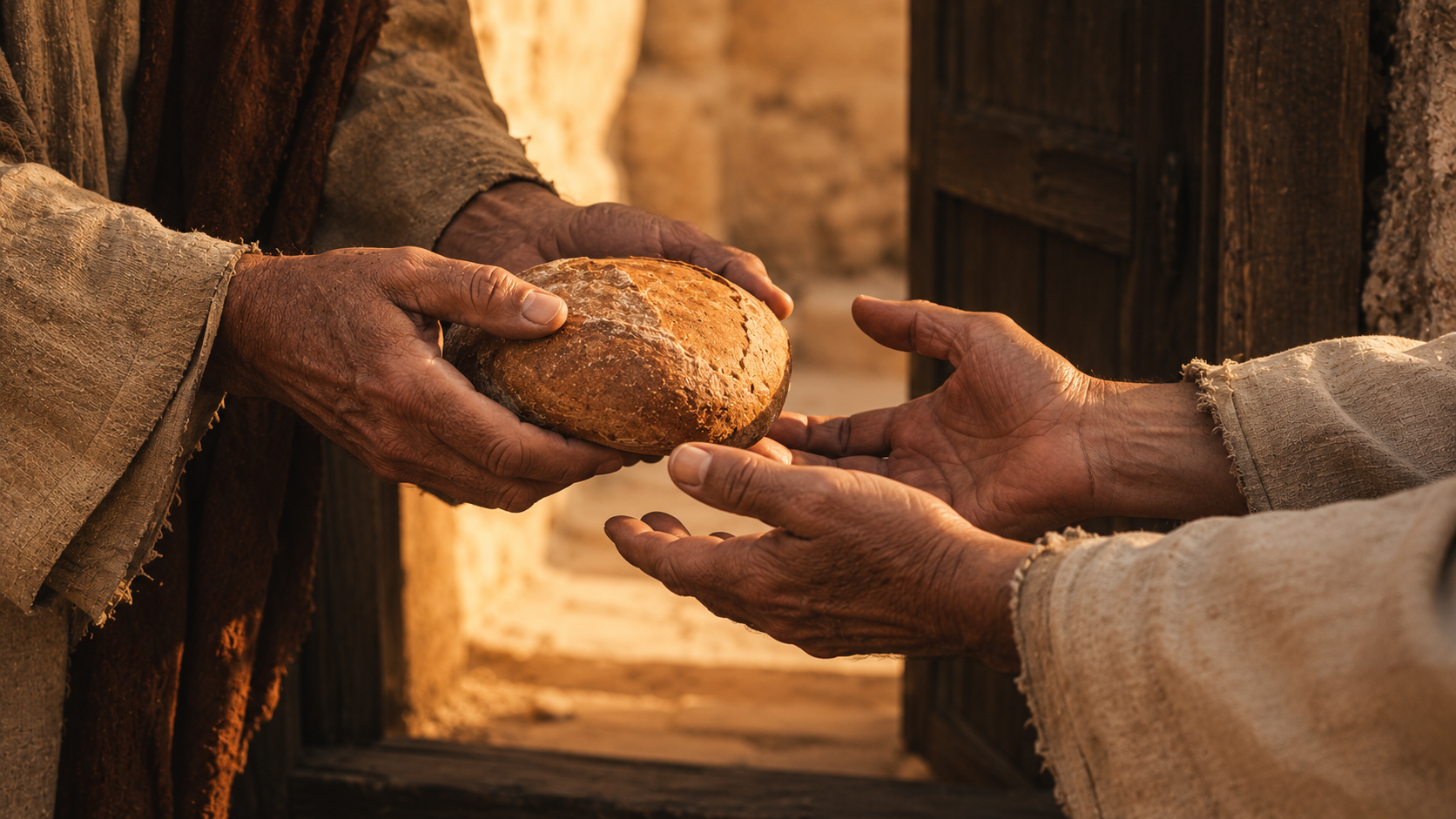
The chapter’s closing benediction (vv. 20-21) is one of the most beautiful in the New Testament. Now may the God of peace, who brought again from the dead the great shepherd of the sheep with the blood of an eternal covenant, even our Lord Jesus, make you complete in every good thing to do his will, working in you that which is well pleasing in his sight, through Jesus Christ, to whom be the glory forever and ever. Amen. The benediction gathers the book’s central themes (resurrection, the eternal covenant, the work that pleases God) into a single sustained blessing.
The author closes (v. 22) by naming the book’s own genre: bear with my word of exhortation (Greek anechesthe tou logou tēs paraklēseōs). The book is, by the author’s own confession, a word of exhortation, a synagogue sermon. The closing seal confirms what the book has been all along.
A · Hebrews 13:1-6 · Practical exhortations on community life
¹ Let brotherly love continue. ² Don’t forget to show hospitality to strangers, for in doing so, some have entertained angels without knowing it. ³ Remember those who are in bonds, as bound with them; and those who are ill-treated, since you are also in the body. ⁴ Let marriage be held in honor among all, and let the bed be undefiled; but God will judge the sexually immoral and adulterers. ⁵ Be free from the love of money, content with such things as you have, for he has said, “I will in no way leave you, neither will I in any way forsake you.” ⁶ So that with good courage we say, “The Lord is my helper. I will not fear. What can man do to me?”
- Let brotherly love continue (v. 1). The chapter’s opening exhortation. The Greek hē philadelphia menetō (let brotherly love remain). The verb menetō (let it remain) names continuance: the love the community already has must not lapse. Philadelphia is the New Testament’s standard word for love among Christians as siblings. The chapter is not introducing a new command; it is naming a continued obligation.
- Don’t forget to show hospitality to strangers, for in doing so, some have entertained angels without knowing it (v. 2). The chapter cites the Hebrew Bible’s hospitality tradition. The Greek philoxenia (hospitality, literally love of strangers) is the chapter’s specific exhortation. Some have entertained angels without knowing it references Abraham at Mamre (Gen 18:1-15) and Lot at Sodom (Gen 19:1-3). The whole Hebrew Bible’s tradition of hospitality as covenantal practice (Lev 19:33-34; Deut 10:19) reads forward from this verse.
- Remember those who are in bonds, as bound with them; and those who are ill-treated, since you are also in the body (v. 3). The chapter’s solidarity command. The audience is to remember (Greek mimnēskesthe, in the active mode of acting on the memory) those in chains, as bound with them. The phrase as bound with them (Greek hōs syndedemenoi) names imagined solidarity: the audience is to identify so closely with the imprisoned that they feel themselves chained too. The whole later Christian tradition of prison ministry as core to discipleship (Mt 25:36) reads forward from this verse.
- Let marriage be held in honor among all, and let the bed be undefiled (v. 4). The chapter’s marriage exhortation. The Greek timios ho gamos en pasin (let marriage be honorable in all). The verse honors marriage as intrinsically good and warns against sexual immorality. The whole later Christian theology of marriage as a high vocation reads forward from this verse.
- Be free from the love of money, content with such things as you have (v. 5). The chapter’s money exhortation. The Greek aphilargyros ho tropos (let your way of life be without love of money) and arkoumenoi tois parousin (being content with what is present). The verse is the New Testament’s clearest single statement that contentment with present possessions is part of Christian formation. The whole later Christian tradition of contentment (Phil 4:11; 1 Tim 6:6-10) reads forward from this verse.
- I will in no way leave you, neither will I in any way forsake you (v. 5, citing Deut 31:6 / Josh 1:5). The chapter cites YHWH’s promise to Joshua. The verse is the basis for the contentment exhortation. The audience can be free from anxious money-love because YHWH’s presence is guaranteed. The whole later Christian tradition of the presence of God as the foundation of generosity reads forward from this verse.
- The Lord is my helper. I will not fear. What can man do to me? (v. 6, citing Ps 118:6). The chapter cites Psalm 118 (the Hallel psalm sung at Passover). The verse anchors the audience’s confidence in YHWH’s helping presence. The Greek boēthos (helper) is the same word from 2:18 and 4:16. The God who helps is the same God who has been the audience’s help throughout the book.
B · Hebrews 13:7-17 · Leaders, sacrifice, outside the camp
⁷ Remember your leaders, men who spoke to you the word of God, and considering the results of their conduct, imitate their faith. ⁸ Jesus Christ is the same yesterday, today, and forever. ⁹ Don’t be carried away by various and strange teachings, for it is good that the heart be established by grace, not by food, through which those who were so occupied were not benefited. ¹⁰ We have an altar from which those who serve the holy tabernacle have no right to eat. ¹¹ For the bodies of those animals, whose blood is brought into the holy place by the high priest as an offering for sin, are burned outside of the camp. ¹² Therefore Jesus also, that he might sanctify the people through his own blood, suffered outside of the gate. ¹³ Let’s therefore go out to him outside of the camp, bearing his reproach. ¹⁴ For we don’t have here an enduring city, but we seek that which is to come. ¹⁵ Through him, then, let’s offer up a sacrifice of praise to God continually, that is, the fruit of lips which proclaim allegiance to his name. ¹⁶ But don’t forget to be doing good and sharing, for with such sacrifices God is well pleased. ¹⁷ Obey your leaders and submit to them, for they watch on behalf of your souls, as those who will give account, that they may do this with joy, and not with groaning, for that would be unprofitable for you.
- Remember your leaders, men who spoke to you the word of God, and considering the results of their conduct, imitate their faith (v. 7). The chapter’s exhortation about past leaders. The audience is to remember (Greek mnēmoneuete) and imitate the pistis of those who led them in the past. The verse is the New Testament’s clearest single statement of the leadership-imitation pattern: leaders are to be remembered by the pattern of their pistis, not by personal style or charisma.
- Jesus Christ is the same yesterday, today, and forever (v. 8). The chapter’s most famous single verse. The Greek Iēsous Christos echthes kai sēmeron ho autos kai eis tous aiōnas (Jesus Christ, yesterday and today the same, and forever). The verse names Christ’s immutable identity as the anchor of the audience’s faith. The verse is not a generic theological statement; it is pastorally placed: between past leaders’ faith (v. 7) and strange teachings (v. 9). The audience must remember leaders’ faith because Christ is the same; the audience must not be carried away by strange teachings because Christ is the same.
- Don’t be carried away by various and strange teachings, for it is good that the heart be established by grace, not by food (v. 9). The chapter’s specific warning. The Greek didachais poikilais kai xenais (various and strange teachings) names teachings outside the apostolic tradition. The reference to food (Greek brōmasin) likely points to Jewish-Christian disputes about food laws (cf. Acts 15; Rom 14; 1 Cor 8-10; Col 2:16-23). The chapter’s pastoral move: the heart is established by grace, not by dietary regulations. The verse is consistent with the broader Paul Within Judaism lane: food disputes are not the heart of Christian formation; the heart is established by grace.
- We have an altar from which those who serve the holy tabernacle have no right to eat (v. 10). The chapter’s most enigmatic single verse. The Greek thysiastērion echomen (we have an altar). What altar? The chapter does not specify directly. The most likely reference is Christ’s offering itself: the audience has an altar (the cross / heavenly sanctuary) from which those who continue to serve the earthly tabernacle have no right to eat. The verse is not dismissing the earthly tabernacle as illegitimate; it is naming the structural incompatibility of continuing to seek the earthly altar’s services while having received the heavenly altar’s gift.
- For the bodies of those animals, whose blood is brought into the holy place by the high priest as an offering for sin, are burned outside of the camp (v. 11). The chapter cites Leviticus 16:27. The Day of Atonement’s bull and goat (whose blood was brought into the Most Holy Place) had their carcasses burned outside the camp. The chapter is preparing the next verse.
- Therefore Jesus also, that he might sanctify the people through his own blood, suffered outside of the gate (v. 12). The chapter’s typological move. Jesus suffered outside the gate (Greek exō tēs pylēs, outside the city wall). The Jerusalem of the first century had a gate near Golgotha. Jesus’s death outside the city is read as the fulfillment of the Levitical pattern: the bull and goat whose blood entered the Most Holy Place were burned outside the camp; Christ, whose blood enters the heavenly sanctuary, suffered outside the gate. The whole later Christian theology of Christ’s death in the place of disgrace reads forward from this verse.
- Let’s therefore go out to him outside of the camp, bearing his reproach (v. 13). The chapter’s most pastorally distinctive single verse. The audience is called to go out to him outside the camp (Greek exerchōmetha pros auton exō tēs parembolēs) bearing his reproach (Greek ton oneidismon autou pherontes). The verse is the cruciform call of the book. The audience is not called to defend a comfortable position inside the camp; they are called to follow Christ to the place of reproach. The whole later Anabaptist tradition (the outside-the-camp church, refusing imperial accommodation) reads forward from this verse.
- For we don’t have here an enduring city, but we seek that which is to come (v. 14). The chapter’s eschatological framing. The Greek ou gar echomen hōde menousan polin (we do not have a remaining city here). The audience is not at home in the present order; they seek the city that is to come. The verse echoes the patriarchs of chapter 11 (they confessed they were strangers and pilgrims on the earth, 11:13).
- Through him, then, let’s offer up a sacrifice of praise to God continually, that is, the fruit of lips which proclaim allegiance to his name (v. 15). The chapter’s Christian sacrifice exhortation. The Greek thysian aineseōs … karpon cheileōn homologountōn tō onomati autou (a sacrifice of praise … the fruit of lips confessing his name). The chapter is naming continued worship-confession as the Christian’s sacrificial offering. The verb homologountōn (confessing, acknowledging publicly) is the gospel allegiance vocabulary: the public allegiance to Christ’s name is the sacrifice the audience offers.
- But don’t forget to be doing good and sharing, for with such sacrifices God is well pleased (v. 16). The chapter’s additional sacrifice exhortation. Doing good (Greek eupoiias) and sharing (Greek koinōnias, the verb-noun related to koinōnia, fellowship) are also sacrifices. The verse is the New Testament’s clearest single statement that the Christian’s life-practice (doing good, sharing resources) is liturgical, not merely ethical. The whole later Christian theology of the priesthood of all believers (1 Pet 2:9; Rev 1:6) reads forward from this verse.
- Obey your leaders and submit to them, for they watch on behalf of your souls (v. 17). The chapter’s current leadership exhortation. The audience’s current leaders (different from the past leaders of v. 7) are to be obeyed (Greek peithesthe, to be persuaded by, to follow) and submitted to (Greek hypeikete, to yield to). The verse is the New Testament’s clearest single statement of the audience’s relation to their living church leaders. The leaders’ responsibility: they watch (Greek agrypnousin, stay awake) on behalf of souls, and they will give account.
C · Hebrews 13:18-25 · Final greetings and benediction
¹⁸ Pray for us, for we are persuaded that we have a good conscience, desiring to live honorably in all things. ¹⁹ I strongly urge you to do this, that I may be restored to you sooner. ²⁰ Now may the God of peace, who brought again from the dead the great shepherd of the sheep with the blood of an eternal covenant, our Lord Jesus, ²¹ make you complete in every good work to do his will, working in us that which is well pleasing in his sight, through Jesus Christ, to whom be the glory forever and ever. Amen. ²² But I exhort you, brothers, endure the word of exhortation, for I have written to you in few words. ²³ Know that our brother Timothy has been freed, with whom, if he comes shortly, I will see you. ²⁴ Greet all of your leaders and all the saints. The Italians greet you. ²⁵ Grace be with you all. Amen.
- Pray for us, for we are persuaded that we have a good conscience (v. 18). The author’s brief personal request. The Greek kalēn syneidēsin echein (to have a good conscience) is one of the book’s final uses of conscience (Greek syneidēsis; cf. chapter 9’s extensive treatment). The author’s good conscience is consistent with the cleansed conscience the book has named throughout. The author practices what he preaches.
- I strongly urge you to do this, that I may be restored to you sooner (v. 19). The author hints at being separated from the audience and hoping to be restored (Greek apokatastathō, perfect / restored to former position) to them. The chapter does not explain why the separation; possibly imprisonment, possibly travel.
- Now may the God of peace, who brought again from the dead the great shepherd of the sheep with the blood of an eternal covenant, our Lord Jesus, make you complete in every good work to do his will (vv. 20-21). The chapter’s great benediction. The Greek ho de theos tēs eirēnēs ho anagagōn ek nekrōn ton poimena tōn probatōn ton megan en haimati diathēkēs aiōniou (now the God of peace, who brought up from the dead the great shepherd of the sheep with the blood of the eternal covenant). The benediction gathers four major themes: – God of peace (Greek theos tēs eirēnēs): the divine name appropriate to the new-covenant inauguration. – Brought again from the dead: the resurrection of Christ, named explicitly in the benediction. The book has primarily focused on Christ’s ascension and heavenly entry; the benediction names the resurrection that made the ascension possible. – The great shepherd of the sheep: a Christ-image drawing on Psalm 23, Ezekiel 34, and John 10. The image of Christ as shepherd is one the book has not developed elsewhere; the benediction adds it. – The blood of an eternal covenant: the new covenant’s blood as eternal (Greek aiōniou, lasting through all ages).
The benediction is the most theologically rich single sentence in the chapter.
- Working in us that which is well pleasing in his sight, through Jesus Christ, to whom be the glory forever and ever. Amen (v. 21). The benediction’s closing. God works in us (Greek poiōn en hēmin, doing in us) what is well pleasing in his sight. The verse names the Christian’s good works as God’s own work in the believer. The verb is active divine indwelling, not merely moral assistance. The doxology to whom be the glory forever and ever names the appropriate response to all that has been said.
- But I exhort you, brothers, endure the word of exhortation, for I have written to you in few words (v. 22). The chapter’s most genre-defining single verse. The Greek logou tēs paraklēseōs (word of exhortation) names the technical category of the synagogue sermon (cf. Acts 13:15). The author is not writing a letter; he is writing a homily, the genre of gathered worship instruction. The closing seal confirms the book’s character. In few words (Greek dia bracheōn) is the author’s modest description; the book is, by ancient Greek standards, short for such a sustained argument.
- Know that our brother Timothy has been freed, with whom, if he comes shortly, I will see you (v. 23). The chapter’s brief personal note about Timothy. The Timothy here is almost certainly Paul’s coworker Timothy (Acts 16; 2 Tim; the pastoral epistles). The fact that Timothy has been freed (Greek apolelymenon, released) suggests Timothy had been imprisoned, possibly in connection with the audience’s own community. The author hopes to come with Timothy soon.
- Greet all of your leaders and all the saints. The Italians greet you. Grace be with you all. Amen (vv. 24-25). The chapter’s closing. The Italians greet you may indicate the author writes from Italy (with Italian believers sending greetings to the audience back in Italy) or to Italy (with believers who have left Italy sending greetings back). The geographical clue is debated. The closing Grace be with you all is the standard Christian closing benediction (cf. all the Pauline letters’ closings).
Where this lands: Outside the camp
The chapter’s most distinctive single image is at v. 13: let us go out to him outside the camp, bearing his reproach. The verse is the book’s cruciform call in compressed form. The audience is not called to defend a comfortable position inside the camp; they are called to follow Christ to the place of reproach.
Modern Christianity often inverts this. The instinct is to make Christianity comfortable inside the cultural camp, to defend the church’s place in respectable society, to avoid reproach wherever possible. The chapter refuses this. Christ suffered outside the gate. The community is called out, into the place of social marginality, into the costly identification with the reproached one.
The verse is the foundation of one of the Christian tradition’s most theologically powerful lineages. The early martyrs going to their deaths outside the city walls. The desert fathers fleeing the imperial Christianity that had become respectable. The Anabaptist refusal to merge church and state. The black church’s history of standing outside the dominant order’s approval. The base communities of Latin American Christianity. The contemporary church’s witness to the imprisoned, the displaced, the homeless.
The verse is also the foundation of one of the most difficult pastoral questions for modern Christians: where is the camp, and where is the outside-the-camp place to which Christ calls? Each generation must discern this for itself. The verse is not a license for performative outsider-ness or for self-righteous separation. The verse is a call to follow Christ, specifically, into the reproach he endured, wherever in the contemporary moment that location is.
The chapter’s closing benediction is the assurance that goes with this call. The God of peace who raised the great shepherd from the dead is the one who is working in the audience what is well pleasing in his sight. The audience does not go outside the camp alone; they go with the risen shepherd who has already gone there.
Influence callout: Amy Peeler (Hebrews; the closing benediction as the book’s theological summary)
Peeler’s reading of Hebrews 13:20-21 in her 2024 Hebrews commentary (CCF, Eerdmans) develops the benediction as the book’s compressed theological summary. The benediction names peace, resurrection, shepherd Christology, the eternal covenant’s blood, the believer’s good works as God’s own work, and the doxological closing. Each theme has been developed somewhere in the book; the benediction gathers them. Peeler’s pastoral payoff: the benediction is not a tacked-on closing; it is the book’s compressed gospel. The God of peace, the resurrection of the great shepherd, the eternal covenant’s blood, the believer’s formation by divine indwelling, the glory of Jesus Christ forever: these are the load-bearing claims of the book, named together at the close. Peeler argues that the benediction should be read aloud as the closing gift of every sermon on Hebrews. The chapter’s outside-the-camp call (v. 13) and the benediction’s God of peace working in you (vv. 20-21) belong together: the call is severe; the assurance is generous. Both are the book’s final word to the audience.
Reflection prompts
- The chapter teaches that Jesus Christ is the same yesterday, today, and forever (v. 8). The pastoral force of the verse is that the audience’s Christ is the same Christ the cloud of witnesses knew, the same Christ the audience knew at conversion, the same Christ they will know at the consummation. Where in your own faith life have you been imagining that the Christ of your past is different from the Christ of your present or the Christ of your future?
- The chapter calls the community to go out to him outside the camp, bearing his reproach (v. 13). The cruciform call is not optional. Where in your own current life is the camp (the comfortable position of cultural respectability) and where is the outside-the-camp place to which Christ calls?
- The chapter closes with the benediction: the God of peace … working in us that which is well pleasing in his sight (v. 21). The believer’s good works are God’s own work in the believer. Where in your own life have you been operating with a self-powered effort assumption that the benediction would replace with the God-of-peace working in you?
Frameworks at play in this chapter: the kipper / atonement framework, the new covenant, gospel allegiance, the cruciform hermeneutic, Paul within Judaism, the cry of the oppressed.