

Romans 12 is the chapter where the therefore lands. Eleven chapters of theological argument have unfolded the gospel of God’s righteousness for both Jew and gentile, the new humanity in Christ, the Spirit-animated life, and God’s faithfulness to Israel. Chapter 12 opens with therefore I urge you, brothers, by the mercies of God (12:1) and turns the cosmic gospel into the actual shape of the community’s daily life. On Scot McKnight’s backward-read thesis, the chapter is where Paul finally addresses the community problem that has been driving the whole letter: the Strong-Weak conflict in the Roman house churches that chapters 14-15 will name explicitly. Chapter 12 establishes the cruciform community pattern that makes welcome across difference possible.
The chapter divides into three movements. Verses 1-2 develop the foundational call: present your bodies as a living sacrifice, do not be conformed to this age, be transformed by the renewing of your mind. Verses 3-8 develop the one body, many gifts metaphor: each member has a unique gift given for the building up of the body. Verses 9-21 develop the practical ethics: love without hypocrisy, honor one another, hospitality to strangers, bless those who persecute you, overcome evil with good. The chapter is the cruciform-community-pattern applied to actual daily life in the Roman house churches under Nero.
The chapter’s ethics are not an addition to the gospel; they are the gospel in its embodied community form. The living sacrifice of 12:1 picks up the cultic-offering vocabulary of 6:13 (present your members as instruments of righteousness). The renewing of the mind of 12:2 picks up the Spirit-led mind of 8:5-6. The one body of 12:4-5 picks up the in-Christ corporate-humanity of 5:12-21. The cruciform commands of 12:14-21 (bless those who persecute you; if your enemy is hungry, feed him) are Christ’s own teaching (Mt 5:38-48) applied to the Roman believers’ daily relationships with hostile neighbors.
A · Romans 12:1-2 · Living sacrifice
¹ Therefore I urge you, brothers, by the mercies of God, to present your bodies a living sacrifice, holy, acceptable to God, which is your spiritual service. ² Don’t be conformed to this world, but be transformed by the renewing of your mind, so that you may prove what is the good, well-pleasing, and perfect will of God.
- Therefore I urge you, brothers, by the mercies of God (v. 1). The Greek parakalō oun hymas, adelphoi, dia tōn oiktirmōn tou theou. The chapter opens with therefore (Greek oun), explicitly grounding the practical chapters in the mercies of God developed across chapters 1-11. By the mercies (Greek dia tōn oiktirmōn) names the basis of the appeal. The verse refuses any moralistic reading of the chapters that follow: the commands of 12-16 flow from the gospel of mercy, not from a separate moral imperative attached to the gospel.
- Present your bodies a living sacrifice (v. 1). The Greek parastēsai ta sōmata hymōn thysian zōsan. The verb parastēsai echoes 6:13 (present yourselves to God as alive from the dead) and is the cultic-offering vocabulary of the Hebrew Bible’s temple sacrifice. Bodies (Greek sōmata) names the whole embodied self, not just the physical body in the modern dualistic sense. Living sacrifice is paradoxical: in the Hebrew Bible’s sacrificial economy, the sacrifice died; the living sacrifice is the believer’s ongoing daily life as offering. The whole later Christian theology of daily life as worship reads forward from this verse.
- Your spiritual service (v. 1). The Greek tēn logikēn latreian hymōn. The adjective logikē (often translated spiritual or reasonable) is built on logos (word, reason). The phrase has been translated your reasonable worship, your spiritual worship, or your rational service. The Stoic philosophical tradition used logikē of the rational soul’s service to the divine; Paul appropriates the vocabulary while redirecting it to embodied life in the Spirit. Service (Greek latreia) is cultic-priestly vocabulary: the Hebrew Bible’s avodah, the temple priest’s service. The verse names embodied daily life as the Christian’s priestly liturgy.
- Don’t be conformed to this world, but be transformed by the renewing of your mind (v. 2). The Greek mē syschēmatizesthe . . . metamorphousthe. Two verbs built on schēma (outward form, scheme) and morphē (essential form). The contrast is between being shaped by the current age’s pattern (Greek syschēmatizō, conformed-with) and being shaped by the new-creation pattern (Greek metamorphoō, transformed). The verb metamorphoō is the same verb used at Jesus’s transfiguration (Mt 17:2; Mk 9:2). The verse names the Christian’s transformation as participation in the same kind of glory-change the transfigured Christ embodied.
- That you may prove what is the good, well-pleasing, and perfect will of God (v. 2). The Greek eis to dokimazein hymas (so that you may test / approve / discern). The verb dokimazō names the discerning evaluation of what is good. The Christian’s renewed mind is not given a pre-printed list of God’s will; it is given the capacity to discern what the divine will is in particular concrete circumstances. The whole later Christian practical-wisdom tradition reads forward from this verse.
Influence callout: Timothy Gombis (Romans podcast lecture series, 2024-25)
Gombis develops Romans 12:1-2 as the cruciform-community foundation of the chapter and the following four chapters. The mercies of God (12:1) are the cosmic atonement-and-reconciliation unfolded across chapters 1-11; the living sacrifice is the believer’s body responding to that cosmic act. Gombis’s pastoral payoff: the chapter is not a moral checklist; it is the embodied response of a community that has heard the gospel. Living sacrifice names daily life as the place where the gospel lands, not a heightened spiritual moment separated from daily existence. Transformation by mind-renewal is Spirit-empowered re-imagining of what life under the Lordship of the Messiah looks like, not the moralistic ratcheting up of effort to be good. The chapter’s grammar is consistent with chapter 8’s life-in-the-Spirit: the imperative of 12:1-2 is grounded in the indicative of 8:1-11.
B · Romans 12:3-8 · One body, many gifts
³ For I say through the grace that was given me, to every man who is among you, not to think of himself more highly than he ought to think; but to think reasonably, as God has apportioned to each person a measure of faith. ⁴ For even as we have many members in one body, and all the members don’t have the same function, ⁵ so we, who are many, are one body in Christ, and individually members of one another. ⁶ Having gifts differing according to the grace that was given to us, if prophecy, let’s prophesy according to the proportion of our faith; ⁷ or service, let’s give ourselves to service; or he who teaches, to his teaching; ⁸ or he who exhorts, to his exhorting; he who gives, let him do it with generosity; he who rules, with diligence; he who shows mercy, with cheerfulness.
- Not to think of himself more highly than he ought to think (v. 3). The Greek mē hyperphronein par’ ho dei phronein, alla phronein eis to sōphronein. The verse is a wordplay on the verb phroneō (to think): not to over-think (hyper-think) beyond what is necessary, but to think into sober-thinking. The verse names the right-sized self-estimation the community requires. The chapter is not anti-confidence; it is anti-arrogance. The verse is exactly the corrective that the gentile believers’ temptation toward arrogance against natural branches (11:18-22) requires.
- As God has apportioned to each person a measure of faith (v. 3). The Greek metron pisteōs (measure of faith). Each member of the community has been apportioned a specific gift / faith-measure for their particular vocation. The verse refuses uniform-discipleship assumptions: not everyone has the same measure; not everyone has the same gift; the apportioning is God’s, not the community’s.
- We, who are many, are one body in Christ (v. 5). The Greek hen sōma esmen en Christō. The chapter introduces the body metaphor that 1 Corinthians 12 will develop more fully. One body (Greek hen sōma) names the corporate-organic unity of the in-Christ community. The members are one another’s (Greek to de kath’ heis allēlōn melē, individually members of one another). The verse is the organic-mutuality foundation of all the chapter’s practical commands.
- Having gifts differing according to the grace that was given to us (v. 6). The Greek charismata kata tēn charin. Gifts (Greek charismata, the plural of charisma, grace-gift) are built from the word grace (Greek charis). The connection is not accidental: every gift is a manifestation of grace. The verse names seven specific gifts: prophecy, service, teaching, exhortation, giving, ruling / leading, mercy. The list is not exhaustive (1 Cor 12 names different gifts; Eph 4 names fivefold ministry); it is representative of the variety of grace-manifestations in the actual community.
- He who shows mercy, with cheerfulness (v. 8). The chapter’s final-listed gift deserves attention. Mercy (Greek eleos) is the divine attribute Paul has just named at 11:31-32 (that they may also obtain mercy; that he may have mercy on all). The Christian community is to embody the very divine mercy that has reached them. The cheerfulness (Greek en hilarotēti) qualifier is striking: mercy offered grudgingly is not yet the divine mercy’s reflection; mercy must be cheerful to be the gospel’s expression.
C · Romans 12:9-21 · Love in action
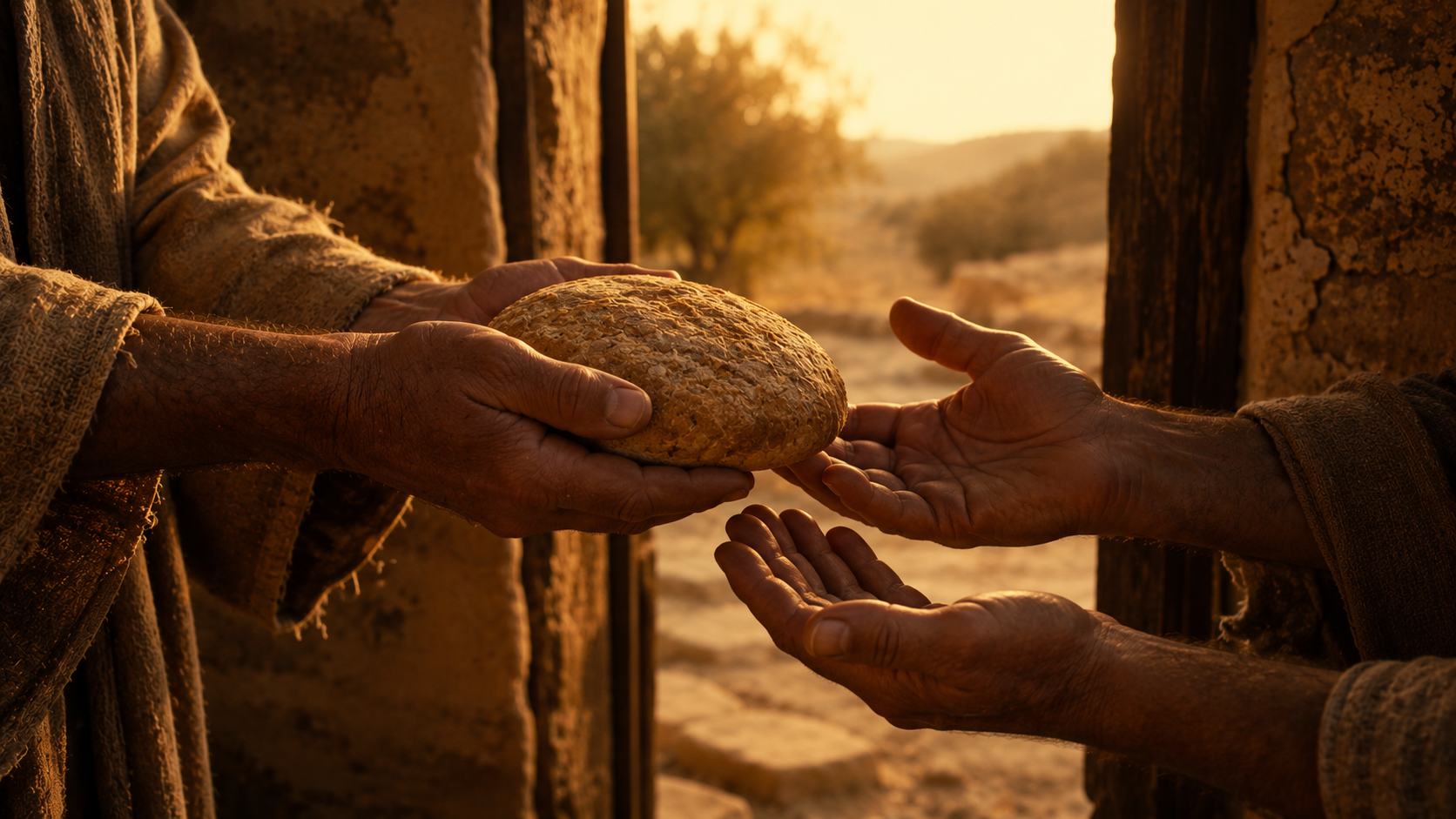
⁹ Let love be without hypocrisy. Abhor that which is evil. Cling to that which is good. ¹⁰ In love of the brothers be tenderly affectionate to one another; in honor preferring one another; ¹¹ not lagging in diligence; fervent in spirit; serving the Lord; ¹² rejoicing in hope; enduring in troubles; continuing steadfastly in prayer; ¹³ contributing to the needs of the saints; given to hospitality. ¹⁴ Bless those who persecute you; bless, and don’t curse. ¹⁵ Rejoice with those who rejoice. Weep with those who weep. ¹⁶ Be of the same mind one toward another. Don’t set your mind on high things, but associate with the humble. Don’t be wise in your own conceits. ¹⁷ Repay no one evil for evil. Respect what is honorable in the sight of all men. ¹⁸ If it is possible, as much as it is up to you, be at peace with all men. ¹⁹ Don’t seek revenge yourselves, beloved, but give place to God’s wrath. For it is written, “Vengeance belongs to me; I will repay, says the Lord.” ²⁰ Therefore “If your enemy is hungry, feed him. If he is thirsty, give him a drink; for in doing so, you will heap coals of fire on his head.” ²¹ Don’t be overcome by evil, but overcome evil with good.
- Let love be without hypocrisy (v. 9). The Greek hē agapē anypokritos (love un-hypocritical). The adjective anypokritos is built on hypokritēs, the actor who wears a mask. Hypocritical love is love performed for the appearance; unhypocritical love is love that is what it appears to be. The chapter’s whole practical-ethics section is anchored in this single phrase: the love being commanded is real love, not the performance of love.
- In honor preferring one another (v. 10). The Greek tē timē allēlous proēgoumenoi. The verb proēgeomai (to go before, to lead the way) names active honor-giving: each one giving the other honor first. The verse inverts the Greco-Roman honor culture of the imperial city: competitive honor-claiming is replaced by competitive honor-giving.
- Bless those who persecute you; bless, and don’t curse (v. 14). The chapter’s most-quoted single verse and one of the deepest cruciform commands in the Pauline corpus. The Greek eulogeite tous diōkontas hymas, eulogeite kai mē katarasthe. The command directly echoes Christ’s teaching in Matthew 5:44 (love your enemies and pray for those who persecute you) and Luke 6:28 (bless those who curse you). The verse is not abstract; it is the practical posture the Roman believers must take toward their neighbors who actively oppose their faith. Under Nero’s coming persecution (within a decade of the letter), the verse will literally cost many of these believers their lives.
Influence callout: Brian Zahnd (the cruciform reading; Sinners in the Hands of a Loving God; A Farewell to Mars)
Zahnd’s cruciform hermeneutic finds one of its deepest Pauline anchors at Romans 12:14-21. The chapter’s commands (bless those who persecute you, do not repay evil with evil, if your enemy is hungry, feed him, do not be overcome by evil but overcome evil with good) are Christ’s own teaching from the Sermon on the Mount applied directly to the actual community life Paul addresses. Zahnd’s pastoral payoff: the cruciform ethic is not an aspirational ideal; it is the apostolic command for daily Christian life. The chapter forecloses any reading of the Pauline gospel that separates the cross from the believer’s ethical posture. Cross-shaped enemy-love is not optional Christianity; it is Christianity in its Pauline-apostolic form. The chapter’s do not repay evil with evil (12:17) and do not be overcome by evil but overcome evil with good (12:21) are the practical centerpiece of the cruciform-disciple’s daily life. See the cruciform hermeneutic.
- Don’t seek revenge yourselves, beloved, but give place to God’s wrath (v. 19). The Greek mē heautous ekdikountes. The community is not to be the avenger. The reasoning: vengeance is the Lord’s. The chapter is not abolishing justice; it is re-locating the agent of justice from the wronged community to God. The verse is consistent with the Hebrew Bible’s prohibition of personal revenge (Lev 19:18, the same verse Paul has just used at 13:9 as the law’s summary) and the deferment of vengeance to YHWH (Deut 32:35, quoted here).
- If your enemy is hungry, feed him (v. 20). The quotation from Proverbs 25:21-22. The Hebrew Bible’s wisdom tradition names active kindness to enemies as the appropriate response. The verse is not Pauline innovation; it is the wisdom tradition’s own teaching applied to the Roman believers’ relationships with hostile neighbors. The coals of fire on his head image is not (in the wisdom tradition) a passive-aggressive intensification of vengeance; it is the burning shame of conscience that active kindness produces in the recipient. The verse names enemy-kindness as the most effective tool for transforming hostility.
- Don’t be overcome by evil, but overcome evil with good (v. 21). The chapter’s closing summary. The Greek mē nikō hypo tou kakou, alla nika en tō agathō to kakon. The verb nikaō (to conquer, to overcome) appears twice. Evil’s strategy is to conquer by provoking the response in kind. The Christian’s cruciform strategy is to conquer evil by responding with good. The verse is the summary of the entire chapter’s ethic and the practical-pastoral foundation of the welcome-one-another commands of chapters 14-15.
Reflection prompts
- The chapter opens with the mercies of God as the basis of every command that follows (12:1). The commands flow from the mercy; they are not separate. Where in your own life has the call to ethical living been imagined as separate from the gospel of mercy? What changes if the practice of daily mercy is the ongoing reception of the divine mercy already received?
- Be transformed by the renewing of your mind (12:2). The verse names transformation (Greek metamorphoō, the verb of Christ’s transfiguration) as the believer’s current process. The believer is being transfigured. Where in your own discipleship has transformation been imagined as a one-time conversion event with the rest being maintenance? What would daily mind-renewal require of what you read, who you spend time with, and what you let occupy your imagination?
- Bless those who persecute you; bless, and don’t curse (12:14). The command is not abstract; it names active blessing of the people who actively oppose you. Who in your current life is most actively making your life difficult? What would it look like to bless them in concrete daily ways?
- Don’t be overcome by evil, but overcome evil with good (12:21). The chapter’s closing summary names the cruciform strategy against evil. The strategy is not avoiding evil; it is responding to evil with good, refusing to let evil’s logic determine your action. Where in your own life is evil’s logic currently determining your response (with retaliation, withdrawal, anger, contempt)? What would the good response look like in that specific situation?
Frameworks at play in this chapter: the cruciform hermeneutic · gospel allegiance · Paul Within Judaism · counter-imperial reading · the new covenant