
Chapter 11 turns from the priesthood (chs. 8-10) to the people, and from the sacrifices to the kitchen table. The chapter is the Hebrew Bible’s first sustained treatment of the food laws (which animals Israel may and may not eat) and of the contagion rules (what happens when a person or object touches the carcass of an unclean animal). The whole framework of clean and unclean (see the clean and unclean framework) gets its most concrete material expression in this chapter.
The chapter has a clean fourfold structure: land animals (vv. 1-8), water creatures (vv. 9-12), birds (vv. 13-19), and winged swarming things (vv. 20-23). Each category gets its own boundary rule. Then the chapter turns to what to do when contact happens: touching the carcass of an unclean animal (vv. 24-28), the special rules for creeping things (vv. 29-38), and the rules for an animal that died naturally (vv. 39-40). The chapter closes with one of the Hebrew Bible’s most often-quoted theological capstones: be holy, for I am holy (vv. 44-45).
The chapter is not an ancient health code. It is not, primarily, about nutrition. Modern readers who hear no pork and think trichinosis are reading a hygiene category back into a theological one. The chapter is teaching that Israel eats differently because Israel is different. The food laws are identity markers, daily visible practices that distinguish the covenant community at the most fundamental level of all (the daily meal). The whole later New Testament debate about whether Gentile converts must keep these laws (Acts 10, 15; Galatians 2; Romans 14; 1 Corinthians 8-10) presumes that the laws have been functioning as identity markers — which is exactly why the question of Gentile inclusion required a council to settle. The site reads this debate, with Marty Solomon and the broader Paul within Judaism lane, as a question about Gentile obligation rather than a verdict that the chapter is retired (see the Solomon callout below).
A · Leviticus 11:1-23 · The four categories
¹ Yahweh spoke to Moses and to Aaron, saying to them, ² “Speak to the children of Israel, saying, ‘These are the living things which you may eat among all the animals that are on the earth. ³ Whatever parts the hoof, and is cloven-footed, and chews the cud among the animals, that you may eat. ⁴ “‘Nevertheless these you shall not eat of those that chew the cud, or of those that part the hoof: the camel, because it chews the cud but doesn’t have a parted hoof, is unclean to you. ⁵ The hyrax, because it chews the cud but doesn’t have a parted hoof, is unclean to you. ⁶ The hare, because it chews the cud but doesn’t part the hoof, is unclean to you. ⁷ The pig, because it has a split hoof, and is cloven-footed, but doesn’t chew the cud, is unclean to you. ⁸ Of their flesh you shall not eat, and their carcasses you shall not touch; they are unclean to you. ⁹ “‘These you may eat of all that are in the waters: whatever has fins and scales in the waters, in the seas, and in the rivers, that you may eat. ¹⁰ All that don’t have fins and scales in the seas, and in the rivers, of all that move in the waters, and of all the living creatures that are in the waters, they are an abomination to you, ¹¹ and you shall detest them. You shall not eat of their flesh, and you shall detest their carcasses. ¹² Whatever has no fins nor scales in the waters, that is an abomination to you. ¹³ “‘These you shall detest among the birds; they shall not be eaten because they are an abomination: the eagle, and the vulture, and the black vulture, ¹⁴ and the red kite, any kind of black kite, ¹⁵ any kind of raven, ¹⁶ the horned owl, the screech owl, and the gull, any kind of hawk, ¹⁷ the little owl, the cormorant, the great owl, ¹⁸ the white owl, the desert owl, the osprey, ¹⁹ the stork, any kind of heron, the hoopoe, and the bat. ²⁰ “‘All flying insects that walk on all fours are an abomination to you. ²¹ Yet you may eat these: of all winged creeping things that go on all fours, which have legs above their feet, with which to hop on the earth. ²² Even of these you may eat: any kind of locust, any kind of katydid, any kind of cricket, and any kind of grasshopper. ²³ But all winged creeping things which have four feet, are an abomination to you.
- Whatever parts the hoof, and is cloven-footed, and chews the cud among the animals, that you may eat (v. 3). The chapter’s first rule. Land animals must meet two criteria: they must have a parted (cloven) hoof (Hebrew mafriset parsah) and they must chew the cud (ma’alat gerah). The rule’s logic is categorical purity: the animal must be unambiguously a member of its kind. An animal with one trait but not the other is mixed, and mixed categories are the chapter’s organizing problem. The camel, hyrax, and hare are excluded for chewing the cud but lacking the parted hoof. The pig is excluded for the inverse (parted hoof, no cud-chewing). The chapter is not arbitrary: it is teaching, through the animal categories, that YHWH’s creation has clear types, and Israel honors the types in what it eats.
- The pig (v. 7). The chapter’s most theologically loaded single animal. The pig has been the focus of more interpretation, both ancient and modern, than any other dietary prohibition. The Maccabean martyrs would die rather than eat pork (1 Macc 1:62-63; 2 Macc 6:18-31; 7); the pig became the symbol of Hellenistic compromise in Jewish memory. The pig’s categorical confusion (looks like a clean animal in its hooves, fails the test on its digestion) makes it, in the chapter’s grammar, the visible emblem of the mixed kind. The whole Hebrew Bible’s later imagery of the unclean swine (Isa 65:4; 66:17, the Sus-eaters of YHWH’s judgment) draws on this verse.
- Whatever has fins and scales in the waters (v. 9). The water rule. The fish must have both fins (senapir) and scales (qasqeset). The rule excludes catfish (scaleless), eels (scaleless), shellfish (no fins), shrimp (no fins or scales), squid and octopus (no fins or scales), and whales (no scales, despite having fins). The same categorical-purity logic applies: the creature must look unambiguously like a fish in its habitat. Anything aquatic that has clearly non-fish characteristics (segmented like an insect, slithering like a snake, shelled like a land creature) is excluded.
- Among the birds (vv. 13-19). The chapter does not give a categorical rule for birds (the way it does for land animals and fish); it lists specific prohibited species. The list includes eagles, vultures, kites, ravens, owls, hawks, herons, the hoopoe, and the bat (which the Hebrew Bible’s taxonomy classifies with birds because of its wings; modern biological classification of the bat as a mammal was unknown). What unites the listed birds, scholars argue, is they all eat meat or carrion. The clean birds (chickens, pigeons, doves, quail, geese) are seed-and-vegetation eaters. The chapter’s logic, again: life-eating creatures are excluded. The clean birds are life-friendly creatures.
- All flying insects that walk on all fours are an abomination to you. Yet you may eat these: … any kind of locust (vv. 20-22). The chapter’s permission for locusts (and katydids, crickets, grasshoppers) is the chapter’s most surprising allowance. John the Baptist will live on this verse: his diet of locusts and wild honey (Mt 3:4; Mk 1:6) is exactly the Levitical permission. The chapter is teaching that the food rules are not about modern Western palatability; they are about categorical purity. The grasshopper, which has jointed legs above its feet to hop, fits its category cleanly. The crawling insect (cockroach, beetle) does not.
Word study: sheqetz (שֶׁקֶץ) — “abomination, detestable thing”
The Hebrew sheqetz (and its related verb shaqatz, to detest) names the chapter’s emotional vocabulary for the prohibited animals. The word’s range is visceral revulsion: not merely “disallowed” but deeply repugnant. The chapter is teaching that the food laws operate not only on the level of rule-keeping but on the level of trained sensibility. The Israelite who has internalized the laws is meant to find the prohibited foods physically distasteful, not merely to refrain by intellectual choice. The same word sheqetz will later name idolatrous practices (Deut 7:26; 29:17) and the abomination of desolation (Dan 11:31; 12:11; the Greek bdelygma tes eremoseos of Mt 24:15). The chapter is laying the foundation for the Hebrew Bible’s deeper grammar of abomination: a category that runs from forbidden food through forbidden worship through eschatological evil. To say something is sheqetz is to name it as belonging in the same category as the prohibited animals: a violation of created kind, recognizable to the trained sensibility as out-of-place.
B · Leviticus 11:24-38 · Defilement by contact
²⁴ “‘By these you will become unclean: whoever touches their carcass shall be unclean until the evening. ²⁵ Whoever carries any part of their carcass shall wash his clothes, and be unclean until the evening. ²⁶ “‘Every animal which parts the hoof, and is not cloven-footed, nor chews the cud, is unclean to you. Everyone who touches them shall be unclean. ²⁷ Whatever goes on its paws, among all animals that go on all fours, they are unclean to you. Whoever touches their carcass shall be unclean until the evening. ²⁸ He who carries their carcass shall wash his clothes, and be unclean until the evening. They are unclean to you. ²⁹ “‘These are they which are unclean to you among the creeping things that creep on the earth: the weasel, the rat, any kind of great lizard, ³⁰ the gecko, and the monitor lizard, the wall lizard, the skink, and the chameleon. ³¹ These are they which are unclean to you among all that creep. Whoever touches them when they are dead, shall be unclean until the evening. ³² Anything they fall on when they are dead shall be unclean; whether it is any vessel of wood, or clothing, or skin, or sack, whatever vessel it is, with which any work is done, it must be put into water, and it shall be unclean until the evening; then it will be clean. ³³ Every earthen vessel, into which any of them falls, all that is in it shall be unclean, and you shall break it. ³⁴ All food which may be eaten, that on which water comes, shall be unclean; and all drink that may be drunk in every such vessel shall be unclean. ³⁵ Everything whereupon part of their carcass falls shall be unclean; whether oven, or range for pots, it shall be broken in pieces: they are unclean, and shall be unclean to you. ³⁶ Nevertheless a spring or a cistern in which water is gathered shall be clean: but that which touches their carcass shall be unclean. ³⁷ If part of their carcass falls on any sowing seed which is to be sown, it is clean. ³⁸ But if water is put on the seed, and part of their carcass falls on it, it is unclean to you.
- By these you will become unclean: whoever touches their carcass shall be unclean until the evening (v. 24). The chapter introduces contagion-of-impurity logic. Contact with a dead unclean animal makes the toucher also unclean (cf. the clean and unclean framework on the asymmetry: impurity transmits, holiness does not). The unclean state lasts until the evening, marked by the standard purification of washing the clothes (v. 25) and bathing (assumed). The chapter is teaching that impurity is a state, not a verdict; it has a beginning and an end.
- Until the evening (vv. 24, 25, 27, 28, 31, 32, 39, 40). The chapter’s most-repeated phrase. The Hebrew is ad ha-arev. The day, in the Hebrew Bible’s reckoning, begins at evening (Gen 1:5, there was evening and there was morning, the first day; Lev 23:32 names the Sabbath as observed from evening to evening). The chapter is teaching that the next day brings a fresh start. The impurity does not persist indefinitely. The pastoral note is generous: the system has built-in reset points, not endless guilt.
- Every earthen vessel, into which any of them falls, all that is in it shall be unclean, and you shall break it (v. 33). The clay pot rule of 6:28 returns in the food-law context. Porous materials (clay, earthen vessels) cannot be cleansed from impurity contact; they must be broken. Non-porous materials (water-resistant wood, leather, fabric) can be cleansed by water and time. The chapter is treating materiality with the same care it took with the chatta’t-meat-cooking pot.
- A spring or a cistern in which water is gathered shall be clean (v. 36). The chapter’s important exception. Standing water that gathers (a spring; a mikveh-pool; a cistern) is not defiled by a dead carcass falling into it. The chapter is teaching that living water (water connected to the ground, water in motion, water in a natural body) is self-purifying. The same principle will run through the Hebrew Bible’s later theology of mayim chayyim, living water (Jer 2:13; 17:13; Zech 14:8; Jn 4:10-14; 7:38). The whole rabbinic and later Christian theology of the mikveh (the immersion pool for purification, the structural ancestor of the baptistery) reads forward from this verse: water that is connected to a source purifies; water that is merely stored in a vessel can be polluted.
- If part of their carcass falls on any sowing seed which is to be sown, it is clean (v. 37). The chapter’s other significant exception. Dry seed does not absorb impurity. Only after water is added (v. 38) does the seed become defileable. The principle: moisture is the medium of contamination. The same principle runs through ancient food-storage practice (dry grain keeps; wet grain spoils). The chapter is teaching, again, that the system makes sense at the material level: it observes how decay actually spreads in the physical world.
C · Leviticus 11:39-47 · The capstone
³⁹ “‘If any animal of which you may eat dies; he who touches its carcass shall be unclean until the evening. ⁴⁰ He who eats of its carcass shall wash his clothes, and be unclean until the evening. He also who carries its carcass shall wash his clothes, and be unclean until the evening. ⁴¹ “‘Every creeping thing that creeps on the earth is an abomination. It shall not be eaten. ⁴² Whatever goes on its belly, and whatever goes on all fours, or whatever has many feet, even all creeping things that creep on the earth, them you shall not eat; for they are an abomination. ⁴³ You shall not make yourselves abominable with any creeping thing that creeps, neither shall you make yourselves unclean with them, that you should be defiled thereby. ⁴⁴ For I am Yahweh your God. Sanctify yourselves therefore, and be holy; for I am holy: neither shall you defile yourselves with any kind of creeping thing that moves on the earth. ⁴⁵ For I am Yahweh who brought you up out of the land of Egypt, to be your God. You shall therefore be holy, for I am holy. ⁴⁶ “‘This is the law of the animal, and of the bird, and of every living creature that moves in the waters, and of every creature that creeps on the earth, ⁴⁷ to make a distinction between the unclean and the clean, and between the living thing that may be eaten and the living thing that may not be eaten.’”
- If any animal of which you may eat dies; he who touches its carcass shall be unclean (v. 39). Even clean animals (sheep, goats, cattle) become defiling agents when they have died naturally (rather than being killed by ritual slaughter). The chapter is teaching that the act of proper slaughter is itself a purification. The animal that dies without the worshipper’s intentional act of ritual killing remains carcass (Hebrew nevelah) in the impure category. The whole later Jewish tradition of kashrut (kosher slaughter, shechita) is built on this verse’s distinction.
- Whatever goes on its belly, and whatever goes on all fours, or whatever has many feet (v. 42). The chapter’s final list. Snakes (go on the belly), rats and lizards (go on all fours), centipedes (have many feet). The chapter is teaching, by exhaustive enumeration, that the creeping things are categorically outside the clean category. The criterion is locomotion: clean creatures move in a normal way for their kind (walking, swimming with fins, flying with wings, hopping). The creeping creatures move in anomalous ways.
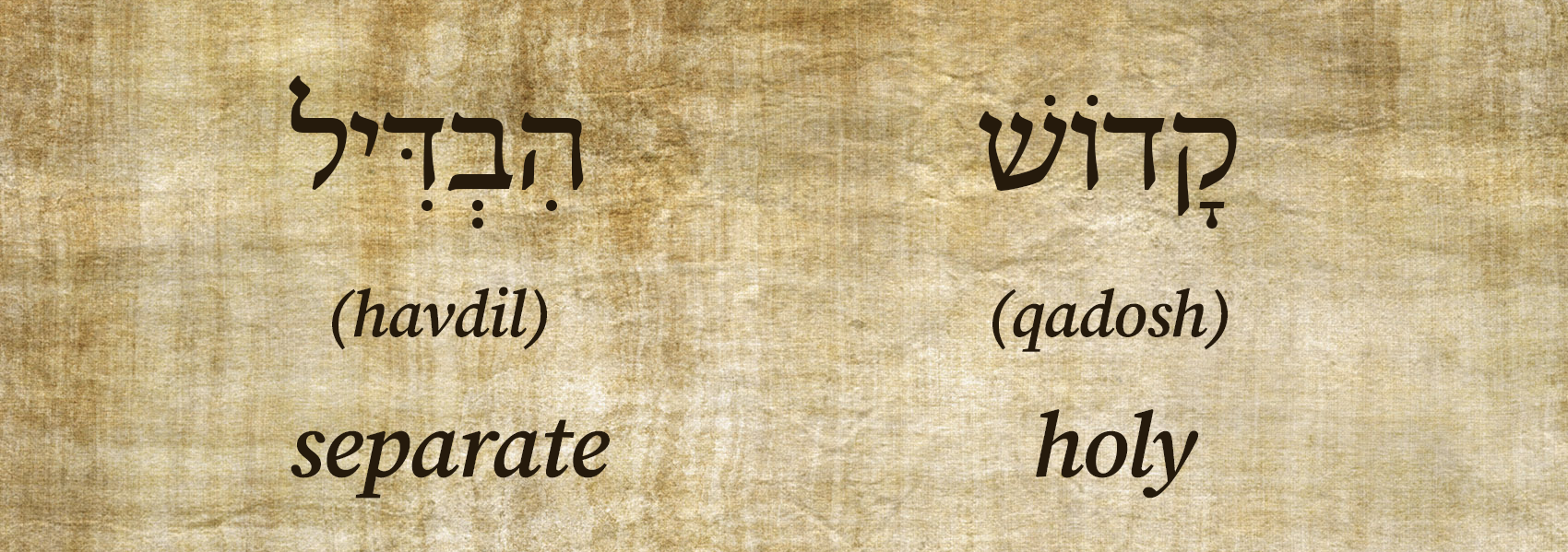
- Sanctify yourselves therefore, and be holy; for I am holy (v. 44). The chapter’s theological capstone. The Hebrew is vehit-qaddishtem vihyitem qedoshim ki qadosh ani. The reflexive vehit-qaddishtem names the active self-consecrating the people must perform; the active vihyitem qedoshim names the being-holy state they must enter; the indicative ki qadosh ani names the grounding reason: YHWH is holy. The chapter is delivering the most-quoted theological line in the book. Peter will quote it at 1 Peter 1:15-16 in his foundational call to Christian holiness. The whole later Christian doctrine of sanctification reads forward from this verse.
- For I am Yahweh who brought you up out of the land of Egypt, to be your God (v. 45). The Exodus-grounding of the holiness command. Israel is to be holy because YHWH delivered them. The covenant-historical event grounds the daily-practice requirement. The chapter is teaching that the food laws are not arbitrary; they are the daily memorial of the Exodus. Every meal is a re-performance of the people’s distinct status as the redeemed. The whole later Hebrew Bible’s theology of eating as memorial (the Passover meal; the todah of Lev 7; the shelamim of Lev 3) is anchored here.
- To make a distinction between the unclean and the clean, and between the living thing that may be eaten and the living thing that may not be eaten (v. 47). The chapter closes with the same verb (l’havdil, to distinguish) that Genesis 1 used for YHWH’s creation-week separations. The chapter is teaching that the Israelite who keeps the food laws is performing, at the kitchen table, the same kind of separating-act YHWH performed at creation. To honor the categories is to participate in YHWH’s creative ordering. The whole later Christian tradition’s theology of humans as image-bearers who participate in God’s ordering of the world (Gen 1:26-28) reads forward from this concluding verse.
Influence callout: Mary Douglas (Purity and Danger; Leviticus 11 as coherent symbolic system)
Douglas’s 1966 anthropological reading of Leviticus 11 reshaped the modern scholarly conversation about the food laws. Before Douglas, most Christian and Jewish readings treated the chapter either as hygienic (an ancient health code, anticipating modern medicine) or as arbitrary (a divine test of obedience, with no internal logic). Douglas argued that neither reading is right. The chapter, she demonstrated, operates inside a coherent symbolic system. The clean creatures are those that fit their habitat’s normal type: land animals walk on cloven hooves and chew the cud; fish swim with fins and scales; birds fly with feathers and eat seeds. The unclean creatures are categorical anomalies: animals that have one of two required traits but not the other; sea creatures that move like land animals; land creatures that move like sea creatures; flying creatures that walk on the ground. Douglas’s interpretive key: the chapter’s logic mirrors Genesis 1’s creation-by-separation. YHWH created the world by separating (light from darkness, waters from waters, day from night, kinds from kinds; Gen 1:4, 7, 14, 18). The Israelite who keeps the food laws honors the separations YHWH made. Each unclean animal is, in Douglas’s reading, a visible symbol of categorical breakdown. The pastoral payoff: the chapter is teaching that creation has order, and that honoring the order is itself worship. Douglas’s reading has had enormous influence on Christian theology since 1966 (her work is foundational for Tim Mackie’s BibleProject videos on the food laws and for most modern conservative-and-progressive theological readings alike). She did not interpret Leviticus 11 to vindicate it for Christians; she interpreted it to show that the chapter was never the irrational primitive code modern readers assumed. It was, all along, a sophisticated theology embedded in everyday practice.
Influence callout: Marty Solomon (Bema, “Unclean Sheets”; Peter’s vision is not about food)
Solomon’s reading of Acts 10, which has shaped the popular-level Paul within Judaism lane this site reads from, refuses the standard Christian assumption that Peter’s vision in Acts 10 declared all foods clean and retired the Levitical food laws. The vision, Solomon argues, has Peter himself interpret it for us at v. 28: “God has shown me that I should not call any person common or unclean” (ESV). The Greek emphasizes anthropon — any human being — not any food. When the sheet descends, Peter refuses three times to eat because the animals on it are still unclean by the Torah he has kept his whole life. The voice does not say these are now clean; it says do not call unclean what God has called clean. The what in question, Peter realizes when the messengers from Cornelius arrive at the door, is the Gentile household waiting down the road, not the animals on the sheet.
Solomon’s reading reverses the standard Christian assumption about the chapter’s afterlife. The Torah’s food laws remain in force for Jewish believers in Messiah (Solomon himself keeps kosher); what Acts 10 settles is that Gentiles do not need to become Jews first to be full members of the messianic community. The whole later Pauline debate about circumcision and food (Galatians, Romans 14, 1 Corinthians 8-10) is, on this reading, not “the works of the law don’t save you so abandon them” but “Jewish identity markers don’t make Jews superior to Gentiles before God; only pistis (faith / faithful allegiance, as Matthew Bates has developed it) counts. So a Jew who follows Yeshua should be a faithful Jew, and a Gentile who follows Yeshua should be a faithful Gentile.” Neither needs to become the other. Both belong to the Messiah’s family.
The pastoral payoff is significant. Leviticus 11 is not a retired chapter that the church has graduated from. For Jewish believers, its specific applications still stand. For Gentile believers, the chapter’s principle (covenant identity is registered in visible daily bodily practice) still stands; only the specific applications differ, and those need to be discerned within the Gentile believer’s actual life rather than imported wholesale from Sinai.
Where this lands: Identity in the kitchen
Many Christians have inherited a thousand-year habit of skipping Leviticus 11. Doesn’t apply to me anymore, the reasoning goes — Acts 10 took care of it. But that’s a misread of Acts 10 (see the Solomon callout above), and even setting it aside, the chapter’s principle has not retired.
The chapter is teaching that covenant identity is registered in daily bodily practice. The most ordinary act of every day, the meal, is one of the places the people who belong to YHWH look visibly different from the people who don’t. For Jewish believers in Messiah, the chapter’s specific applications still stand. For Gentile believers, the question is different but not absent: what are the visible daily bodily practices that mark you as belonging to YHWH?
If the food rules don’t form your particular boundary, something must do the work they used to do: Sabbath rest, verbal blessing of food (the berakhah Jewish tradition has preserved and the Christian grace before meals faintly echoes), fasting on particular days, giving away a fixed percentage of every paycheck, saying the daily office, refusing certain entertainment, observing the liturgical calendar with your body. Leviticus 11 won’t tell you exactly which ones. But it will refuse to let you say invisible identity is enough.
If your faith has no daily-visible bodily form, the chapter is asking you to find one. Be holy, for I am holy is not a feeling. It is the patterns of your kitchen, your calendar, and your week.
Reflection prompts
- The chapter teaches that Israel eats differently because Israel is different. The food laws are identity markers, not health rules. What are your visible daily practices that mark you as belonging to YHWH? If you struggle to name any, what would it cost to develop one?
- The chapter ends with be holy, for I am holy. The command is grounded in YHWH’s own character, not in moral improvement. How does the grounding change the command? What’s different about imitating who YHWH is versus meeting a moral standard?
- The clean creatures fit their habitat’s normal type; the unclean creatures are categorical anomalies. The chapter is teaching that honoring created order is itself worship. Where in your own life have you been honoring the categories YHWH made (your body’s limits, the seasons, the Sabbath, the relationships you were given), and where have you been crossing them in ways the chapter would diagnose?
Frameworks at play in this chapter: the clean and unclean, Paul Within Judaism, gospel allegiance, the five offerings, the tabernacle as cosmic temple.