
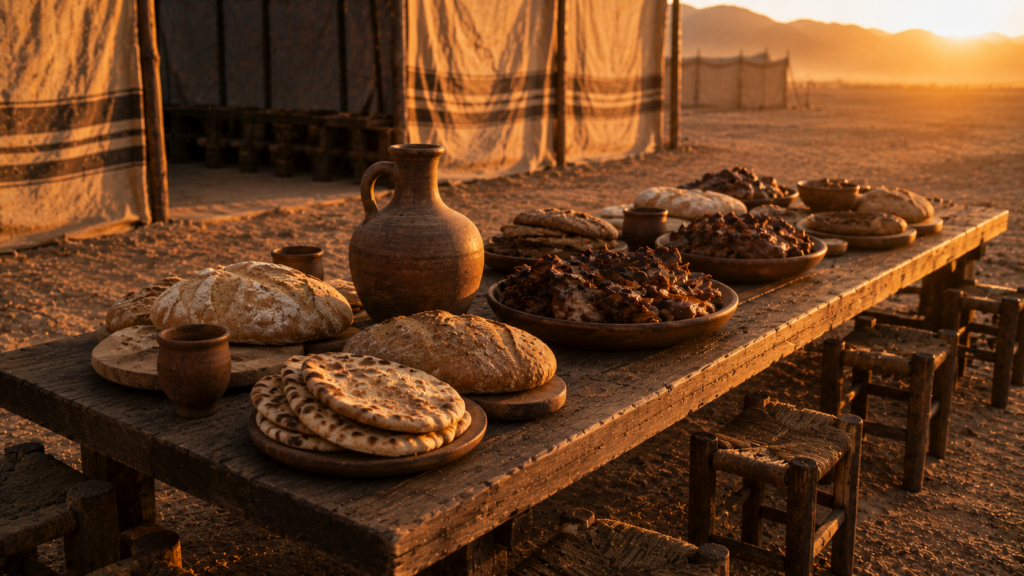
Chapter 7 closes the sacrificial unit of chapters 1-7. After the worshipper’s instructions (1-5) and the priests’ regulations for the olah, minchah, and chatta’t (6), the chapter delivers the priests’ instructions for the asham (vv. 1-10) and the shelamim (vv. 11-21), repeats and expands the perpetual prohibition on eating fat and blood (vv. 22-27), specifies the priestly portions of the shelamim (vv. 28-36), and concludes with the most explicit closing colophon in the book (vv. 37-38).
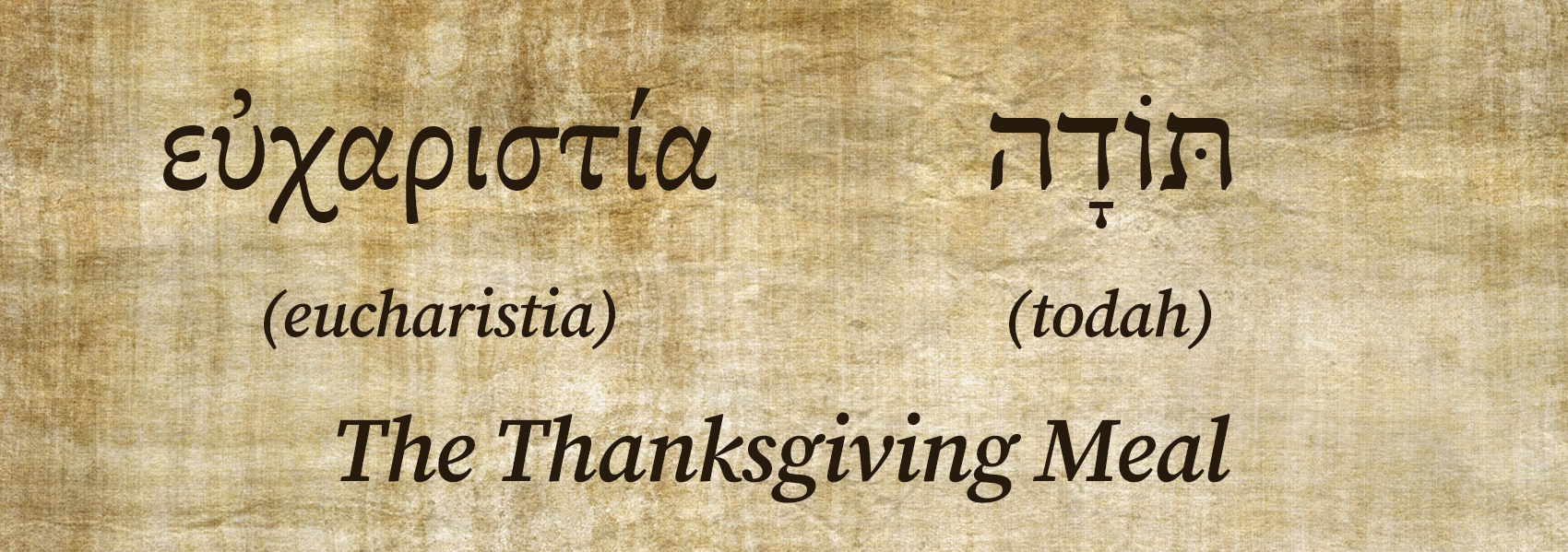
The chapter’s most theologically significant section is the shelamim taxonomy at vv. 11-21. The chapter recognizes three subtypes of peace offering: the todah (thanksgiving offering), the neder (vow offering), and the nedavah (freewill offering). Each has its own occasion, its own constraints, and its own eating-timeline. The todah in particular is the seed of the New Testament’s central liturgical word, eucharistia: the chapter is establishing the Hebrew Bible’s thanksgiving meal that the early church will continue and re-center in Christ.
The chapter’s closing colophon (vv. 37-38) summarizes all five of the five offerings and names the location and date of the instruction: Mount Sinai, on the day he commanded the children of Israel to offer their offerings to YHWH in the wilderness of Sinai. The book is signaling that chapters 1-7 are a unified sacrificial code delivered as a single instruction-block at the foundation moment.
A · Leviticus 7:1-10 · The asham and the priests’ share
¹ “‘This is the law of the trespass offering: it is most holy. ² In the place where they kill the burnt offering, he shall kill the trespass offering; and its blood he shall sprinkle around on the altar. ³ He shall offer all of its fat: the fat tail, and the fat that covers the innards, ⁴ and the two kidneys, and the fat that is on them, which is by the loins, and the cover on the liver, with the kidneys, shall he take away; ⁵ and the priest shall burn them on the altar for an offering made by fire to Yahweh: it is a trespass offering. ⁶ Every male among the priests may eat of it. It shall be eaten in a holy place. It is most holy. ⁷ “‘As is the sin offering, so is the trespass offering; there is one law for them. The priest who makes atonement with them shall have it. ⁸ The priest who offers any man’s burnt offering, even the priest shall have for himself the skin of the burnt offering which he has offered. ⁹ Every meal offering that is baked in the oven, and all that is dressed in the pan, and on the griddle, shall be the priest’s who offers it. ¹⁰ Every meal offering, mixed with oil or dry, belongs to all the sons of Aaron, one as well as another.
- It is most holy (v. 1). The chapter opens by classifying the asham in the qodesh qodashim (most holy) category alongside the minchah (6:17) and the chatta’t (6:25). The same eating-rules apply: priestly males only, in the holy precinct. The asham‘s blood-application also matches the chatta’t‘s: applied to the outer altar’s horns, not brought into the Tent (cf. ch. 5 and the kipper / atonement framework).
- As is the sin offering, so is the trespass offering; there is one law for them. The priest who makes atonement with them shall have it (v. 7). The chapter equates the chatta’t and asham in the priests’ handling. Both go to the priest who performs the ritual. The chapter is solving a logistical question: which priest gets the meat when multiple priests are on duty? The answer is the one who performed the rite. The system has a direct line between work and recompense, not a pooled-tip arrangement.
- The priest who offers any man’s burnt offering, even the priest shall have for himself the skin of the burnt offering (v. 8). The olah is wholly burnt, but the skin (Hebrew or) is removed before the burning and goes to the priest. This is the chapter’s first naming of the priestly portion in the olah. Even the wholly-ascending offering produces a priestly portion: the animal’s hide, which has obvious economic value (leather, garment-making, sale at market). The chapter is preserving the chapter-6 principle: the priests live inside the offerings, even the offering whose meat ascends entirely.
- Every meal offering that is baked in the oven … shall be the priest’s who offers it. Every meal offering, mixed with oil or dry, belongs to all the sons of Aaron, one as well as another (vv. 9-10). The chapter distinguishes cooked grain offerings (which go to the offering priest individually) from raw grain offerings (which go to all of Aaron’s sons equally). The mechanics are practical: cooked food spoils quickly and must be eaten the same day; raw flour keeps and can be distributed. The chapter is treating priestly food-economics with the realism of a small-business operations manual.
B · Leviticus 7:11-21 · The three shelamim variants
¹¹ “‘This is the law of the sacrifice of peace offerings, which one shall offer to Yahweh. ¹² If he offers it for a thanksgiving, then he shall offer with the sacrifice of thanksgiving unleavened cakes mixed with oil, and unleavened wafers anointed with oil, and cakes mixed with oil. ¹³ With cakes of leavened bread he shall offer his offering with the sacrifice of his peace offerings for thanksgiving. ¹⁴ Of it he shall offer one out of each offering for a heave offering to Yahweh. It shall be the priest’s who sprinkles the blood of the peace offerings. ¹⁵ The flesh of the sacrifice of his peace offerings for thanksgiving shall be eaten on the day of his offering. He shall not leave any of it until the morning. ¹⁶ “‘But if the sacrifice of his offering is a vow, or a freewill offering, it shall be eaten on the day that he offers his sacrifice; and on the next day what remains of it shall be eaten: ¹⁷ but what remains of the flesh of the sacrifice on the third day shall be burned with fire. ¹⁸ If any of the flesh of the sacrifice of his peace offerings is eaten on the third day, it will not be accepted, neither shall it be imputed to him who offers it. It will be an abomination, and the soul who eats any of it will bear his iniquity. ¹⁹ “‘The meat that touches any unclean thing shall not be eaten. It shall be burned with fire. As for the meat, everyone who is clean may eat it; ²⁰ but the soul who eats of the meat of the sacrifice of peace offerings that belongs to Yahweh, having his uncleanness on him, that soul shall be cut off from his people. ²¹ When anyone touches any unclean thing, the uncleanness of man, or an unclean animal, or any unclean abomination, and eats some of the meat of the sacrifice of peace offerings, which belong to Yahweh, that soul shall be cut off from his people.’”
- If he offers it for a thanksgiving (v. 12). The chapter names the first of three shelamim subtypes: the todah, the thanksgiving offering. The todah is brought in response to a specific deliverance: rescue from illness (Ps 30, 116), rescue from enemies (Ps 18), rescue from prison or peril (Ps 107, the four-fold let them give thanks-refrain). The whole Hebrew Bible’s *toda*h theology presupposes this chapter’s mechanics. The Psalter’s thank-offering psalms (Ps 50:14, 23; 56:12; 95:2; 100:4; 107:22; 116:17) are the verbal counterpart to the chapter’s sacrificial practice. The worshipper says the thanksgiving aloud and brings the thanksgiving sacrifice in the same liturgical moment.
- Unleavened cakes mixed with oil, and unleavened wafers anointed with oil, and cakes mixed with oil. With cakes of leavened bread he shall offer his offering (vv. 12-13). The todah is the only offering that explicitly includes leavened bread (along with three kinds of unleavened bread). The leavened loaves are not burned on the altar (recall 2:11-12, leaven cannot ascend); they accompany the meal that the worshipper, the priest, and the family eat together. The chapter is building the largest peace-offering meal: the worshipper brings an animal and four kinds of bread, including the celebratory leavened loaves the household eats at feasts. The todah is a banquet, not a sober rite.
Word study: todah (תּוֹדָה) — “thanksgiving”
The Hebrew todah is built on the verb-root yadah (to acknowledge openly, to confess; cf. the word study on yadah at Lev 5:5). The same root names confession of failure and thanksgiving for deliverance: both are open acknowledgments. The todah offering is the spoken-out-loud thanksgiving of a worshipper whose deliverance has been granted, accompanied by the largest sacrificial meal in the Hebrew Bible’s everyday liturgy. The Psalter records the worshipper’s words: I will offer to you the sacrifice of thanksgiving and will call on the name of YHWH (Ps 116:17). The Septuagint translates todah as aineseos or eucharistias; the Hebrew Bible’s todah-vocabulary is the etymological ancestor of the New Testament’s eucharistia. When Jesus took the bread and gave thanks (Mt 26:26, eulogesas; Lk 22:19, eucharistesas) and instituted the Lord’s Supper, he was performing, in his own register, the todah-meal of Leviticus 7:12-15. The early church’s name for the practice (eucharist) is the Septuagint’s translation of the Levitical thanksgiving offering. The whole Christian liturgical tradition’s central practice is the todah-shaped meal, re-centered on Christ’s deliverance as the deliverance worth thanking.
- The flesh of the sacrifice of his peace offerings for thanksgiving shall be eaten on the day of his offering. He shall not leave any of it until the morning (v. 15). The todah‘s meat must be eaten the same day. The constraint forces the worshipper to invite a large group to share the meal. A bull, a goat, or even a lamb is too much meat for one household to consume in a single day before the meat spoils. The todah‘s structural mechanic demands that the thanksgiving be publicly celebrated with the community. The Hebrew Bible is teaching, by the time-constraint, that gratitude is a social practice. You cannot have a private todah.
- But if the sacrifice of his offering is a vow, or a freewill offering (v. 16). The chapter names the second and third shelamim subtypes. The neder (vow offering) fulfills a prior promise the worshipper made to YHWH (if you do X, I will offer Y; cf. Hannah’s vow at 1 Sam 1:11; Jacob’s at Gen 28:20-22). The nedavah (freewill offering) is brought spontaneously, without triggering occasion. The two are allowed two days to eat the meat. The constraint is less strict than the todah‘s because the neder and nedavah are not occasioned by a specific deliverance that requires immediate public celebration; they are quieter expressions of devotion or fulfillment of obligation.
- Will be an abomination (v. 18). The Hebrew is piggul yihyeh, “it shall be piggul.” The word piggul names foul, rejected, putrid sacrificial meat. The Hebrew Bible uses the word only a handful of times (Lev 7:18; 19:7; Isa 65:4; Ezek 4:14), and always in the sacrificial context. Meat eaten too late becomes piggul and retroactively annuls the offering’s acceptance. The chapter is teaching that the offering’s timing matters as much as its substance. A todah on day two is not a delayed todah; it is a spoiled one.
- That soul shall be cut off from his people (vv. 20, 21). The chapter introduces the karet penalty (cutting off from the community) for eating shelamim meat while in a state of uncleanness. The karet is the Hebrew Bible’s most severe non-capital penalty, used for the most grievous covenant violations (Sabbath profanation, Ex 31:14; eating leaven during Passover, Ex 12:15, 19; sacrificing children to Molech, Lev 20:1-5). The chapter is treating unclean eating of holy meat as a covenant-breaking offense, not a procedural error.
C · Leviticus 7:22-27 · The fat and blood prohibition (extended)
²² Yahweh spoke to Moses, saying, ²³ “Speak to the children of Israel, saying, ‘You shall eat no fat, of bull, or sheep, or goat. ²⁴ The fat of that which dies of itself, and the fat of that which is torn of animals, may be used for any other service, but you shall in no way eat of it. ²⁵ For whoever eats the fat of the animal which men offer as an offering made by fire to Yahweh, even the soul who eats it shall be cut off from his people. ²⁶ You shall not eat any blood, whether it is of bird or of animal, in any of your dwellings. ²⁷ Whoever it is who eats any blood, that soul shall be cut off from his people.’”
- You shall eat no fat, of bull, or sheep, or goat (v. 23). The chapter extends 3:17’s perpetual prohibition. The Hebrew clarifies that the prohibition specifically covers the three sacrificial animals’ fat. The fat of non-sacrificial animals (deer, gazelle, etc., the animals an Israelite hunts rather than offers; see Deut 12:15-16) can be eaten. The constraint is keyed to what could have been brought to the altar: the Israelite cannot privately eat what would have belonged to YHWH.
- The fat of that which dies of itself, and the fat of that which is torn of animals, may be used for any other service (v. 24). The fat of an animal that died naturally or was killed by a predator was not eligible to be brought to the altar (the offering must be killed by the worshipper). Such fat is not YHWH’s portion, so the prohibition on eating YHWH’s fat does not apply. But the same fat is not edible either (the animal’s death has rendered it ritually problematic). The chapter resolves the case: the fat can be used for any other service (lamp oil, leather treatment, soap, lubrication) but not eaten.
- Whoever eats the fat … shall be cut off (v. 25). The same karet penalty as v. 20. The chapter is treating the fat-prohibition as a covenant-level matter, not a kitchen-level preference.
- You shall not eat any blood, whether it is of bird or of animal, in any of your dwellings (v. 26). The blood prohibition extends to all animals, not just the sacrificial three. The whole Hebrew Bible’s blood-theology (Lev 17:10-14, the life of the flesh is in the blood) is built on this verse. The Acts council’s instruction to Gentile converts to abstain from blood (Acts 15:20, 29) is reading this verse forward into the early church’s life. The chapter’s blood-prohibition is one of the few Levitical food rules the New Testament carries forward explicitly.
D · Leviticus 7:28-38 · The priestly portions and the colophon
²⁸ Yahweh spoke to Moses, saying, ²⁹ “Speak to the children of Israel, saying, ‘He who offers the sacrifice of his peace offerings to Yahweh shall bring his offering to Yahweh out of the sacrifice of his peace offerings. ³⁰ With his own hands he shall bring the offerings of Yahweh made by fire. He shall bring the fat with the breast, that the breast may be waved for a wave offering before Yahweh. ³¹ The priest shall burn the fat on the altar, but the breast shall be Aaron’s and his sons’. ³² The right thigh you shall give to the priest for a heave offering out of the sacrifices of your peace offerings. ³³ He among the sons of Aaron who offers the blood of the peace offerings, and the fat, shall have the right thigh for a portion. ³⁴ For the waved breast and the heaved thigh I have taken from the children of Israel out of the sacrifices of their peace offerings, and have given them to Aaron the priest and to his sons as their portion forever from the children of Israel.’” ³⁵ This is the consecrated portion of Aaron, and the consecrated portion of his sons, out of the offerings of Yahweh made by fire, in the day when he presented them to minister to Yahweh in the priest’s office; ³⁶ which Yahweh commanded to be given them of the children of Israel, in the day that he anointed them. It is their portion forever throughout their generations. ³⁷ This is the law of the burnt offering, of the meal offering, and of the sin offering, and of the trespass offering, and of the consecration, and of the sacrifice of peace offerings; ³⁸ which Yahweh commanded Moses in Mount Sinai, in the day that he commanded the children of Israel to offer their offerings to Yahweh, in the wilderness of Sinai.
- With his own hands he shall bring the offerings of Yahweh made by fire (v. 30). The worshipper, not the priest, carries the offering to the altar. The chapter is preserving the lay agency of chapter 1: the offerer’s own hands do the work of bringing. The whole later New Testament theology of no mediator between worshipper and altar except Christ (1 Tim 2:5) has, in this chapter, an unexpected Levitical hint: even in the high-priestly system, the offerer’s hands remain central.
- The breast may be waved for a wave offering before Yahweh (v. 30). The Hebrew is le-haniph oto tenufah, “to wave it as a tenufah.” The verb nuph means to wave back and forth. The breast of the shelamim is waved in the priest’s hands as a presentation gesture (some scholars argue the tenufah is a back-and-forth motion symbolizing giving to YHWH and receiving back; others argue it is an elevation gesture). Whatever the mechanics, the breast goes to all the priests.
- The right thigh you shall give to the priest for a heave offering (v. 32). The Hebrew is terumah, “lifted up.” The right thigh (the more developed of the two thigh muscles in a quadruped) goes to the specific priest who performed the ritual. The same divide as 7:7-10: the part waved (the breast) is shared communally; the part lifted up (the thigh) goes individually. The chapter is making distinctions priests would have known by heart but lay worshippers might have missed.
- This is the law of the burnt offering, of the meal offering, and of the sin offering, and of the trespass offering, and of the consecration, and of the sacrifice of peace offerings (v. 37). The closing colophon names all five offerings plus a sixth: the consecration (Hebrew milluim). The milluim (filling, ordination) is the special sacrifice for the priests’ installation, which chapter 8 will narrate. The colophon is forward-pointing: the next chapter’s narrative is announced in the closing summary of the legal unit.
- Which Yahweh commanded Moses in Mount Sinai, in the day that he commanded the children of Israel to offer their offerings (v. 38). The chapter dates the entire unit at Sinai, the foundation moment. The whole sacrificial system is grounded not in Israel’s gradual development of cult practice but in the one-time covenantal disclosure at Sinai. Whatever historical-critical questions remain about the documents behind Leviticus, the book itself presents the offering-system as a unified Sinaitic gift. The whole later prophetic tradition’s appeal back to Sinai (Mal 4:4, remember the law of my servant Moses, the statutes and rules I commanded him at Horeb) reads this verse forward.
Influence callout: Brian Zahnd (the todah as the seed of the eucharist)
Zahnd’s reading of Leviticus 7’s thanksgiving offering names the chapter’s deepest contribution to the Christian liturgical tradition. The todah, Zahnd argues, is the Hebrew Bible’s largest celebratory meal: a worshipper whose deliverance has been granted brings a sacrifice and four kinds of bread and gathers a large group to consume the meat the same day. The structural mechanic forces communal celebration. When Jesus, on the night of his betrayal, took the bread and gave thanks (Greek eucharistesas, the Septuagint’s translation of todah), he was performing the thanksgiving meal the Hebrew Bible had been teaching Israel to celebrate. The cross is the deliverance; the resurrection is its confirmation; the eucharist is the todah-meal that responds. Zahnd’s pastoral payoff: the church’s central liturgical practice is the Levitical todah-meal re-centered on the largest deliverance imaginable. To say do this in remembrance of me (Lk 22:19) is to assume the Hebrew Bible’s zikkaron-grammar (cf. the azkarah word-study at ch. 2); to give thanks is to perform the Hebrew Bible’s todah. The whole Christian sacramental tradition, however different its emphases, is reading Leviticus 7:12-15 forward into the Lord’s table. The bread that the early church broke was thanksgiving bread, the leavened loaves of the chapter’s grand peace-offering banquet, eaten the same day, with the community present, in response to deliverance.
Reflection prompts
- The todah must be eaten the same day. The constraint forces the worshipper to gather the community. Where in your own gratitude-practice has thanksgiving become a private matter, when the Hebrew Bible’s grammar insists it be a public meal?
- The chapter names three peace-offering subtypes: thanksgiving (occasioned by deliverance), vow (fulfilling a prior promise), and freewill (spontaneous devotion). Which is most missing from your current relationship with God? What occasion or promise or movement of the heart is going unmarked?
- The chapter assigns the breast to all the priests and the thigh to the specific priest who served. The community’s portion and the individual’s portion are both present in the same animal. Where in your own ministry or work has the line between what is shared and what is yours gotten blurred? What would the Levitical clarity look like?
Frameworks at play in this chapter: the five offerings, the kipper / atonement framework, the clean and unclean, the festival calendar.