
Exodus 11 is the chapter where the tenth plague is announced. It is short, taut, and structurally hinges. The announcement is delivered as a final word to Pharaoh, at the very meeting that chapter 10 said Moses would never have again, and then the chapter cuts off, holding the reader at the threshold of the firstborn night. Chapter 12 will narrate the night itself; chapter 11 announces what is coming.
Three details give the chapter its particular force. First, Israel will leave with great wealth: the Egyptians give the Hebrews silver, gold, and clothing, fulfilling Genesis 15:14’s promise to Abraham four hundred years earlier. Second, Israel is in favor in Egyptian eyes: by the time the announcement is made, the Egyptian populace and Pharaoh’s officials have gone past Pharaoh in their respect for Moses. Third, no dog shall move its tongue: the silence in Goshen during the firstborn-strike will be absolute. Egypt will be filled with screaming; Israel will be filled with quiet. The chapter is staging the contrast that the next chapter will execute.
The chapter also delivers the most theologically loaded sentence in Exodus to date: Israel is my son, my firstborn… I will kill your son, your firstborn. The contest that began with Pharaoh refusing to recognize YHWH is ending with YHWH demonstrating whose firstborn Israel actually is. The whole exodus turns on this exchange of firstborns. The Passover lamb stands in for Israel. Pharaoh’s son does not.
A · Exodus 11:1-3 · One more plague, and great wealth
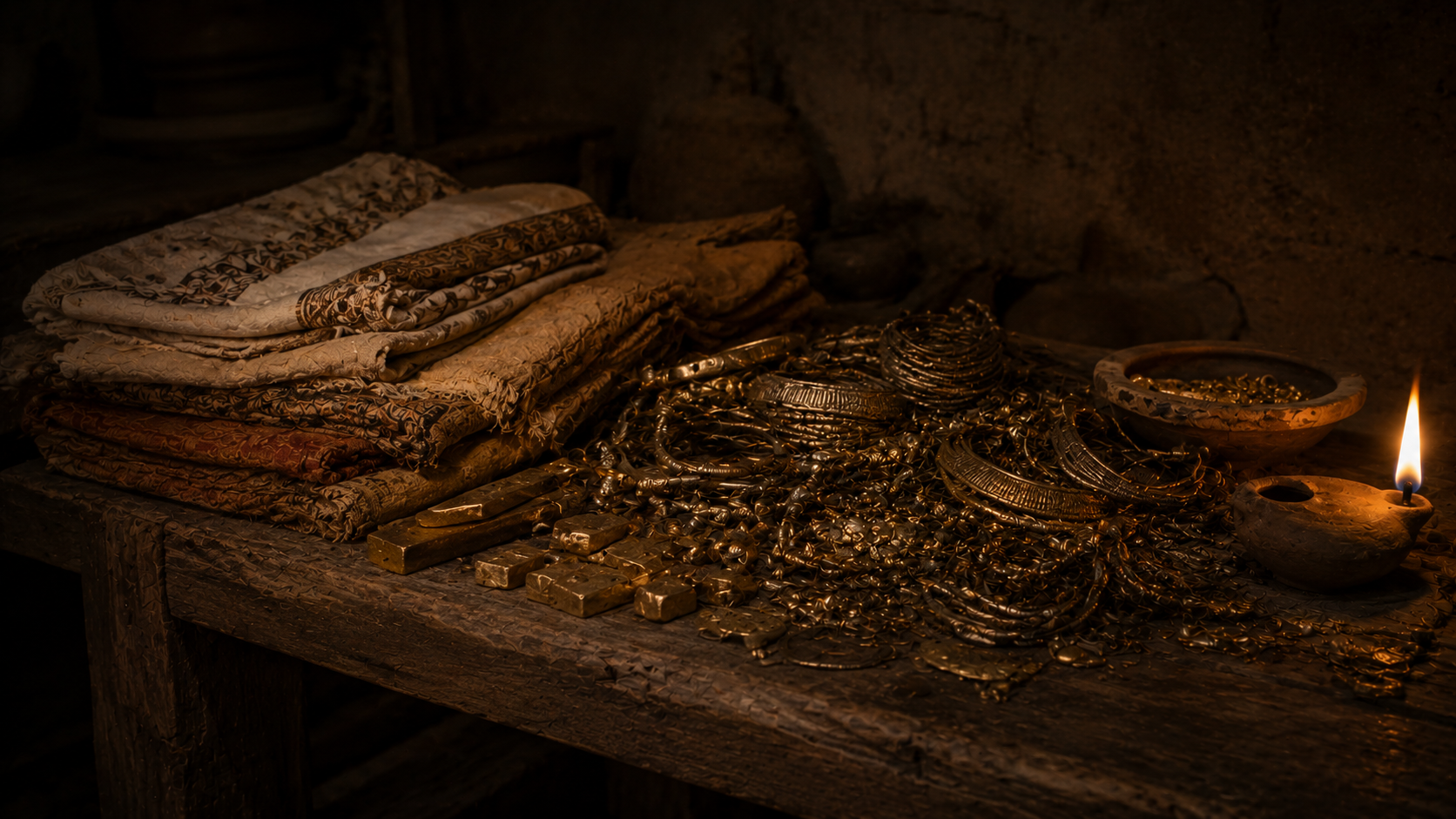
¹ Yahweh said to Moses, “Yet one more plague I will bring on Pharaoh, and on Egypt; afterwards he will let you go. When he lets you go, he will surely thrust you out altogether. ² Speak now in the ears of the people, and let them ask every man of his neighbor, and every woman of her neighbor, jewels of silver, and jewels of gold.” ³ Yahweh gave the people favor in the sight of the Egyptians. Moreover, the man Moses was very great in the land of Egypt, in the sight of Pharaoh’s servants, and in the sight of the people.
- Yet one more plague. The Hebrew is od nega echad, yet one more strike. The word nega (strike, blow, plague) is grimly precise. Nine plagues have fallen; one remains. The text marks the arithmetic. The number ten matters. Ten was the number of words in Pharaoh’s first refusal-speech (5:2), who is YHWH… I do not know YHWH… I will not let Israel go. Ten was, in Mackie’s structural reading, the number of stages required to fully unmake Egypt’s pantheon. And ten will become the number of the words given at Sinai (Ex 20). Ten plagues to break Pharaoh’s empire; ten words to form Israel’s covenant. The numerology is not random.
- He will surely thrust you out altogether. The Hebrew is kallah garesh yegaresh etkhem mi-zeh. Emphatic doubling: driving out, he will drive you out. The verb garash (drive out, expel) is the same word used in Ex 6:1 (by a strong hand he shall drive them out), in Ex 10:11 (they were driven out from Pharaoh’s presence, of Moses), and now of all Israel here. Pharaoh, who garashed Moses out of his court in chapter 10, will now garash all Israel out of his country. Garash will also reappear in Genesis-resonance: the Hebrew Bible’s first use of garash is Gen 3:24 (God drove the man out of the garden) and 21:10 (Sarah’s demand to drive out Hagar and Ishmael). The word carries a long memory. Israel’s garash from Egypt is the redemptive inverse of Adam’s garash from Eden.
- Speak now in the ears of the people, and let them ask every man of his neighbor. The Hebrew is yish’alu ish me’et re’ehu: let each ask of his neighbor. The verb sha’al (ask, request) is striking. The Hebrews are not taking; they are asking. The transaction is, on the surface, voluntary: a request, then a giving. But the giving is happening because YHWH gave the people favor. The Egyptians, after nine plagues, are willing to part with their wealth to see the Hebrews go.
- Jewels of silver, and jewels of gold. The Hebrew is kley-kesef u-kley-zahav, vessels of silver and vessels of gold. The promise of Gen 15:14 is being kept. Four hundred years ago, God told Abraham that his descendants would be slaves in a land not their own, but afterward they shall come out with great possessions. The chapter is fulfilling Genesis. The wealth is severance pay for four hundred years of unpaid labor, and it is also Genesis being kept.
- The wealth has theological weight beyond severance. The same silver and gold will, in chapter 25, be donated to build the tabernacle. The wealth Egypt gives Israel becomes the material out of which Israel’s sanctuary will be constructed. Egypt’s plundered gold becomes the gold of the ark, the lampstand, the cherubim. Mackie’s note: the storage cities Pharaoh used Hebrew slaves to build will produce the gold that builds YHWH’s dwelling place. The Hebrew Bible is doing a redemption-of-materials theology. Empire’s gold becomes God’s house.
The same wealth will also, tragically, be turned into the golden calf in chapter 32. The text is honest about this: the same Egyptian gold becomes both the tabernacle and the calf. The material is morally neutral; the people who hold it can use it for either. The chapter is seeding what Ex 32 will harvest.
- YHWH gave the people favor in the sight of the Egyptians. The Hebrew is vayiten YHWH et-chen ha-am be-eyney mitsrayim, YHWH gave the favor of the people in the eyes of Egypt. The same word chen (favor, grace) is used of Joseph in Pharaoh’s house (Gen 39:21), of Esther before Ahasuerus (Esth 5:2), and of Mary at the annunciation (Luke 1:30, charis). It is the Hebrew Bible’s word for unmerited favorable disposition. Egypt, after nine plagues, favors Israel. The empire’s grip has cracked; even the populace is now in sympathy with the slaves.
- Moreover, the man Moses was very great in the land of Egypt, in the sight of Pharaoh’s servants, and in the sight of the people. The Hebrew is gam ha-ish Mosheh gadol me’od, moreover, the man Moses was very great. The phrase is striking. The Egyptian populace and Pharaoh’s officials now hold Moses in great esteem. The man who once asked who am I? is now publicly recognized as gadol me’od, very great. Pharaoh remains the only person in Egypt who refuses to acknowledge what everyone else has now seen. Even Pharaoh’s own court has moved past him. The chapter is a final exposure of Pharaoh’s isolation. He is alone in his refusal.
B · Exodus 11:4-8 · “Israel is my firstborn”
⁴ Moses said, “This is what Yahweh says: ‘About midnight I will go out into the middle of Egypt, ⁵ and all the firstborn in the land of Egypt shall die, from the firstborn of Pharaoh who sits on his throne, even to the firstborn of the female servant who is behind the mill; and all the firstborn of livestock. ⁶ There shall be a great cry throughout all the land of Egypt, such as there has not been, nor shall be any more. ⁷ But against any of the children of Israel a dog won’t even bark or move its tongue, against man or animal; that you may know that Yahweh makes a distinction between the Egyptians and Israel. ⁸ All these your servants shall come down to me, and bow down themselves to me, saying, “Get out, with all the people who follow you;” and after that I will go out.’” He went out from Pharaoh in hot anger.
- About midnight I will go out into the middle of Egypt. The Hebrew is ka-chatsot ha-laylah ani yotse be-tokh mitsrayim, at the middle of the night I will go out in the middle of Egypt. The two phrases, middle of the night and middle of Egypt, frame the moment. Middle (tokh) is the same word used in Ex 8:22 of YHWH being in the midst (be-qerev) of the earth: the same theological claim, restated as judicial action. YHWH will go out through Egypt. The Hebrew Bible’s vocabulary of divine coming forth is being deployed.
- All the firstborn… from the firstborn of Pharaoh who sits on his throne, even to the firstborn of the female servant who is behind the mill. The plague’s scope is vertical: from Pharaoh’s heir to the lowest slave’s heir. Every social tier of Egypt is affected. The text is making the ethical point: empire’s hierarchy does not protect anyone from the cost of empire’s refusal. The slave-girl behind the mill is also paying for Pharaoh’s heart. This is one of the chapter’s most painful observations: empire’s harm falls heaviest on the empire’s most vulnerable. The slave-girl’s grief is part of the cost of Pharaoh’s refusal. The text records this without softening.
- And all the firstborn of livestock. The plague extends to animals. Egyptian livestock had already been struck twice (the fifth plague’s pestilence, the seventh’s hail). What remains will lose their firstborn this night.
- There shall be a great cry throughout all the land of Egypt. The Hebrew is tse’aqah gedolah be-khol erets mitsrayim. The verb tsa’aq, cry, is the technical word for the cry of the oppressed that Israel cried in 2:23. But now it is Egypt crying. The structural reversal is complete. Egypt did not hear Israel’s tse’aqah; now Egypt’s own tse’aqah will fill the country. The Hebrew Bible’s cry of the oppressed framework (see The cry of the oppressed) is here used in inverted form: the oppressor now cries the cry the oppressed used to cry. Middah ke-neged middah.
- Such as there has not been, nor shall be any more. The hyperbole is theological. The cry is unprecedented and will not be repeated at this scale. The text is signalling: this is the climactic event. Nothing in Israel’s history will rival this for Egyptian anguish. (And the Hebrew Bible will, with deep care, also remember that Egyptians are part of God’s image-bearing humanity. Isaiah 19:25 will eventually say blessed be Egypt my people. The cry is real, and it will not be the last word.)
- But against any of the children of Israel a dog won’t even bark or move its tongue. The Hebrew is u-le-khol bney-yisra’el lo’ yecheraz-kelev leshono, and against all the children of Israel, no dog shall sharpen its tongue. The image is exquisite. In Goshen, while Egypt is wracked with screaming, not even a dog will bark. The silence will be perfect. The selective sparing has reached the level of acoustic. Not a sound. Egypt cries; Israel’s dogs are silent.
- The Hebrew word kelev (dog) is also worth pausing on. Dogs were not pets in the ancient Near East; they were scavengers, often viewed with suspicion. To say not a dog shall sharpen its tongue is to use the Hebrew Bible’s most ordinary scavenger as a measure of total quiet. If even the dogs are quiet, everything is quiet.
- That you may know that YHWH makes a distinction between the Egyptians and Israel. The Hebrew verb is again yapleh, makes a distinction. The same verb used in 8:22; 9:4. The selective sparing has been a recurring feature of the plague cycle from the fourth plague forward. The tenth plague will execute it at maximum scale. The book is teaching that YHWH knows whose is whose, and that the difference is not invisible. It is spoken: that you may know. The plagues continue to be pedagogical, even as they reach their climax.
- All these your servants shall come down to me, and bow down themselves to me, saying, “Get out.” Moses predicts to Pharaoh exactly what will happen at midnight. Pharaoh’s officials will come to me. Moses, and will bow down, and will say “leave.” The Hebrew is ve-yardu… ve-hishtachavu li… lekh, three verbs in sequence. The bowing-down (hishtachavah) is the Hebrew word for worship/prostration before a king or before God. Pharaoh’s own court will prostrate themselves before Moses. The man who once asked who am I? will, by midnight, be the man Egyptian officials are bowing to and begging to leave. The chapter is making the inversion explicit.
- He went out from Pharaoh in hot anger. The Hebrew is vayetse me-im par’oh ba-chari af, he went out from with Pharaoh in burning anger. The phrase is unusual. Moses, who has been patient through nine plagues, is furious. The Hebrew Bible records his anger here for the first time. The patience has run out. Moses leaves the throne room with the announcement of the firstborn delivered, and his anger is now visible. He is, in this moment, structurally aligned with YHWH: God’s anger and Moses’s anger are now in the same direction. The deliverer has been changed by the contest. He is no longer the meek shepherd at the bush.
Word study: bechor: Israel’s firstborn, Egypt’s firstborn
The Hebrew word bechor (firstborn) is the chapter’s deepest theological keyword. The whole tenth plague turns on the word. Ex 4:22-23 announced the framework: Israel is my son, my firstborn. Let my son go that he may serve me. If you refuse, I will kill your firstborn son. The contest is firstborn for firstborn. Egypt has been treating Israel as Pharaoh’s slaves; YHWH claims them as YHWH’s firstborn. The Hebrew Bible’s whole bechor-theology runs through this exchange (see The firstborn / bechor).
Two crucial points. First, firstbornness in the Hebrew Bible is role, not biology. Israel is not the first-created nation, and yet is named God’s bechor by vocation. The role is to carry the family’s character to the rest of the family. Israel is conscripted to carry YHWH’s character to the nations. Second, firstbornness involves substitution. The Passover lamb (chapter 12) will die in place of Israel’s firstborn. From this point forward, every Israelite firstborn will be redeemed (pidyon haben): symbolically bought back, every generation. The pattern reaches the New Testament: Mary and Joseph perform pidyon haben on Jesus at the temple (Lk 2:22-24). Christ becomes the firstborn from the dead (Col 1:18): the one who, by his death, redeems the firstborn vocation for the whole grafted-in church (Heb 12:23, the assembly of the firstborn).
The tenth plague is the night the bechor framework is established as the canon’s spine.
C · Exodus 11:9-10 · The hardening confirmed
⁹ Yahweh said to Moses, “Pharaoh won’t listen to you, that my wonders may be multiplied in the land of Egypt.” ¹⁰ Moses and Aaron did all these wonders before Pharaoh, but Yahweh hardened Pharaoh’s heart, and he didn’t let the children of Israel go out of his land.
- Pharaoh won’t listen to you. The chapter ends with YHWH confirming, in advance, that the announcement of the tenth plague will not change Pharaoh’s mind. Pharaoh will remain chazaq-hearted right up to the moment his own son dies.
- That my wonders may be multiplied in the land of Egypt. The Hebrew is le-ma’an revot moftay, so that my wonders may be many. The plagues’ theological purpose, again, is naming. The God of Israel has been doing wonders: moftim, for the watching world. Pharaoh’s resistance has served the larger purpose. The Egyptian audience has watched ten consecutive demonstrations of who YHWH is. Even Pharaoh’s hardness has become a vehicle for YHWH’s wonder-multiplying. The text refuses to read Pharaoh’s resistance as defeat; it reads it as the occasion for the deepest revelation.
- YHWH hardened Pharaoh’s heart, and he didn’t let the children of Israel go out of his land. The chapter’s final verb is chazaq. Pharaoh’s heart-condition is strengthened one last time, in advance of the plague that will break him. The chapter ends with the fully-formed picture: a man whose heart is now beyond reach, in a country whose theology is in ruins, with a deliverer in hot anger walking out of the palace, and a midnight strike scheduled for which all the dogs of Goshen will fall silent.
- The chapter ends without the actual plague. The reader is held at the threshold. Chapter 12 will narrate the firstborn night, but with one of the longest delays in the book. Before the plague falls, the text will turn aside for an extended liturgical-theological treatise on the Passover meal. The plague is, in a way, less interesting to the text than the liturgy that the plague will produce. Chapter 12 is going to be primarily about how Israel will remember this night for the next three thousand years, not about what the night was like. The book’s pacing keeps preaching: the redemption is being told forward as it happens.
Influence callout: Carmen Joy Imes (Bearing God’s Name)
Imes notes that Ex 11 is the chapter where the contest’s theological architecture comes fully into view. Israel is my firstborn son… let him go that he may serve me. The same word avad, serve / worship, that has run through every plague-demand reaches its final form. Pharaoh has been refusing to release Israel from avodah-as-slavery. YHWH is conscripting Israel into avodah-as-worship. The two are the same Hebrew word pointed in different directions. The tenth plague is YHWH’s final claim: Israel is mine. Their avodah is mine. Their bechor-vocation is mine. The cost of that claim is the death of every Egyptian firstborn whose father refuses to release the firstborn whom YHWH already owns. Imes’s pastoral note: the framework is severe and it is also the structural foundation of the rest of the Hebrew Bible. To be God’s people is to be God’s firstborn. To be God’s firstborn is to be conscripted into a vocation. Israel is not a privileged nation; Israel is a sent nation. And the price of being sent has been, from this night forward, paid in blood.
Reflection prompts
- YHWH gave the people favor in the sight of the Egyptians. Even at the climactic moment of the contest, the Hebrew Bible records that the Egyptian populace favored Israel. Empire’s grip on its people has cracked; the populace can see what Pharaoh refuses to. Where, in the systems and institutions you live inside, has the populace already moved past the king? What does it mean to be in favor with the watching world even while the powers that be remain hostile?
- I will go out into the middle of Egypt. The God of Israel is the God who goes out, who comes down, who enters in, who goes through. The plagues are not God’s distance; they are God’s nearness. Where, in the painful center of your own life, does the Hebrew Bible’s vocabulary of YHWH going out into the middle reframe what you thought was abandonment?
- Israel is my son, my firstborn. The whole exodus turns on this naming. To be God’s firstborn is vocation, not privilege, to be conscripted to carry YHWH’s character to the rest of the family. Where, in your own sense of being chosen-by-God, have you slipped into reading election as exemption rather than as call? What does it mean to be a bechor whose firstbornness is the work of going first into the world for the world’s sake?
Frameworks at play in this chapter: the firstborn / bechor, the cry of the oppressed, the divine council.