
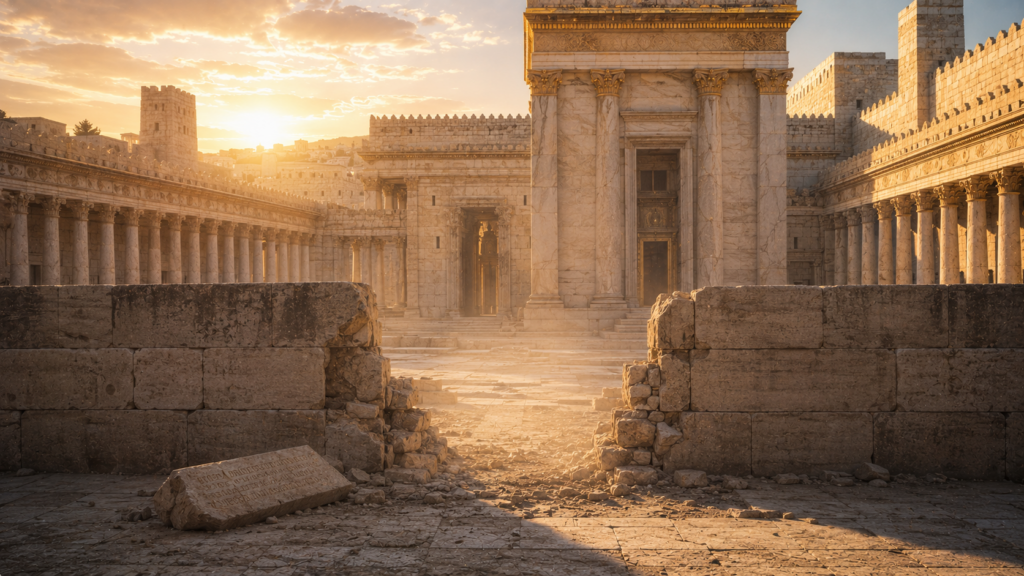
If Ephesians 1 is the great berakah of what God has done in Christ, Ephesians 2 is the chapter that says what that means for you, and for us. The chapter is the single richest theological text in the letter, and it works in two carefully matched halves. The first (verses 1 to 10) tells the story of the individual before God: dead in trespasses, walking under the powers, then suddenly but God, made alive together with Christ, raised with him, seated with him, saved by grace through faith, created in him for good works. The second (verses 11 to 22) tells the same story of the community before God: gentiles formerly far off, alienated from Israel’s covenants, then suddenly but now in Christ, brought near in his blood, the dividing wall demolished, one new humanity created, reconciled to God in one body through the cross, built into a holy temple where God dwells by the Spirit.
The two halves are not separable themes the modern reader can choose between. They are one chapter for a reason. The grace that raises the individual is the same grace that builds the new humanity. The gift that creates the saved person is the same gift that creates the body in which the saved person belongs. Reading Eph 2:8-9 (grace through faith) without Eph 2:11-22 (the dividing wall down) has been one of the great pastoral failures of modern evangelical preaching. The chapter refuses to be cut in half.
The chapter’s structural hinges are two short phrases that should be circled in any reading copy: “But God, being rich in mercy” (verse 4), and “But now in Christ Jesus” (verse 13). Both reverse the prior diagnosis with the same divine action. The God who was rich in mercy acted in Christ, and what once was dead is now alive, what once was far is now near, what once was divided is now one. Ephesians 2 is the gospel told twice in the same chapter, once for the soul and once for the church, and they turn out to be the same gospel.
A · Ephesians 2:1-10 · But God: from death to life by grace
¹ You were made alive when you were dead in transgressions and sins, ² in which you once walked according to the course of this world, according to the prince of the power of the air, the spirit who now works in the children of disobedience. ³ We also all once lived among them in the lusts of our flesh, doing the desires of the flesh and of the mind, and were by nature children of wrath, even as the rest. ⁴ But God, being rich in mercy, for his great love with which he loved us, ⁵ even when we were dead through our trespasses, made us alive together with Christ, by grace you have been saved, ⁶ and raised us up with him, and made us to sit with him in the heavenly places in Christ Jesus, ⁷ that in the ages to come he might show the exceeding riches of his grace in kindness toward us in Christ Jesus; ⁸ for by grace you have been saved through faith, and that not of yourselves; it is the gift of God, ⁹ not of works, that no one would boast. ¹⁰ For we are his workmanship, created in Christ Jesus for good works, which God prepared before that we would walk in them. (Ephesians 2:1-10, World English Bible)
- You were made alive when you were dead in transgressions and sins, in which you once walked according to the course of this world, according to the prince of the power of the air, the spirit who now works in the children of disobedience (verses 1-2). The chapter opens with a stark diagnosis. The pre-gospel human condition is death, not weakness or immaturity; the verb nekrous (dead) is unsparing. And the death is lived: the dead person walks (periepatēsate), the same verb that will organize the ethical half of the letter from 4:1 onward. The diagnosis names two intertwined sources for the walk: the course of this world (the temporal-cultural current of the present age) and the prince of the power of the air (an unseen personal agency, the structural-spiritual climate of the same age). The combination is exact. Paul is not naming sin as either purely interior or purely external; he is naming a human life lived inside a contested cosmos, where the visible cultural current and the invisible spiritual climate work together. The Christian doctrine of the world, the flesh, and the devil is built on this verse and the next. See powers and principalities and flesh and spirit.
- We also all once lived among them in the lusts of our flesh, doing the desires of the flesh and of the mind, and were by nature children of wrath, even as the rest (verse 3). The “you” (gentile readers) becomes “we” (Paul and his Jewish coreligionists included). The diagnosis does not stop at the gentile world; it reaches Israel too. Children of wrath is a Semitism (Hebrew idiom rendered in Greek): not a metaphysical class but a way of describing those whose situation is properly addressed by God’s judgment. The strikingly democratic note is even as the rest: Jew and gentile alike are inside the same diagnosis. The chapter’s later turn to one new humanity (verses 11-22) is set up here. The unity of the church begins with the unity of the human predicament.
- But God, being rich in mercy, for his great love with which he loved us (verse 4). The hinge. Two words in Greek, ho de theos, “but God,” redirect everything. Paul’s most pastoral reflex appears here: he does not let the diagnosis stand alone. The “but God” of verse 4 is the same shape as the “but now in Christ Jesus” of verse 13 and the “but God” of countless Hebrew Bible turning points (Gen 50:20, Ps 73:26, etc.). The reason for the turn is named twice in one verse: God’s mercy (eleos) and his great love (agapē). The salvation Paul is about to describe is not because of any of the diagnostic categories of verses 1 to 3 reversing themselves; it is because of who God is.
- even when we were dead through our trespasses, made us alive together with Christ, and raised us up with him, and made us to sit with him in the heavenly places in Christ Jesus (verses 5-6). The chapter’s most concentrated participatory verse, and one of the New Testament’s clearest statements of in Christ: participation and union. Three Greek compound verbs each carry the syn- prefix (“with”): synezōopoiēsen (made alive together with), synēgeiren (raised together with), synekathisen (seated together with). The believer’s narrative is now the Messiah’s narrative: his resurrection is our resurrection, his enthronement is our enthronement. And the location is exact: the believer is already seated in the heavenly places in Christ Jesus (echoing 1:3, 1:20). The believer’s true address is where Christ is, even while her body remains on earth. The eschatology of Ephesians is already and not yet, and the already is real.
Word study: charis (χάρις), “grace, gift, gratitude”
The word that holds Ephesians 2 together. Charis in the Greco-Roman world named the gift and the favor and the gratitude that the gift created, all at once; in Paul’s hands it becomes the single most concentrated theological term for God’s saving action. Charis appears in this chapter as the means of salvation (2:5, 2:8), as the future demonstration of God’s character (2:7, the exceeding riches of his grace in kindness toward us in Christ Jesus), and in 1:6-7 as the means of redemption (the riches of his grace, to the praise of the glory of his grace). Two related Greek words appear in the same orbit: the verb echaritōsen (he graced, 1:6), only used twice in the New Testament (the other is Gabriel’s greeting of Mary, Luke 1:28); and charisma (gift, the noun form of grace, e.g., Rom 5:15-16; 1 Cor 12). The shape of the word matters. In Greco-Roman gift-culture, gifts created obligation; the recipient was expected to respond in kind. Paul’s charis keeps the gift-and-response shape (the believer is created for good works, 2:10) while reframing the response from paying back to walking in. We do not pay God back for the gift; we walk in the works it created us for.
- that in the ages to come he might show the exceeding riches of his grace in kindness toward us in Christ Jesus (verse 7). The eschatological purpose of God’s saving action in the present. The believer who has been made alive, raised, and seated with Christ is also an exhibit (the verb endeixētai is the language of public display) of God’s grace in the ages to come. The salvation of the church is, in part, God’s plan to show his character publicly across eternity. This is not anthropocentric; it is theocentric, and it locates the believer’s value not in her usefulness but in her function as a sign of God’s character.
Influence callout: John Barclay (Paul and the Gift) on grace as incongruous gift (2:8-10)
Barclay’s Paul and the Gift (2015) is the modern conversation-shaper for reading Eph 2:8-10. His move is to refuse the old binary in which “grace” means either unmerited favor in a vacuum (the standard popular evangelical reading) or just God’s general kindness (a softer modern reading). Barclay shows that in Paul’s Greco-Roman world charis always meant gift, and gift always came with relational textures. He identifies six possible “perfections” of the concept of gift, ways the gift could be maximized: superabundance (the gift is enormous), singularity (the giver gives only gifts), priority (the gift precedes any merit), incongruity (the gift goes to the unworthy), efficacy (the gift produces what it intends), and non-circularity (the gift expects nothing back). Different theological traditions have maximized different perfections. The Reformation tradition foregrounded priority and incongruity; some modern readings foreground non-circularity. Barclay’s argument is that Paul foregrounds incongruity especially: the gift goes to the unworthy precisely because the gift is what makes them worthy. But Paul does not perfect non-circularity. The gift expects a response; it creates a relationship. Eph 2:8-9 (“by grace you have been saved through faith, and that not of yourselves; it is the gift of God, not of works”) and Eph 2:10 (“created in Christ Jesus for good works, which God prepared before that we would walk in them”) are one move in two beats: the incongruous gift, and the life of walking in works the gift created. Reading 2:8-9 without 2:10, the Christianity Paul is forming becomes either passive (no walk follows) or works-based (the walk replaces the gift). Reading them together, you get what the chapter actually says: the gift is real, the gift is incongruous, and the gift creates the walk. See justification, gospel allegiance.
- for by grace you have been saved through faith, and that not of yourselves; it is the gift of God, not of works, that no one would boast (verses 8-9). The most-quoted verse-pair in the chapter, the Reformation’s most-cited summary of the Pauline gospel, and the one that has carried the most theological weight in the church’s history. Three notes. First, the Greek verb tense (este sesōsmenoi, “you have been saved”) is the perfect passive, naming a past act with continuing effect: the believer is in a saved state created by God’s prior action. Second, the antecedent of touto (“that”) in that not of yourselves; it is the gift of God is grammatically debated; the most natural reading takes touto to refer to the whole prior phrase (grace-through-faith-saved-state, all of it), not just to “faith” as the antecedent. The whole thing, all the way down, is God’s gift. Third, the negation not of works refuses kauchesthai (boasting). The verse-pair guards against the relational distortion in which the believer’s standing becomes a credential the believer can use as social currency. Boasting is exactly what 2:11-22 will refuse to allow between Jew and gentile.
- For we are his workmanship, created in Christ Jesus for good works, which God prepared before that we would walk in them (verse 10). Verse 10 is the necessary companion to verses 8-9 and is too often skipped over. The Greek poiēma (workmanship, the noun that also gives us “poem”) names the believer as God’s crafted artifact, the new creation made by the Maker. Created in Christ Jesus is the participatory location (see in Christ: participation and union). And the purpose-clause matters: for good works, which God prepared before that we would walk in them. The works do not earn the salvation; the salvation creates the works. The works are also prepared in advance, on the path God has set, ready to be walked in (the same verb peripatēsōmen that will organize the rest of the letter). This is the chapter’s quiet refusal of cheap-grace pieties: the gift creates a life, not just a status.
Where this lands: the gift creates the walk
Modern evangelical Christianity has often been fluent in verses 8 and 9 and silent on verse 10. The gospel of not by works lest anyone boast has been preached as if it were the whole gospel, and the Christianity it has produced has often been short on the actual walking in the works God prepared. Ephesians 2:10 will not let that happen. The gift is real, the gift is incongruous, the gift is not earned, and the gift creates a walking in a life of good works prepared before. The honest Christianity Eph 2 is forming is not anxious activism (trying to keep the gift by performance), and it is also not passive consumption (treating the gift as a static possession with no shape). It is the walking in the works that were already prepared, with the confidence that the path is set and the gift that puts you on it is not earned but received. The Christian life Eph 2 calls into being is gracious-and-active in the same breath. Either half without the other is the chapter mis-quoted.
B · Ephesians 2:11-22 · One new humanity, one body, one temple
¹¹ Therefore remember that once you, the Gentiles in the flesh, who are called “uncircumcision” by that which is called “circumcision” (in the flesh, made by hands), ¹² that you were at that time separate from Christ, alienated from the commonwealth of Israel, and strangers from the covenants of the promise, having no hope and without God in the world. ¹³ But now in Christ Jesus you who once were far off are made near in the blood of Christ. ¹⁴ For he is our peace, who made both one, and broke down the middle wall of separation, ¹⁵ having abolished in his flesh the hostility, the law of commandments contained in ordinances, that he might create in himself one new man of the two, making peace, ¹⁶ and might reconcile them both in one body to God through the cross, having killed the hostility through it. ¹⁷ He came and preached peace to you who were far off and to those who were near. ¹⁸ For through him we both have our access in one Spirit to the Father. ¹⁹ So then you are no longer strangers and foreigners, but you are fellow citizens with the saints and of the household of God, ²⁰ being built on the foundation of the apostles and prophets, Christ Jesus himself being the chief cornerstone; ²¹ in whom the whole building, fitted together, grows into a holy temple in the Lord; ²² in whom you also are built together for a habitation of God in the Spirit. (Ephesians 2:11-22, World English Bible)
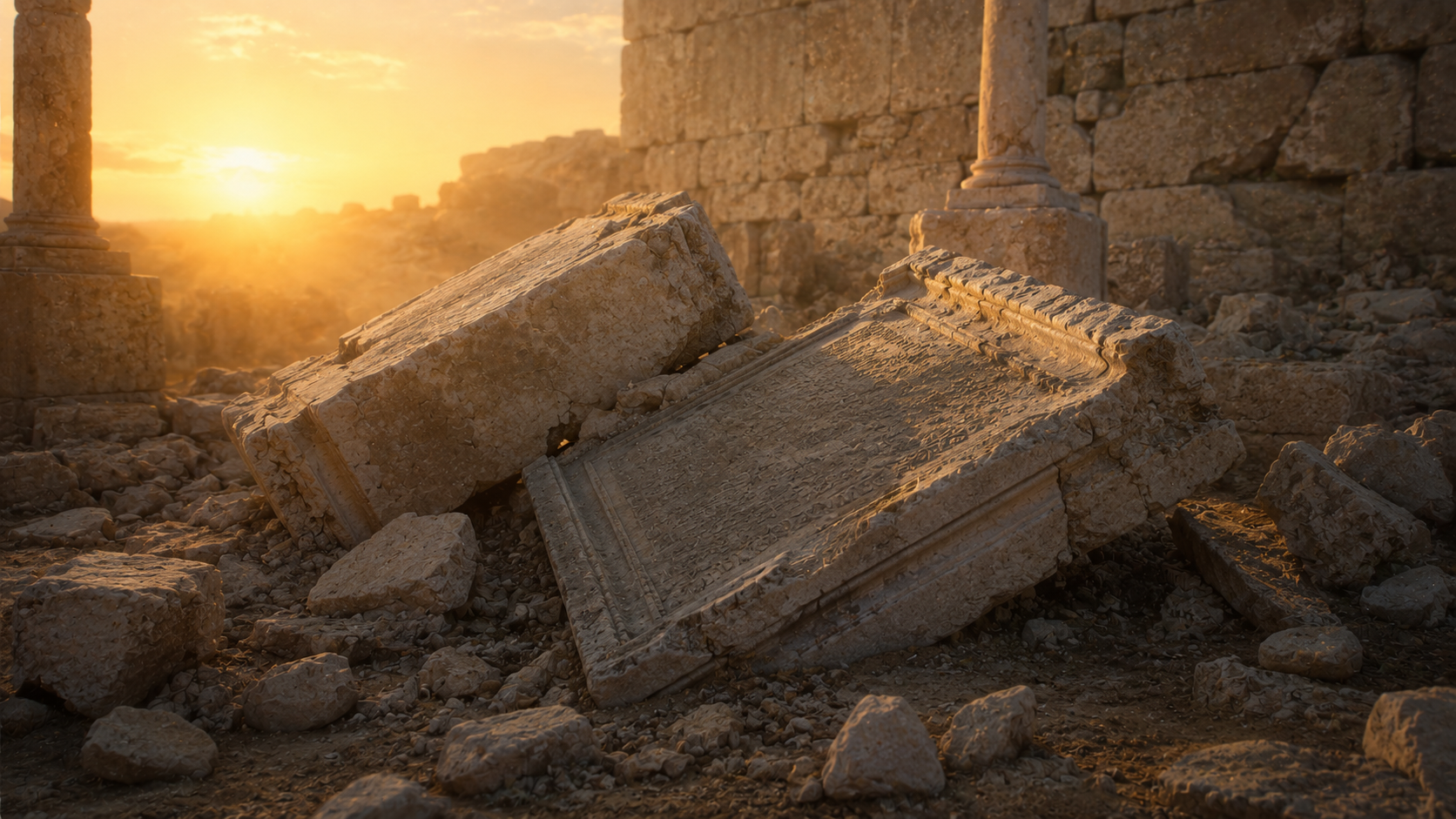
- Therefore remember that once you, the Gentiles in the flesh, who are called “uncircumcision” by that which is called “circumcision” (in the flesh, made by hands) (verse 11). The chapter’s second great movement begins with a remember. The gentile believers in Roman Asia are to remember who they once were. Two short phrases compress the memory: Gentiles in the flesh (an ethnic-cultural designation) and called “uncircumcision” by that which is called “circumcision” (the social-religious designation the world used). Paul’s parenthetical (in the flesh, made by hands) drops a quiet bomb on the very category of circumcision: the bodily mark itself is now framed as “made by hands,” the same vocabulary the Hebrew Bible uses for idols (Lev 26:30, Isa 2:8). The boundary marker that distinguished Israel from the nations is, here, named as a human production, the thing 2:14-15 will identify as the dividing wall.
- that you were at that time separate from Christ, alienated from the commonwealth of Israel, and strangers from the covenants of the promise, having no hope and without God in the world (verse 12). Five clauses, each one a window onto what gentile life was apart from the gospel. Separate from Christ (no Messiah); alienated from the commonwealth of Israel (no covenant people); strangers from the covenants of the promise (no covenant story); having no hope (no eschatological destination); without God in the world (no God, atheoi, in this world, the Greek word that gives modern English “atheist,” used not to name a metaphysical denial of the gods but the absence of God in the world’s life). The diagnosis is fierce, and it is the foundation for the chapter’s most pastorally generous claim, which is coming in verse 13. The further the gentile is from God, the further “near” he is about to be brought.
- But now in Christ Jesus you who once were far off are made near in the blood of Christ (verse 13). The chapter’s second great but (after 2:4). But now in Christ Jesus. The temporal now names the new age that has dawned (the apocalyptic frame; see apocalyptic Paul); in Christ Jesus names the location (see in Christ: participation and union); the blood of Christ names the means (the cross). The same vocabulary the Hebrew Bible used for covenant-coming-near (Lev 16, Num 18:7) is now used for the gentile, brought near to the God of Israel through the blood of Israel’s Messiah. Three short clauses, a complete reversal.
Influence callout: Markus Barth (Anchor Bible) on the dividing wall (2:14)
Markus Barth’s two-volume Anchor Bible commentary on Ephesians (1974) is the gold standard for reading 2:11-22, and his treatment of to mesotoichon tou phragmou (“the middle wall of separation,” verse 14) is foundational. Barth identifies the most likely first-century referent with care: the soreg of the Jerusalem temple. The soreg was a low stone barrier, about four and a half feet high, that separated the court of the gentiles from the inner courts of Israel. It bore inscriptions, in Greek and Latin, warning gentiles that they would be killed if they passed it. Josephus describes the inscriptions twice (War 5.193-194; Antiquities 15.417), and one of them was unearthed in 1871 and is now in the Istanbul Archaeological Museum; another was found in 1935 and is in the Israel Museum in Jerusalem. Both bear the warning, in capital letters: MĒTHENA ALLOGENĒ EISPOREUESTHAI… HOS D’ AN LĒPHTHĒ HEAUTŌI AITIOS ESTAI DIA TO EXAKOLOUTHEIN THANATON, “No foreigner is to enter… whoever is caught will himself be responsible for his ensuing death.” The historical irony is sharp. Paul writes Ephesians from Roman imprisonment in part because he was falsely accused of bringing a gentile past that very wall (Acts 21:27-29). Now, from prison, he announces that the wall has been broken down in his flesh. The body that the temple barrier protected, and the body that the false accusation imagined Paul violating, is now the body of the crucified Messiah, in whom the architecture of separation has been demolished. Barth’s reading also insists that what is “abolished” is not Torah as such (which would be an anti-Jewish move Paul never makes; see Paul Within Judaism) but the boundary-marker function of Torah, the ceremonial requirements that legally and practically separated Jew from gentile in the world before the Messiah came. The substance of Torah remains, fulfilled in the new humanity. See one new humanity.
Pushback note: the dividing wall and the American church (Jennings)
Willie James Jennings’s The Christian Imagination: Theology and the Origins of Race (Yale, 2010) and After Whiteness (Eerdmans, 2020) name the chapter the modern American church has most badly failed to live. Jennings’s historical argument is direct. The same Protestant tradition that built its identity around Pauline grace also built racially separated denominations, defended chattel slavery, segregated worship, and constructed the theological apparatus that he calls the racial imagination of the West. The church that claimed Eph 2:8-9 as its own gospel often refused to live Eph 2:11-22 in the same letter. The pushback is not partisan; it is exegetical. Where the church remains organized along the lines the cross demolished, the church has stopped preaching Eph 2. Sunday morning is still the most segregated hour in America; American Christianity’s political coalitions still often track its ethnic ones; modern white American evangelicalism’s bandwidth for racial reconciliation, for honest immigration ethics, for the cost of one new humanity, has been narrow and intermittent. None of that is an aside to the chapter. Through the church, 3:10 will say, the manifold wisdom of God is made known to the powers; where the church mirrors the dividing-wall ontology of the old age, the powers are not shown the gospel. Jennings’s contribution is to refuse to let the chapter remain in the realm of timeless principle. The dividing wall is concrete. The dismantled wall is also concrete. The church that lives this chapter is not vague about it. The church that does not is not Eph 2’s church. This is not a comfortable pushback. It is meant not to be.
- For he is our peace, who made both one, and broke down the middle wall of separation, having abolished in his flesh the hostility, the law of commandments contained in ordinances, that he might create in himself one new man of the two, making peace (verses 14-15). Eight Greek participles work together in these two verses, all governed by the opening claim autos gar estin hē eirēnē hēmōn (“for he himself is our peace”). The Messiah is not a peace-broker between two parties; he is the peace, the very condition of unity. The verbs are concrete: he made both one (an act, not a state); he broke down (lysas) the wall; he abolished (katargēsas) the hostility; he created (ktisē) one new humanity; he reconciled (apokatallaxē) both in one body. The chapter that began in death and was reversed by but God now reaches its theological summit: a new creation in the form of a new humanity.
Word study: kainon anthropon (καινὸν ἄνθρωπον), “one new human / humanity”
The phrase translated by the WEB as one new man, by the NIV as one new humanity, by the NRSVue as one new humanity, and by the CSB as one new man. The Greek noun anthropos (the bare word for human, person) is gender-neutral in form, distinct from anēr (specifically male, husband). The translation choice between one new man and one new humanity is not theologically neutral. Paul’s usage in Ephesians elsewhere (the mature anthropos, 4:13; put off the old anthropos and put on the new anthropos, 4:22-24) consistently uses anthropos in its corporate-anthropological sense: not “one new male individual” but the new human creature God is forming in Christ. The Adamic background matters. Anthropos in Paul’s Greek echoes the adam of Genesis 1-2, the corporate humanity made in God’s image; the new humanity of Eph 2:15 is the new Adam’s family (cf. Rom 5:12-21; 1 Cor 15:22, 45-49). Translating it one new man is grammatically possible but pastorally narrow; one new humanity keeps the corporate-Adamic scope the Greek requires. The chapter is not announcing the production of a new individual; it is announcing the production of a new humanity, the Adamic family refounded in Christ across the deepest division the ancient world knew. See one new humanity and the vocabulary of humanity.
- and might reconcile them both in one body to God through the cross, having killed the hostility through it. He came and preached peace to you who were far off and to those who were near. For through him we both have our access in one Spirit to the Father (verses 16-18). The new humanity’s vertical and horizontal dimensions are fused. In one body, both Jew and gentile, are reconciled to God through the cross. The cross is named twice in two verses: as the means of the reconciliation (through the cross) and as the place where the hostility was killed (the Greek apokteinas, killed, is unsparing; the hostility did not just diminish, it was put to death). Verse 17 quotes Isaiah 57:19 (peace to those far and those near) and applies it directly to the gentile-and-Jew situation. Verse 18 names the Trinitarian shape of the access: through him (Christ), in one Spirit, to the Father. The doctrine of God the chapter is forming is not abstract; it is the doctrine of the God whose own life is the access the church has.
- So then you are no longer strangers and foreigners, but you are fellow citizens with the saints and of the household of God, being built on the foundation of the apostles and prophets, Christ Jesus himself being the chief cornerstone (verses 19-20). Three nouns name what the gentile believers are now. Sympolitai (fellow citizens), oikeioi tou theou (members of God’s household), and (in the next clauses) naos hagios (a holy temple). The political language of citizenship, the familial language of household, and the architectural language of temple are layered together. Paul is also setting the foundations clearly: the church is built on the apostles and prophets (Christian witnesses both NT-apostolic and OT-prophetic; the order matters and the Greek genitive tōn apostolōn kai prophētōn admits both readings) with Christ Jesus himself being the chief cornerstone (akrogōniaios, the stone that orients the whole building’s geometry).
Influence callout: Mary Coloe (temple Christology) on Eph 2:19-22
Mary Coloe’s God Dwells With Us (Liturgical Press, 2001) developed the temple-Christological reading that has reshaped how scholars hear the New Testament’s claims about Jesus replacing and fulfilling the Jerusalem temple. Eph 2:21-22 is one of the cleanest applications outside the Gospels. In Hebrew Bible cosmology, the temple is the located dwelling-place of God’s glory: God’s presence fills the tabernacle at Sinai (Exod 40:34-35), fills Solomon’s temple at its dedication (1 Kings 8:10-11; 2 Chr 7:1-3), and is mourned when it departs through the visions of Ezekiel (Ezek 10-11). The post-exilic hope of Israel was, in part, the return of God’s glory to a restored temple. Ephesians 2:21-22 announces that the return has happened, in a wildly unexpected form. In whom the whole building, fitted together, grows into a holy temple in the Lord; in whom you also are built together for a habitation of God in the Spirit. The risen Christ fills all things (1:23); the church is now the located house where his fullness is concentrated. The temple is not a building; the temple is a people. The presence of God is not in a stone; it is in a Spirit-indwelt body of formerly excluded gentiles and formerly insider Jews built together as one new construction. The architectural metaphor of verse 21 (synarmologoumenē, “fitted together”) is engineering vocabulary; the gentile and Jewish “stones” are being precisely set into a single growing temple. The chapter that began in death ends in a temple. The same God who once filled Solomon’s temple now fills the church, and where the dividing wall once stood, the temple is being built out of the formerly excluded. This is the temple Christology of the New Testament at full volume. See tabernacle as cosmic temple and the place YHWH will choose.
- in whom the whole building, fitted together, grows into a holy temple in the Lord; in whom you also are built together for a habitation of God in the Spirit (verses 21-22). The chapter’s final clauses. Two en hō phrases (“in whom”) link the building to Christ as cornerstone. The temple grows (auxei, an organic verb; the building is a living construction). The temple is holy (set apart, the same word that runs through Leviticus and that Eph 5:27 will return to). The temple is in the Lord (the spatial frame of in Christ: participation and union). And the temple is a habitation of God in the Spirit: God’s katoikia (dwelling place), located in the Spirit. The Trinity is again present in the construction: the cornerstone is the Son, the dwelling is the Father, the location is the Spirit. The chapter ends on the church as the place God lives in the present age. The cosmic Christ of chapter 1 has, by the end of chapter 2, found his earthly address.
Reflection prompts
- The chapter’s hinge is but God. Where in your own diagnosis (about yourself, about the world, about a relationship that feels dead) have you been writing the sentence without its second clause? What changes if the but God is not a tagged-on consolation but the actual second half of every honest sentence about your life?
- Eph 2:10 says you are God’s workmanship (poiēma, his “poem”), created in Christ for good works which God prepared beforehand. If the works are already prepared, the spiritual life is not anxiously inventing the path but walking the one that is set. Where have you been trying to invent a path that has already been laid out, and what would it look like simply to step into it?
- The dividing wall of 2:14 was a literal stone wall in the Jerusalem temple, and its modern equivalents (the political, ethnic, and class lines the American church often lives along) are no less concrete. Where in your own life or church do you see the dividing wall still standing? If the wall has been broken down in his flesh, what would faithfulness to the chapter look like for you this week?
Frameworks at play in this chapter: one new humanity, in Christ: participation and union, justification, gospel allegiance, Paul within Judaism, the new covenant, tabernacle as cosmic temple, powers and principalities, flesh and spirit, the vocabulary of humanity.