

Exodus 20 is the chapter where YHWH speaks the Ten Words. The Hebrew Bible’s most famous single passage, sometimes the most misread. The chapter contains the aseret ha-debarim (the ten words; the Hebrew never calls them commandments). They are framed by a preamble of grace at the start (I am YHWH your God who brought you out of Egypt) and by the people’s terror at the end (let not God speak with us, lest we die). Between the preamble and the trembling, ten covenant-words are spoken from the cloud.
Three things are worth remembering before reading the chapter. First, the ten words are not first a legal code; they are a rule of life for a people who have just been redeemed. The preamble (v. 2) grounds every word that follows in what God has already done. The grammar is gift-then-response, not duty-then-reward. Second, the ten words are addressed in the singular you, not the plural. Each Israelite is being addressed personally, not the nation collectively. The covenant lands on the individual heart even as it shapes the corporate life. Third, the ten words are the ketubah of the wedding-covenant (in Solomon’s reading) and the stipulations section of the suzerain-vassal treaty (in Imes’s reading). Both readings hold; they are two faces of the same ANE genre. See The Sinai covenant.
The chapter ends with the people standing far off in fear, while Moses draws near to the thick darkness where God was (v. 21). The covenant has begun. The Book of the Covenant (chs. 21-23) will spell out the case-law that flows from the ten words. Sinai’s most concentrated theological moment is here.
A · Exodus 20:1-11 · The first table, the rule of life with God
¹ God spoke all these words, saying, ² “I am Yahweh your God, who brought you out of the land of Egypt, out of the house of bondage. ³ “You shall have no other gods before me. ⁴ “You shall not make for yourselves an idol, nor any image of anything that is in the heavens above, or that is in the earth beneath, or that is in the water under the earth: ⁵ you shall not bow yourself down to them, nor serve them, for I, Yahweh your God, am a jealous God, visiting the iniquity of the fathers on the children, on the third and on the fourth generation of those who hate me, ⁶ and showing loving kindness to thousands of those who love me and keep my commandments. ⁷ “You shall not take the name of Yahweh your God in vain, for Yahweh will not hold him guiltless who takes his name in vain. ⁸ “Remember the Sabbath day, to keep it holy. ⁹ You shall labor six days, and do all your work, ¹⁰ but the seventh day is a Sabbath to Yahweh your God. You shall not do any work in it, you, nor your son, nor your daughter, your male servant, nor your female servant, nor your livestock, nor your stranger who is within your gates; ¹¹ for in six days Yahweh made heaven and earth, the sea, and all that is in them, and rested the seventh day; therefore Yahweh blessed the Sabbath day, and made it holy.
- I am YHWH your God, who brought you out of the land of Egypt, out of the house of bondage. The Hebrew is anokhi YHWH eloheykha asher hotsetikha me-erets mitsrayim mi-beyt avadim. The chapter’s first word is not a commandment. It is a preamble of grace. YHWH names himself by what he has already done. The covenant rests on the rescue, not on the obedience-to-come. Mackie’s note: this is the foundational grammar of biblical ethics. The preamble grounds every later word. Israel obeys because it has already been freed, not in order to earn freedom. Reading the Decalogue without the preamble is reading it inverted.
- You shall have no other gods before me. The Hebrew is lo’ yihyeh-lekha elohim acherim al-panay. The phrase al-panay (literally before my face) does not deny the existence of other gods; it claims YHWH’s exclusive presence. Israel is not yet asked to deny that other elohim exist (the divine council framework is still on the page). Israel is asked to refuse to give them a place before YHWH’s face. The exclusivity is liturgical and devotional before it is metaphysical.
- You shall not make for yourselves an idol. The Hebrew is lo’ ta’aseh-lekha pesel. The second word forbids image-making. Combined with the third command (do not bow to them, do not serve them), the prohibition is total: no carved images of YHWH or of any other deity. Why? Because the cosmos already has YHWH’s image: the human person (Gen 1:26-27). The temple already has its living statue: Israel itself. Walton’s reading lands here. To carve an idol is to replace the living image-bearer (the human) with a dead one (the carved figure). The prohibition is not anti-art; it is anti-replacement-of-the-image-bearer.
- Showing loving kindness to thousands of those who love me and keep my commandments. The Hebrew is chesed la-alaphim. The asymmetry is striking: judgment to three or four generations; love to thousands. The chapter’s first articulation of God’s character. This will be repeated, in expanded form, at Ex 34:6-7 (the Name-proclamation after the golden calf). The loving kindness to thousands outweighs the judgment by orders of magnitude. The chapter is teaching, in its very first character-naming, that YHWH’s hesed is the dominant note.
- You shall not take the name of YHWH your God in vain. The Hebrew is lo’ tissa et-shem YHWH eloheykha la-shav. Imes’s reading is the chapter’s interpretive key. The verb nasa (lift, carry, bear) is the same verb used for the high priest carrying Israel on his shoulders in Ex 28. The third commandment is not first about profanity. It is about bearing the Name. To take the Name in vain is to carry it in emptiness: to live as God’s representative people in a way that empties the Name of meaning to the watching world. See Bearing God’s Name.
- Remember the Sabbath day, to keep it holy. The Hebrew is zakhor et-yom ha-shabbat le-qaddesho. The fourth commandment is the longest in the Decalogue. It is also the only commandment that anyone can command: God commands it (Gen 2:2-3), and humans command others to keep it. The chapter’s grounding is creation: for in six days YHWH made heaven and earth. Sabbath is woven into the fabric of the cosmos, not a contingent religious practice. The whole later Hebrew Bible’s Sabbath theology runs from this verse.
- You shall not do any work in it, you, nor your son, nor your daughter, your male servant, nor your female servant, nor your livestock, nor your stranger. The Sabbath law’s scope is universal within Israel’s reach. Everyone in the household, including the slaves, the livestock, and the foreigner, rests. Brueggemann’s reading (Sabbath as Resistance): this is the anti-Pharaoh law. Pharaoh’s economy required everyone to work without rest; the manna economy of Ex 16 trained Sabbath rhythm; the fourth commandment now codifies it as covenant law. Sabbath is not just for the privileged. It is for everyone in the camp, including the people who have no power to claim it for themselves. This is one of the Hebrew Bible’s most radical economic-theological moves.
Word study: aseret ha-debarim (עֲשֶׂרֶת הַדְּבָרִים)
The Hebrew Bible’s name for the ten covenant-statements is aseret ha-debarim: the ten words. The phrase appears at Ex 34:28; Deut 4:13; 10:4. The Hebrew is precise: not commandments (a different word, mitsvot), but words (debarim). The Greek Septuagint translated aseret ha-debarim as deka logoi, from which English gets Decalogue (ten-words). The English convention of calling them Ten Commandments mistranslates the Hebrew. Why does this matter? Because commandments sounds legal-imperative; words sounds covenantal-vocational. The ten debarim are the foundational speech of the covenant: the words that name who Israel is and what life with YHWH looks like. They are addressed in the singular you, person-to-person. They are not first a legal code; they are a rule of life. The English tradition has narrowed the Hebrew vocabulary; recovering the original word recovers the genre.
B · Exodus 20:12-17 · The second table, the rule of life with one another
¹² “Honor your father and your mother, that your days may be long in the land which Yahweh your God gives you. ¹³ “You shall not murder. ¹⁴ “You shall not commit adultery. ¹⁵ “You shall not steal. ¹⁶ “You shall not give false testimony against your neighbor. ¹⁷ “You shall not covet your neighbor’s house. You shall not covet your neighbor’s wife, nor his male servant, nor his female servant, nor his ox, nor his donkey, nor anything that is your neighbor’s.”
- Honor your father and your mother. The Hebrew is kabbed et-avikha ve-et-immekha. The verb kabbed shares its root with kavod (weight, glory). To honor parents is to give them weight in your life. This is the only commandment in the Decalogue with an explicit promise: that your days may be long in the land. The longevity-promise will be picked up at Eph 6:2-3 as the first commandment with a promise. The chapter is establishing the foundational ethic of family-honor that the rest of the Hebrew Bible’s wisdom tradition (especially Proverbs) will develop.
- You shall not murder. The Hebrew is lo’ tirtsach. The verb ratsach names unjustified killing: murder, manslaughter, blood-guilt. The verb is not the general word for killing (qatal or harag). Israel’s later case law will distinguish murder from manslaughter (Ex 21:12-14, Num 35), and capital punishment, war, and animal slaughter are not in this verb’s scope. The sixth word is the unjustified-killing prohibition. The cruciform reading (see The cruciform hermeneutic) will eventually expand this to a deeper non-violence ethic, but the chapter’s word is precise.
- You shall not commit adultery. The Hebrew is lo’ tin’aph. Na’aph is adultery (sexual betrayal of a marriage covenant), distinct from zanah (sexual immorality more broadly). The seventh word protects the marriage covenant specifically. In the Sinai-as-wedding framework (see The Sinai covenant), this commandment is the ketubah’s fidelity clause. Israel’s vow at Sinai is, on the wedding reading, the marriage to YHWH; the seventh commandment is the fidelity clause within and between Israelite households. The framework is dual: do not betray your spouse; do not betray YHWH (the same prophets will use the same word na’aph for Israel’s idolatry, Hos 2-3 and Jer 3).
- You shall not steal. The Hebrew is lo’ tignov. Ganav is theft generally. The eighth word protects property and, by extension, the dignity that property represents in an ANE economy. The rabbinic tradition reads this commandment narrowly as kidnapping (theft of a person, since other forms of theft are addressed in Ex 22), in which case the eighth word’s scope is do not enslave another person. The Egyptian background makes this reading especially poignant: Israel was just delivered from a regime that stole the freedom of an entire people.
- You shall not give false testimony against your neighbor. The Hebrew is lo’ ta’aneh ve-re’akha ed shaqer. The ninth word forbids perjury: false witness in legal or civic settings. The Hebrew Bible’s whole judicial system, the system Jethro just installed in chapter 18, depends on truthful witnesses. Pharaoh’s divrey-shaqer (lying words) accusation against Moses in Ex 5:9 is the foil: empire’s standard is the lie. Israel’s standard is truth.
- You shall not covet. The Hebrew is lo’ tachmod. The tenth word is the only commandment that addresses an interior state rather than an external action. Chamad names desire that fixes on what belongs to another. Solomon’s reading (drawing on the wisdom tradition): the tenth word is the foundation of all the others. Murder, adultery, theft, false testimony all begin in the heart with covetousness. The chapter is closing the Decalogue with the heart that drives the actions. The rest of the Hebrew Bible’s wisdom literature (especially Proverbs) will develop this insight.
- The list of what not to covet is striking: your neighbor’s wife, nor his male servant, nor his female servant, nor his ox, nor his donkey. The wife appears in the same list as servants and animals. Modern readers wince. Goldingay’s pastoral note: the chapter is using ANE household property language, which categorized everyone in the household (including the wife) under the head-of-household’s stewardship. The chapter is not endorsing this categorization theologically; it is using the legal vocabulary available. Subsequent Hebrew Bible legislation, and the Hebrew Bible’s prophetic tradition, will steadily reframe and humanize this. The chapter’s underlying point is that the heart’s desire for what belongs to others is corrosive; the listing is the ANE-specific vocabulary for that point.
Influence callout: Carmen Joy Imes on the third commandment as the chapter’s spine
Imes argues the third commandment (you shall not take the name of YHWH your God in vain) is the load-bearing word of the Decalogue. The whole chapter is the rule-of-life for a people bearing God’s Name. Read narrowly as a profanity prohibition, the third word is one of the easiest commandments. Read as a vocational rule (do not carry the Name in emptiness), it becomes the rule that organizes every other word in the chapter. Why no other gods? Because Israel bears YHWH’s Name and cannot carry it while also carrying others. Why no idols? Because Israel itself is the living image of God; the carved one would be a substitute. Why honor parents, no murder, no adultery, no theft, no false testimony, no covetousness? Because Israel’s daily public life is the visible evidence the watching nations have of YHWH’s character. Failing the second table empties the Name on the first table. The third commandment is the chapter’s structural center. See Bearing God’s Name.
C · Exodus 20:18-26 · The people’s terror, and the altar of earth
¹⁸ All the people perceived the thunderings, the lightnings, the sound of the trumpet, and the mountain smoking. When the people saw it, they trembled, and stayed at a distance. ¹⁹ They said to Moses, “Speak with us yourself, and we will listen; but don’t let God speak with us, lest we die.” ²⁰ Moses said to the people, “Don’t be afraid, for God has come to test you, and that his fear may be before you, that you won’t sin.” ²¹ The people stayed at a distance, and Moses came near to the thick darkness where God was. ²² Yahweh said to Moses, “This is what you shall tell the children of Israel: ‘You yourselves have seen that I have talked with you from heaven. ²³ You shall most certainly not make alongside of me gods of silver, or gods of gold for yourselves. ²⁴ You shall make an altar of earth for me, and shall sacrifice on it your burnt offerings and your peace offerings, your sheep and your cattle. In every place where I record my name I will come to you and I will bless you. ²⁵ If you make me an altar of stone, you shall not build it of cut stones; for if you lift up your tool on it, you have polluted it. ²⁶ You shall not go up by steps to my altar, that your nakedness may not be exposed to it.’”
- The people trembled, and stayed at a distance. The Hebrew is vayitsdu vaya’amdu me-rachoq. The chapter’s pivot. The people cannot bear the immediacy of the theophany. They withdraw. Solomon’s note: this is the structural moment where Israel requests mediation. The whole later prophetic and priestly system is rooted in this verse: the people will hear God through Moses rather than directly. The ten words have been spoken; the people have heard them; now the architecture of mediation is requested.
- Speak with us yourself, and we will listen; but don’t let God speak with us, lest we die. The Hebrew is daber-attah immanu, ve-nishma’ah. The people’s request is honest. The theophany is overwhelming. The cloud, the trumpet, the thunder, the smoking mountain: the body cannot sustain the immediacy. They request a mediator. Moses agrees.
- Moses came near to the thick darkness where God was. The Hebrew is u-Mosheh nigash el-ha-arafel asher-sham ha-elohim. Arafel (thick darkness, fog) is the same word used in Job 38:9 and Ps 97:2 for the divine cloudy presence. The chapter is staging the contrast: the people withdraw; Moses approaches. Moses goes into the cloud. The deliverer becomes the mediator. The prophetic vocation begins here in concrete form.
- You shall most certainly not make alongside of me gods of silver, or gods of gold for yourselves. The Hebrew is lo’ ta’asun itti elohey khesef ve-elohey zahav. The chapter’s first direct application of the ten words: no silver gods, no gold gods. The warning is precise. Israel’s silver and gold (taken out of Egypt; see Ex 11:2-3 and 12:35-36) is not to be made into images. This will become tragically relevant at chapter 32, when Aaron does exactly this with the calf. The chapter is foreshadowing what the people will, in twelve chapters, fail to honor.
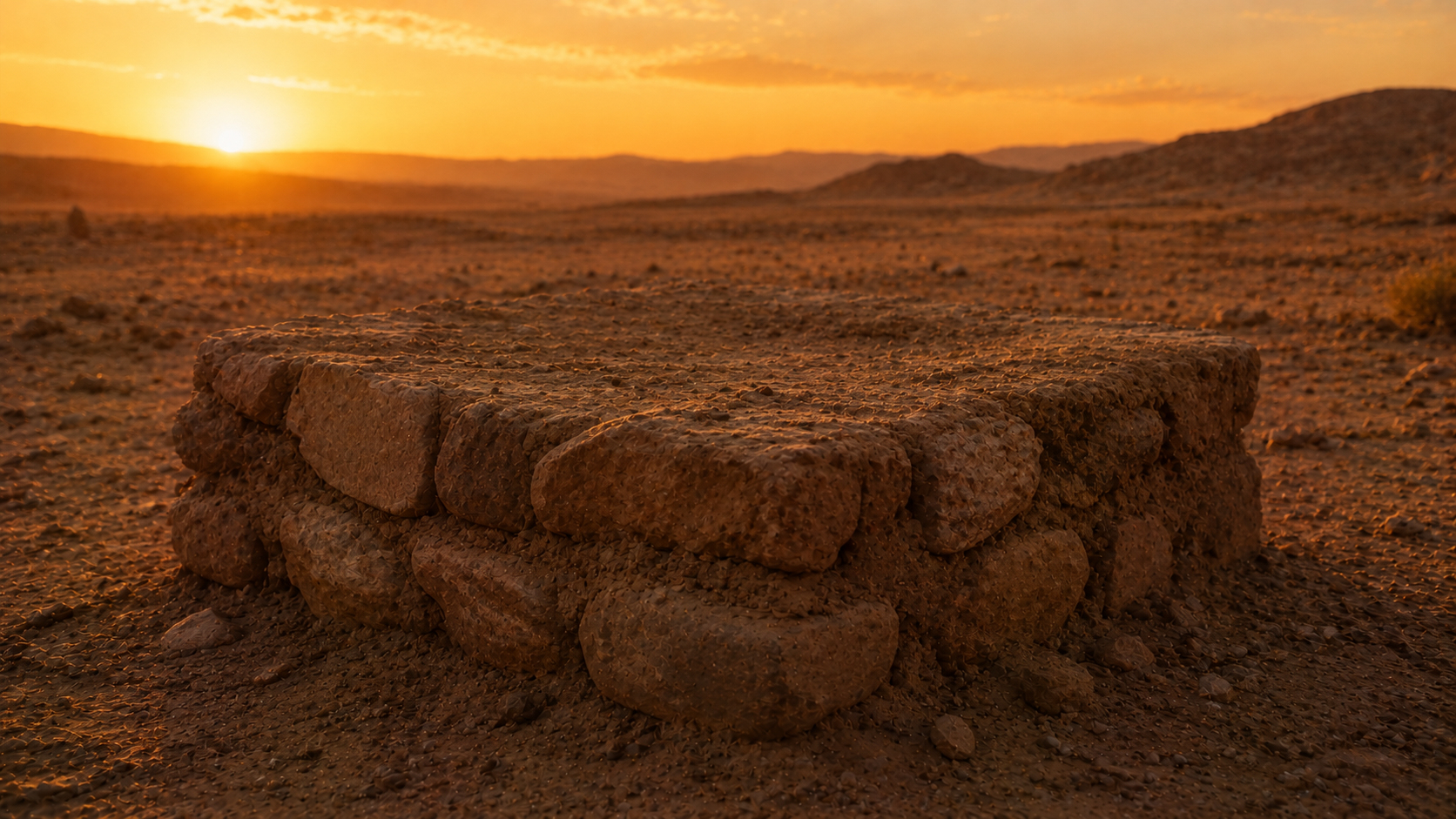
- You shall make an altar of earth for me. The Hebrew is mizbach adamah ta’aseh-li. The first altar-instruction is striking. Earth. Not stone, not silver, not gold. Just earth (the adamah of Genesis 2:7, the soil from which the human was formed). The simplest, most universally available material. Goldingay’s pastoral note: Israel does not need elaborate equipment to worship YHWH. The earliest sanctuary instruction is use the dirt.
- In every place where I record my name I will come to you and I will bless you. The Hebrew is be-khol ha-maqom asher azkir et-shemi avo eleykha u-verakhtikha. The chapter is teaching that YHWH’s name-presence is the basis of his coming. The phrase azkir et-shemi (cause my name to be remembered) will become the central vocabulary for the later tabernacle and temple (Deut 12:5, the place YHWH will choose to make his name dwell there). The framework is consistent: YHWH meets his people where his Name has been placed. See Bearing God’s Name.
- If you make me an altar of stone, you shall not build it of cut stones; for if you lift up your tool on it, you have polluted it. The Hebrew is ve-im mizbach avanim… lo’-tivneh ethen gazit. Stone altars are permitted, but the stones must be uncut. Cut stones (gazit) are stones shaped by human tool. The ban on tooling is striking. Solomon’s reading: the altar’s holiness comes from YHWH’s choice, not from human craftsmanship. Tooling stones risks subordinating the altar to human aesthetic and skill. The chapter is teaching, in this small detail, the larger principle: YHWH’s worship is not improved by human elaboration. The simplest materials, untooled, are sufficient.
- You shall not go up by steps to my altar, that your nakedness may not be exposed to it. A practical priestly note. Israelite priests will not wear the kind of garments that would expose the body when ascending steps. The chapter is teaching dignity in worship. Aaron’s later sacred garments (Ex 28) will include linen breeches to cover their flesh (Ex 28:42).
Influence callout: Marty Solomon (Bema Discipleship) on the ten words as wedding vows
Solomon (drawing on the rabbinic tradition) reads the aseret ha-debarim as the ketubah of the wedding-covenant at Sinai. In the ANE world, the wedding ketubah listed the covenant-defining commitments between bride and groom. Solomon translates each of the ten words as a wedding-vow. I am your husband / no other lovers / honor our family name / set aside a date night once a week / honor my parents-in-law / do not seek to wish me dead or another in my place / do not give your heart to another / be content with what we share / tell the truth about us / be satisfied with what we have together. The reading is not a denial of the legal force of the words; it is a deepening of the relational shape underneath them. Sinai is not a contract. It is a wedding. The ten words are the foundational language of the marriage between YHWH and Israel. Imes’s treaty-form reading and Solomon’s wedding-form reading are two faces of the same ANE genre. Both belong on the page. See The Sinai covenant.
- The chapter ends. The ten words have been spoken. The people are at a distance. Moses is in the cloud. The earth altar has been described. The framework of Israelite worship has begun to take shape. The next chapters (21-23) will spell out the case-law that flows from these ten words. The Book of the Covenant is about to begin.
Reflection prompts
- I am YHWH your God, who brought you out of the land of Egypt, out of the house of bondage. The Decalogue’s preamble is grace, not duty. Where, in your own faith life, are you trying to obey to earn what has already been freely given? What changes when you remember the chapter’s first word is the rescue?
- The third commandment is about carrying the Name well, not about cursing. Where, in your own daily life, are you carrying the Name of God in emptiness: living as God’s representative in a way that empties the Name of meaning to the watching world? What would it look like to carry the Name with weight?
- The people trembled and stayed at a distance. Moses drew near to the thick darkness. Both responses are honest. Most of us live somewhere in between. Where, in your own faith life, are you withdrawing when you should be drawing near, or drawing too quickly when you should pause and tremble? What does the chapter ask of you in this moment?
Frameworks at play in this chapter: the Sinai covenant, bearing God’s name, sabbath rest.