
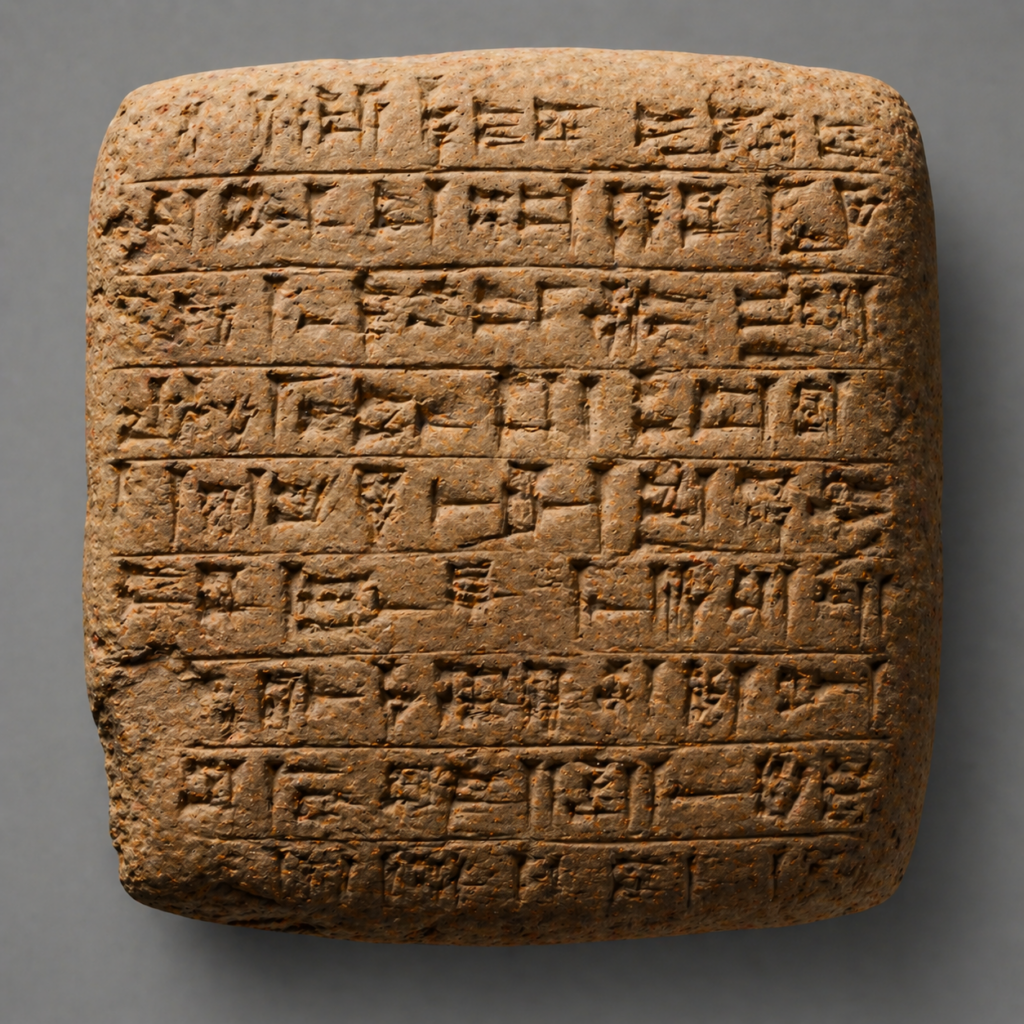
Genesis 5 is a chapter many readers skip. It looks like a list (names, ages, “begat,” and “died”), and modern eyes don’t know what to do with it. But ancient eyes did. In the world this text was written for, genealogies were not historical filler. They were theological documents. They were arguments, made through structure: who matters, who continues the line, who carries the image, where the story is going.
Read carefully, Genesis 5 is anything but boring. It’s the resurrection of hope after the exile of Genesis 3 and the violence of Genesis 4. It’s the affirmation that the image of God passes from generation to generation, even now, even after everything. It’s the sober naming of what humans have lost (death is now the chorus). And it has at least one anomaly that breaks the pattern in a way that points forward.
This chapter exists for a reason. Let’s read it slowly.
A · Genesis 5:1–5 · The toledot of Adam
¹ This is the book of the generations of Adam. In the day that God created man, he made him in God’s likeness. ² He created them male and female, and blessed them. On the day they were created, he named them “Adam.” ³ Adam lived one hundred thirty years, and became the father of a son in his own likeness, after his image, and named him Seth. ⁴ The days of Adam after he became the father of Seth were eight hundred years, and he became the father of other sons and daughters. ⁵ All the days that Adam lived were nine hundred thirty years, then he died.
- Toledot, “generations” or “account of”, is one of the structural keywords of Genesis. The whole book is organized around toledot phrases (“these are the generations of…”), each one launching a new section. We’re being told: this is the genealogical account, and it matters.
- Verses 1–2 quote Genesis 1 almost word for word. “He made him in God’s likeness… male and female… blessed them.” The genealogy begins by re-anchoring us in the creation account. Whatever has happened since, this is the foundation: humans are image-bearers, blessed, made for partnership. The chapter is going to walk through generations of humans, and it wants us to remember from the start that they are all bearing the image.
- Verse 3 is the key theological move. Adam has a son “in his own likeness, after his image.” The same words used of God making Adam are now used of Adam fathering Seth. The image is passed on. It is transmissible. Whatever damage was done in Genesis 3, the imaging vocation continues through generations. Genesis 9 will reaffirm this after the flood. The image is not lost.
Word study: toledot (תּוֹלְדוֹת)
“Generations,” “begettings,” or “the account of.” A structural keyword in Genesis. Each toledot section opens a new chapter in the unfolding story: the toledot of the heavens and earth (2:4), of Adam (5:1), of Noah (6:9), of the sons of Noah (10:1), of Shem (11:10), of Terah (11:27), and onward. Genesis is structured as a cascade of toledot, each one zooming further in on the line that will lead to the people of God.
- “Then he died.” This is the chapter’s refrain. It will repeat for almost every name in the list. Genesis 3 said “you are dust, and to dust you shall return.” Genesis 5 is showing us, generation by generation, that this is now true. The numbers are striking, Adam lived 930 years, but the verb is sobering. Met. He died. Mortality is now the inheritance.
B · Genesis 5:6–20 · The line of Seth (and the death-refrain)
⁶ Seth lived one hundred five years, then became the father of Enosh. ⁷ Seth lived after he became the father of Enosh eight hundred seven years, and became the father of other sons and daughters. ⁸ All of the days of Seth were nine hundred twelve years, then he died.
⁹ Enosh lived ninety years, and became the father of Kenan. ¹⁰ Enosh lived after he became the father of Kenan eight hundred fifteen years, and became the father of other sons and daughters. ¹¹ All of the days of Enosh were nine hundred five years, then he died.
¹² Kenan lived seventy years, then became the father of Mahalalel. ¹³ Kenan lived after he became the father of Mahalalel eight hundred forty years, and became the father of other sons and daughters. ¹⁴ All of the days of Kenan were nine hundred ten years, then he died.
¹⁵ Mahalalel lived sixty-five years, then became the father of Jared. ¹⁶ Mahalalel lived after he became the father of Jared eight hundred thirty years, and became the father of other sons and daughters. ¹⁷ All of the days of Mahalalel were eight hundred ninety-five years, then he died.
¹⁸ Jared lived one hundred sixty-two years, then became the father of Enoch. ¹⁹ Jared lived after he became the father of Enoch eight hundred years, and became the father of other sons and daughters. ²⁰ All the days of Jared were nine hundred sixty-two years, then he died.
- The pattern repeats. Lived… became the father… lived after… became the father of other sons and daughters… then he died. Five times in a row, like a drumbeat. The chapter is making us feel the post-Eden reality. Generation after generation. Birth, fatherhood, death. Birth, fatherhood, death. The refrain is the point.
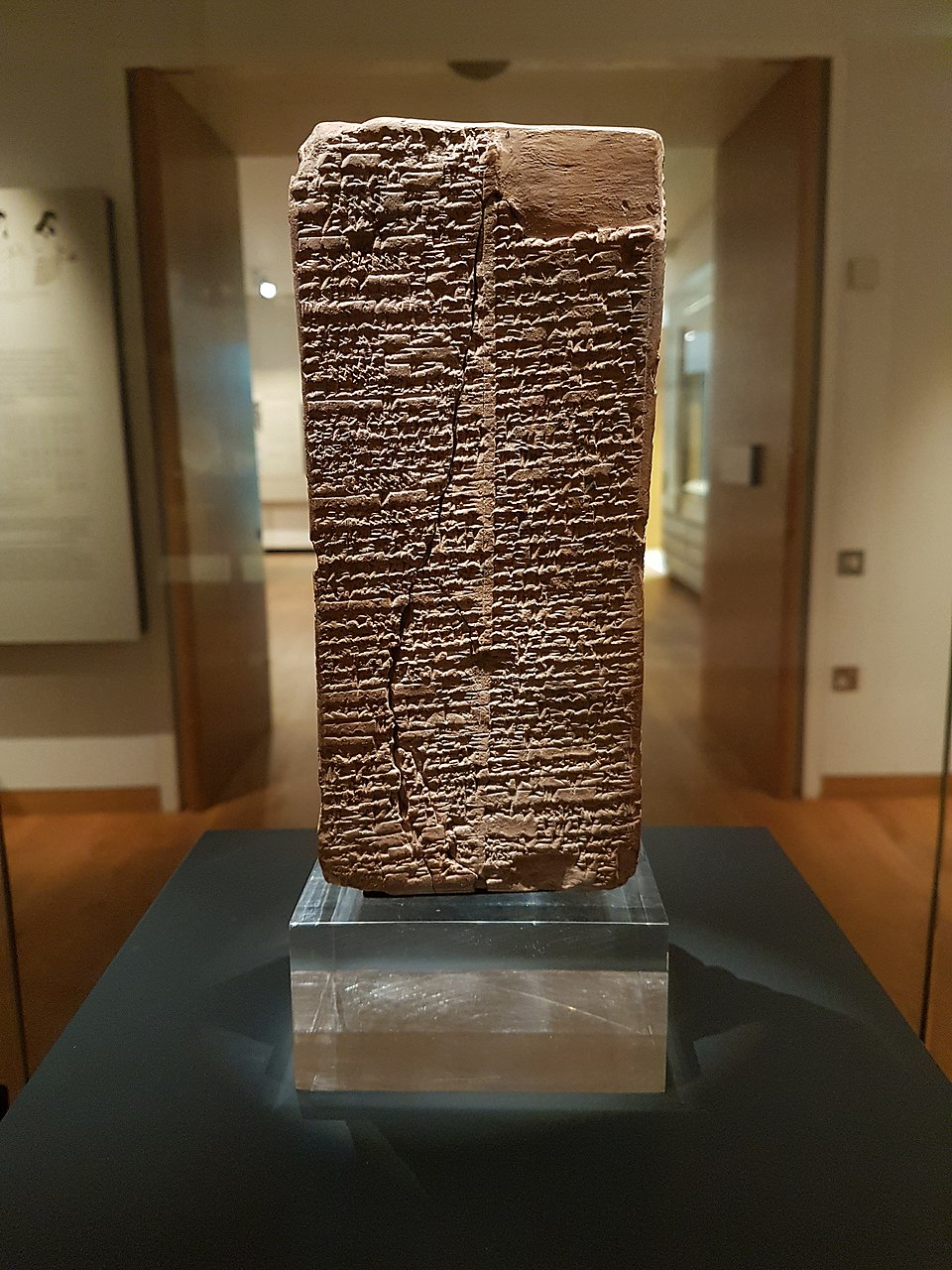
- The numbers raise the obvious modern question: are these literal lifespans? Several careful readings exist. ANE genealogies routinely featured impossibly long ages, the Sumerian King List has antediluvian kings ruling for tens of thousands of years. Genesis is using the genre but bringing the numbers down. Some scholars suggest the numbers may be symbolic, or use a different counting system we no longer fully understand. Others read them as broadly literal but as descriptions of pre-flood human longevity (different conditions, different physiology). The text doesn’t ask us to settle the question; it asks us to feel the weight of generations passing and dying.
- Notice the names. Seth, Enosh, Kenan, Mahalalel, Jared. Some of these are theological. Mahalalel means something like “praise of God.” Other names mean “human” (Enosh) or “appointed” (Seth). The line of Seth, the line we’re following, has names that lean into God. They aren’t heroes, but they’re not fugitives either.
- Consider what the chapter is not saying. There are no narratives in these verses. No stories, no failures, no exploits. The genealogy is making an argument by silence: in the post-Eden world, the line of Seth simply continues, faithfully, without dramatic incident. The story of God’s people is sometimes about the steady, unspectacular faithfulness of generations who lived, fathered children, and died. That’s its own kind of witness.
C · Genesis 5:21–24 · Enoch, the exception
²¹ Enoch lived sixty-five years, then became the father of Methuselah. ²² Enoch walked with God after he became the father of Methuselah for three hundred years, and became the father of other sons and daughters. ²³ All the days of Enoch were three hundred sixty-five years. ²⁴ Enoch walked with God, and he was not, for God took him.
- The pattern breaks. Enoch, the seventh from Adam, gets a different formula. Twice the chapter says “Enoch walked with God.” And then, instead of the expected “and he died,” we get “he was not, for God took him.”
- “Walked with God”, halak im Elohim, is a covenantal phrase. The same language is used of Noah in 6:9 (“Noah walked with God”), and shows up later for Abraham, Isaac, and the patriarchs. To “walk with” God is to live in covenant intimacy, to keep step with him through the days. Enoch is the first person in scripture explicitly described this way.
- “He was not, for God took him.” The Hebrew is striking, einennu, ki-laqach oto Elohim. “He wasn’t, because God took him.” The death refrain doesn’t appear. Whatever happened to Enoch, the chapter is explicit: he didn’t die in the way the others did. Hebrews 11:5 reads this as Enoch being “translated so that he would not see death.” Enoch became, in later Jewish and Christian tradition, the great exception, the man who walked into God’s presence and stayed there.
- Why is this important here? Because in a chapter about death’s reign, Enoch is a flicker of something else. Death is now the human inheritance, but it isn’t absolute. There’s a way of walking with God that the death-refrain doesn’t fully cover. Enoch isn’t a savior; he’s a sign. The exile from Eden means death, but God has not given up on bringing humans back into his presence. It’s possible to walk with him even now.
- Note also: Enoch lived 365 years. The number of days in a solar year. Probably not coincidence. Many scholars (Walton among them) read this as a deliberate signal, Enoch’s life is structured, complete, full. He embodies what a human life with God might look like, if death weren’t the chorus. The genealogy’s other named figures carry similarly weighted numbers. Methuselah’s 969 years (verse 27) is the longest lifespan in scripture; he is, on the chapter’s reading, the height of pre-flood blessing, and his death-year, on the genealogy’s accounting, falls exactly at the year of the flood, as if the highest pre-flood blessing closes precisely as judgment arrives. Lamech’s 777 years (verse 31) is a triple-seven, the threefold-completeness number marking the end of the pre-flood era. The numbers are doing theology more than biology. They are also, taken together, the chapter’s quietest single counter to the then he died drumbeat. The drumbeat is the anti-and it was good refrain of Genesis 1: where the original creation account ended every paragraph with God’s good judgment on what he had made, this chapter ends every paragraph with the same unrelieved and he died. The chapter is recording what life sounds like when the original chorus has been replaced.
D · Genesis 5:25–32 · Toward Noah
²⁵ Methuselah lived one hundred eighty-seven years, then became the father of Lamech. ²⁶ Methuselah lived after he became the father of Lamech seven hundred eighty-two years, and became the father of other sons and daughters. ²⁷ All the days of Methuselah were nine hundred sixty-nine years, then he died.
²⁸ Lamech lived one hundred eighty-two years, and became the father of a son. ²⁹ He named him Noah, saying, “This same will comfort us in our work and in the toil of our hands, caused by the ground which Yahweh has cursed.” ³⁰ Lamech lived after he became the father of Noah five hundred ninety-five years, and became the father of other sons and daughters. ³¹ All the days of Lamech were seven hundred seventy-seven years, then he died.
³² Noah was five hundred years old, then Noah became the father of Shem, Ham, and Japheth.
- Methuselah lives 969 years, the longest lifespan in scripture. He’s also Noah’s grandfather. Methuselah’s name has been read as “when he dies, it (the flood) shall be sent.” There’s debate about that etymology, but the chronological detail is striking: Methuselah dies in the year of the flood. The longest-lived human in scripture is alive for 969 years, and then, when he dies, the world floods. Read it however you want, there’s a poetry in it.
- Notice the second Lamech. Genesis 4 had a Lamech in the line of Cain, the violent one with seventy-seven-fold vengeance. Genesis 5 now has a Lamech in the line of Seth, Noah’s father, who speaks of comfort and toil, naming his son for hope rather than for revenge. The two Lamechs are mirror images. Same name, opposite trajectories. The two lineages diverge in what humans become.
- Lamech’s words about Noah: “This same will comfort us in our work and in the toil of our hands, caused by the ground which Yahweh has cursed.” This is the first explicit reference back to Genesis 3, to the curse on the ground. Lamech sees his son and names hope. Noah (Noach) sounds like the Hebrew nuach, “rest.” Lamech is hoping his son will bring rest from the toil of cursed ground. The chapter is setting up Noah as someone who will bring relief from the post-Eden burden.
- Notice the math: Lamech’s lifespan in this verse is 777. Cain’s Lamech boasted of 77-fold vengeance. Seth’s Lamech lives 777 years. The text is playing again. Same numbers, opposite valences.
- The chapter ends with Noah and his three sons: Shem, Ham, Japheth. The pattern is broken, there’s no “and he died” for Noah. Noah is left alive, his story still ahead of him. Genesis 5 is the bridge from Adam to Noah, from creation to flood. By verse 32, we’re standing at the edge of Genesis 6, and a new movement is about to begin.
Reflection prompts
- The chapter’s refrain is “and he died.” Eight times. What is the work of naming mortality, of letting the death of generations be real rather than evaded? Where in your life have you tried to euphemize what Genesis 5 simply says?
- Enoch broke the pattern by walking with God. The phrase isn’t dramatic, it’s relational, daily, sustained. What would it look like to walk with God in your daily rhythms? Not flashy, just faithful.
- Two Lamechs, one number (77 / 777), opposite trajectories, vengeance multiplied or comfort hoped for. Which Lamech are you closer to right now? What would it take to keep stepping toward the second?