
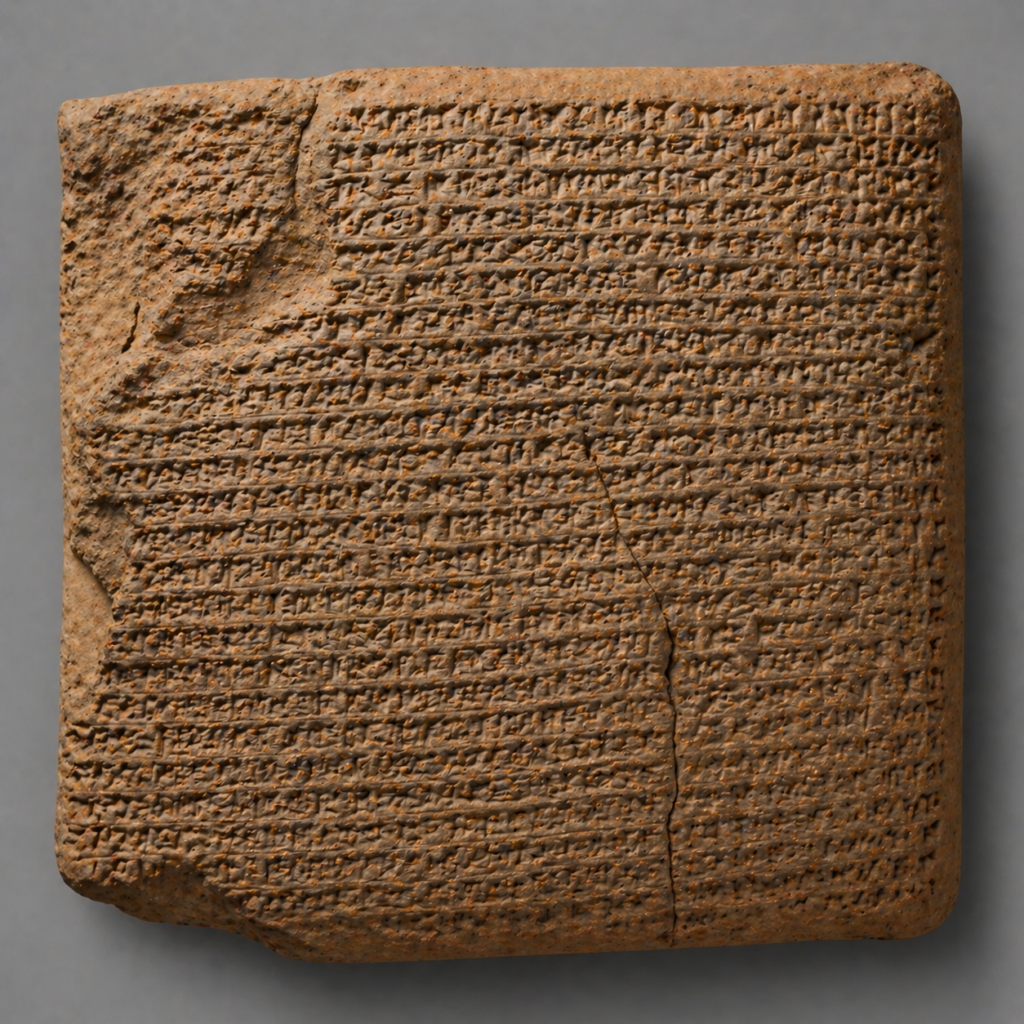
Genesis 6 is where the long descent that started in Eden hits the ground. Four chapters ago, humanity walked with God in a sanctuary garden. By verse 5 of this chapter, we get one of the saddest sentences in the Bible: “every imagination of the thoughts of his heart was only evil continually.” The gap between Genesis 1’s “very good” and Genesis 6’s grief is the chapter we’re about to read.
But this is also a turn. Right when the story seems to bottom out, a man named Noah surfaces. He walks with God, the way Enoch did in chapter 5. God commits to preserving the image-bearing line through him. The ark gets commissioned. And the first explicit covenant language in scripture appears in verse 18: “I will establish my covenant with you.” Genesis 6 is grief and the seed of recovery, in the same chapter.
A note on the strangest section, verses 1 through 4. The “sons of God,” the “Nephilim,” and the “mighty men of old, men of renown” have generated a lot of speculation. We’ll take them seriously rather than skip past them, and we’ll read them in the divine-council framework that the rest of the Old Testament uses. There’s room for disagreement, and we’ll name where we’re making interpretive choices.
The same four-beat pattern that has been running since Genesis 3 (autonomy → fracture → exile → grace) is now operating at scale. The autonomy of Adam and Eve produced individual exile; the autonomy of Cain produced fratricidal exile; the autonomy of Lamech produced revenge-as-cultural-value (4:23-24); and now the autonomy of an entire generation has produced what 6:5 names as universal corruption. The fracture has reached the structural level. The exile that follows will be the largest in the chapter so far: not from a garden, not into the land of Nod, but uncreation itself, as the cosmic-temple’s ordering work in Genesis 1 is partially undone (the waters above and below, separated on day two, will pour back together in chapter 7). And yet the pattern’s grace-beat persists. Verse 8’s Noah found favor in the eyes of the LORD is the chapter’s grace-on-the-edge-of-judgment. The cycle’s unbroken architecture is also its unbroken hope: every fall is met by a divine move toward recovery, and the recovery keeps preserving the line that the rest of Genesis will follow.
A · Genesis 6:1–4 · Sons of God, daughters of men, Nephilim
¹ When people began to multiply on the face of the ground and daughters were born to them, ² the sons of God saw that the daughters of humans were fair, and they took wives for themselves of all that they chose. ³ Then the Lord said, “My spirit shall not abide in mortals forever, for they are flesh; their days shall be one hundred twenty years.” ⁴ The Nephilim were on the earth in those days (and also afterward), when the sons of God went in to the daughters of humans, who bore children to them. These were the heroes that were of old, warriors of renown.
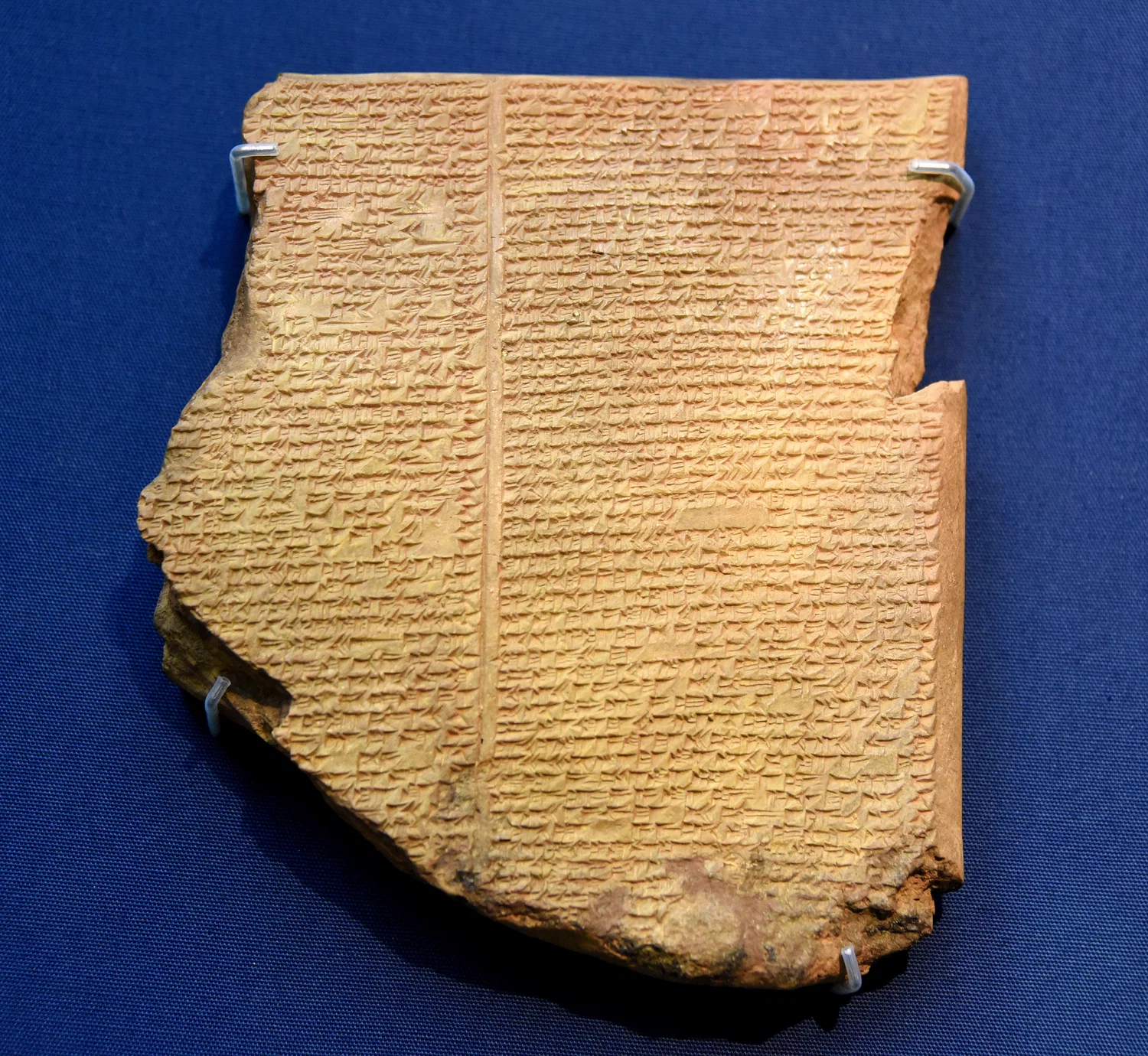
(Genesis 6:1–4, NRSVue)
- Three readings of “sons of God” have circulated in the Christian tradition. The Sethite view says the sons of God are the righteous line of Seth and the daughters of men are the corrupted line of Cain; the sin is intermarriage between the two. The royal view says the sons of God are ancient tyrant-kings who claimed divine status. The divine-being view says the sons of God are members of the heavenly council who took human wives. Each has its defenders, but the divine-being reading is the most natural in the Hebrew, the one Second Temple Judaism took for granted, the one 1 Enoch elaborates extensively, and the one assumed by 2 Peter 2:4–5 and Jude 6 in the New Testament. The text uses the phrase bene Elohim the same way it does in Job 1:6, Job 2:1, Job 38:7, and Psalm 29:1, where it always means heavenly beings.
It’s worth saying why the Sethite view became dominant in Western Christianity. It was largely a defensive move. The divine-being reading made post-Augustine theologians uneasy. It implied real interaction between heavenly beings and human women, and it didn’t fit the natural-vs-supernatural categories Latin theology preferred. The Sethite reading naturalized the passage and made the strange go away. But the strange was the point. Second Temple Judaism, the New Testament writers (2 Peter, Jude), and the rest of the Old Testament’s bene Elohim vocabulary all point to a divine-being reading that the early church largely inherited and the later church mostly buried. Recovering it isn’t innovation; it’s restoration.
- What’s happening, then? The framework Heiser develops in The Unseen Realm fits the text well: a group within the divine council oversteps. They mate with humans. The result is a hybrid offspring described as “Nephilim,” “mighty men,” “men of renown.” This isn’t sentimental folklore. It’s a claim that the corruption of God’s good creation has reached up into the heavenly realm, and the corruption of the heavenly realm has now seeped down into human beings. The cosmos is unraveling at multiple levels.
→ Read the divine council framework for the broader background of how the Bible thinks about the heavenly assembly and its rebellions.
Influence callout: Michael S. Heiser (The Unseen Realm; the sons of God reading)
Heiser’s reading of Genesis 6:1-4 is one of the most distinctive features of the divine council framework on this site. The bene ha-elohim (sons of God) at 6:2 and 6:4 are, on Heiser’s reading, not fallen humans (the Sethite line, as Augustine and much of the later Western tradition read it), and not an editorial mythological remnant. They are members of the divine council, the heavenly beings YHWH governs over (cf. Job 1:6; 2:1; 38:7; Ps 82:1; Ps 89:6-7). Heiser argues that the verse is a deliberate intrusion of the supernatural worldview the rest of the Hebrew Bible takes for granted. The Nephilim who result from the bene ha-elohim‘s union with human women are, in this reading, a transgressive offspring that helps explain the chapter’s premise: the wickedness of humanity was great on the earth, and a corruption that runs deeper than ordinary human moral failure is in view. Heiser links Genesis 6 forward to the New Testament’s references to spirits kept in chains until judgment (2 Pet 2:4; Jude 6) and to the bizarre prison-imprisonment language at 1 Pet 3:18-22. The reading is contested (good scholars disagree on the identity of the bene elohim), but the chapter is unmistakably strange in a way that the Sethite reading does not adequately account for. Heiser’s deeper pastoral move is to insist that the Bible’s worldview is supernatural through and through, and that modern readers who have flattened that worldview into something materially safer have lost some of the text’s actual claims. The chapter is one of the sites of that recovery.
- Nephilim literally means something like “fallen ones” (from the Hebrew naphal, “to fall”), though some scholars suggest derivations from Aramaic with similar meaning. The text describes them as “the heroes that were of old, warriors of renown.” That language echoes ANE hero-king figures, the demigods of Near Eastern myth (Gilgamesh, the heroes of Ugaritic epics). Genesis is doing something subversive: those legendary heroes? They’re not divine. They’re rebellious offspring, and they’re part of why the world is now what it is.
- Verse 3 has its own puzzle. “My Spirit will not strive with man forever, because he also is flesh; so his days will be one hundred twenty years.” Two main readings exist. Either God is announcing a new shorter human lifespan (the long Genesis 5 lifespans giving way to a 120-year cap, anticipated even before the flood), or God is announcing 120 years of grace before the flood comes. The flood narrative seems to lean toward the second: a countdown clock, with the ark being built during it.
- The Nephilim show up again in Numbers 13:33, when the spies return from Canaan and report giants in the land. There’s a thread connecting Genesis 6 to the conquest narratives. The implication is that the Nephilim, or whatever genetic and spiritual pollution they represent, survive the flood somehow and reappear when Israel approaches the land. Whether this is meant literally or symbolically, it’s part of the larger framework: the divine-council rebellions are not all resolved by the flood.
B · Genesis 6:5–8 · The grief of God
⁵ Yahweh saw that the wickedness of man was great in the earth, and that every imagination of the thoughts of his heart was only evil continually. ⁶ Yahweh was sorry that he had made man on the earth, and it grieved him in his heart. ⁷ Yahweh said, “I will destroy man whom I have created from the surface of the ground; man, along with animals, creeping things, and birds of the sky; for I am sorry that I have made them.” ⁸ But Noah found favor in Yahweh’s eyes.
- “Every imagination of the thoughts of his heart was only evil continually.” This is total. It isn’t that humans are sometimes wicked. It’s that the imagination itself, the ground from which thoughts grow, has been compromised. The corruption is all the way down. Walton calls this a description of systemic evil, not just individual misdeeds. It’s the collective state of the human community.
- “Yahweh was sorry that he had made man.” The Hebrew is vayinachem, from the root nacham. It can mean to regret, to be sorry, to relent, to be moved to grief. The translation matters. This isn’t God making a mistake and changing his mind. This is God grieving. The same word is used in 1 Samuel 15:35 about Saul, where it carries the same emotional weight. Genesis is being honest about something hard: the God of the Bible is not a stoic. He feels what humans have become.
- “It grieved him in his heart.” Two grief words stacked. The text wants us to feel the weight. This is not the language of an angry deity dispensing justice from a distance. It’s the language of a parent who has watched a child go wrong, and the watching itself is suffering.
- “But Noah found favor in Yahweh’s eyes.” The pivot of the chapter. The Hebrew word is chen, “grace” or “favor.” Of all the sentences in the chapter, this one might be the most consequential. The story doesn’t end with grief. There’s a but.
- Notice that Noah finds favor before anything is said about his righteousness (which comes in the next section). The favor comes first; the righteousness is the response to the favor. This is the grammar of grace throughout scripture, not just in Paul.
C · Genesis 6:9–12 · Noah walked with God
⁹ This is the history of the generations of Noah. Noah was a righteous man, blameless among the people of his time. Noah walked with God. ¹⁰ Noah became the father of three sons: Shem, Ham, and Japheth. ¹¹ The earth was corrupt before God, and the earth was filled with violence. ¹² God saw the earth, and saw that it was corrupt, for all flesh had corrupted their way on the earth.
- “This is the history of the generations of Noah” introduces the next toledot in Genesis. The book’s structure is moving forward: the toledot of Adam (5:1), the toledot of Noah (6:9), and so on. We’re inside the architecture of Genesis. The toledot of Noah is going to take us through the flood and out the other side.
- Three things are said about Noah: righteous, blameless, walked with God. Walked with God is the same phrase used of Enoch in 5:24. The pattern Enoch glimpsed becomes the foundation of how Noah survives the flood. Noah is the second person in scripture explicitly said to walk with God. The line of those who walk with God will become a thread that runs all the way to the New Testament.
- Blameless is tamim in Hebrew. The word doesn’t mean “sinless” in the later Christian sense. It means “complete, whole, having integrity.” Noah is whole. He hasn’t been corrupted at the level the rest of the world has. There’s a continuity in him between heart, word, and action that doesn’t exist in his contemporaries.
- “Among the people of his time” is a phrase commentators have spilled ink over. Some read it as a qualifier (“blameless for his time,” with the implication that he might not have been blameless in better times). Others read it as a contrast (“blameless despite his time,” the only one not absorbed by the surrounding corruption). The latter reading fits better with the chapter’s grief-and-favor structure. Noah stands out.
- “Filled with violence.” The Hebrew word is chamas. The word will return in the next chapter and in the prophets. It’s not just physical violence; it’s the breaking of social trust, the kind of disorder that makes communities unravelable. Genesis 6 is describing not just sin in some abstract sense but a community that has come apart. The flood, when it comes, will undo what was already in process of undoing.
D · Genesis 6:13–22 · The ark commission
¹³ God said to Noah, “I will bring an end to all flesh, for the earth is filled with violence through them. Behold, I will destroy them and the earth. ¹⁴ Make a ship of gopher wood. You shall make rooms in the ship, and shall seal it inside and outside with pitch. ¹⁵ This is how you shall make it. The length of the ship shall be three hundred cubits, its width fifty cubits, and its height thirty cubits. ¹⁶ You shall make a roof in the ship, and you shall finish it to a cubit upward. You shall set the door of the ship in its side. You shall make it with lower, second, and third levels. ¹⁷ I, even I, do bring the flood of waters on this earth, to destroy all flesh having the breath of life from under the sky. Everything that is in the earth will die. ¹⁸ But I will establish my covenant with you. You shall come into the ship, you, your sons, your wife, and your sons’ wives with you. ¹⁹ Of every living thing of all flesh, you shall bring two of every sort into the ship, to keep them alive with you. They shall be male and female. ²⁰ Of the birds after their kind, of the livestock after their kind, of every creeping thing of the ground after its kind, two of every sort shall come to you, to keep them alive. ²¹ Take with you of all food that is eaten, and gather it to yourself; and it will be for you and for them as food.” ²² Thus Noah did. According to all that God commanded him, so he did.
- The dimensions of the ark deserve attention. The text gives us specifications more careful than any other building project so far in Genesis: 300 cubits long, 50 wide, 30 high. The ratio (6:1:0.6) corresponds to the proportions of a stable maritime vessel. But notice also the tripartite structure: lower, second, and third levels. Three stories, with a single door in the side. Walton, Mackie, and others observe that this is the same vertical structure as the later Tabernacle and Temple: three vertical layers, single entrance. The ark is a floating proto-temple. God is preserving his image-bearers in a sanctuary-shaped vessel.
- “I will establish my covenant with you” is the first explicit covenant language in scripture. The Hebrew word is berit. We’ve seen God-and-human relationships before (Adam, Enoch, the warnings to Cain), but this is the first formal covenant. The pattern is significant: covenant is given before any obedience is demonstrated, before the flood comes, as the basis for survival. The grace precedes the work.
- Notice the parallels to Genesis 1. There, God spoke and ordered. Here, God speaks specifications. There, the cosmos got divided into three vertical layers (heavens, earth, seas). Here, the ark gets divided into three levels. There, animals after their kinds. Here, animals after their kinds (verse 20). The ark is a microcosmic recapitulation of the original cosmos. It’s a seed of the world that will be planted in the soil of the post-flood earth.
- “Take with you of all food that is eaten.” The provisioning is practical. But the underlying picture is striking: the ark is going to contain a representative sample of every category of life. It’s not chaos sealed in a box. It’s an ordered ecology, preserved.
- “Thus Noah did. According to all that God commanded him, so he did.” The chapter’s last verse. After grief, after favor, after the commission, just one sentence. Noah did it. This is the foundation of the flood narrative: a man heard God, took him at his word, and built the ark even though it had never rained that way. Hebrews 11:7 will read this as the great act of faith: “by faith Noah, when he was warned about things not yet seen, in reverence prepared an ark for the saving of his household.” The chapter ends with quiet obedience.
Reflection prompts
- Genesis 6 names a God who grieves. He isn’t aloof from human evil; he’s wounded by it. What changes when you let yourself imagine God’s response to a corrupt world as grief rather than as anger?
- Noah found favor (chen) before he is described as righteous. The grace comes first, the obedience follows. Where in your life are you trying to earn favor that has already been given?
- The ark is a sanctuary-shaped vessel for preserving the image-bearing line through a deluge. What in your life is functioning as your ark right now? What are you keeping alive on it?