

Genesis 22 is one of the heaviest chapters in the Hebrew Bible. The Jewish tradition calls it the Akedah, “the binding,” and treats it as the foundational test of the patriarchal cycle. The Christian tradition has read it, since the New Testament, as a prefiguration of the cross. The chapter has been written about, painted, sung, debated, prayed over, and resisted for more than two thousand years. There is no neutral way to read it.
The chapter opens with three Hebrew words that carry the weight of the whole patriarchal cycle: lech-lecha. “Go for yourself / go to yourself.” The same construction Yahweh used in Genesis 12:1, the original call. The first lech-lecha asked Abraham to leave his past. The second lech-lecha asks him to surrender his future. Between them sits the entire shape of the covenant life. The chapter is, in the most literal way, the patriarchal narrative coming back to its starting word.
The chapter then narrates a three-day journey, a wood-bearing son who asks the question every reader is asking (“where is the lamb?”), an altar built on a mountain, a knife raised, and a voice from heaven that stops the descending hand. A ram caught in a thicket becomes the substitute. The mountain is named Yahweh-yireh, “the LORD will provide” (or “the LORD will see”). The covenant blessing is renewed in language that explicitly extends to “all the nations of the earth.”
The chapter is doing several things at once. It is the climactic test of Abraham’s faith. It is the confirmation that Yahweh is not a deity who takes children (a sharp contrast to surrounding ANE religions in which child sacrifice was sometimes practiced). It is the introduction of the substitutionary motif that the rest of the Bible’s sacrificial system will develop. It is the moment at which the blessing of “all the families of the earth” (12:3) is renewed in stronger language. And it is, in the Christian tradition, a deep typological pointer to the cross. Each of these readings has integrity. None of them is the whole story.
A note on what we are about to read. Genesis 22 contains a father preparing to kill his son at God’s instruction. The text is recording something deeply uncomfortable, and it does not soften it. Modern readers, especially modern parents, often find this chapter morally offensive. The chapter does not need to be defended; it needs to be read carefully. We will try to read it with both honesty about the difficulty and attention to what the text is actually doing.
A · Genesis 22:1–2 · The second lech-lecha
¹ After these things God tested Abraham. He said to him, “Abraham!” And he said, “Here I am.” ² He said, “Take your son, your only son Isaac, whom you love, and go (lech-lecha) to the land of Moriah, and offer him there as a burnt offering on one of the mountains that I shall show you.” (Genesis 22:1–2, NRSVue)
- The chapter opens with a sentence that frames everything that follows: “After these things God tested Abraham.” The Hebrew word nissah means “to test, to try, to prove.” The narrator is telling the reader, before the action begins, what the chapter is. It is a test. The reader is given information Abraham does not have. We know we are reading a test scene. Abraham does not.
Word study: nissah (נִסָּה), “to test”
The Hebrew verb nissah is the standard word for testing or proving. Used elsewhere of God testing Israel in the wilderness (Deuteronomy 8:2, 8:16), of God testing Hezekiah (2 Chronicles 32:31), and of testing in the wisdom and prophetic traditions. The word does not necessarily imply uncertainty about the outcome on God’s part; it implies a process by which something is brought to the surface, demonstrated, established. The chapter is recording what becomes visible when the patriarch is brought to the limit, not God’s surprise about what was always already inside him.
- “Take your son, your only son Isaac, whom you love” (verse 2). The instruction is given in escalating intimacy. Your son. Your only son. (A pointed phrase, since Ishmael, Abraham’s other son, has just been sent away in chapter 21; the chapter is writing as if Isaac is now functionally the only son in covenant terms.) Whom you love. The text wants the reader to feel exactly what is at stake. This is not a casual request. The narrator is naming everything Abraham is being asked to surrender.
- Lech-lecha. The phrase used by Yahweh to Abram in Genesis 12:1 (“Go from your country and your kindred and your father’s house”) returns here. It is the only other place in the Hebrew Bible the construction is used. The patriarchal cycle began with lech-lecha (leave the past); it now reaches its climactic test with lech-lecha (surrender the future). The chapter is bookending what the call has been all along. To follow Yahweh has been, from the first word, to walk where Yahweh leads, leaving and surrendering as instructed.
Influence callout: Tim Mackie
Mackie’s literary reading of the lech-lecha bookend frames the whole Abraham cycle (chapters 12 to 22) as a structure with the call at one end and the binding at the other. The first lech-lecha required Abraham to give up what had formed him; the second requires him to give up what had been promised to him. The covenant family’s vocation, in Mackie’s reading, is bound to both gestures. To enter the covenant is to leave; to remain in the covenant is to surrender. The chapter is showing what the call has cost across thirteen chapters and twenty-five years.
- “To the land of Moriah… on one of the mountains that I shall show you.” The location is named only by region; the specific mountain is undisclosed. Abraham must walk before he knows where. The same pattern as Genesis 12:1 (“to a land that I will show you”). Faith is constituted, again, by motion before clarity.
Pushback note
A common evangelical reading frames the chapter as: “God told Abraham to sacrifice his son, but secretly God was never going to let it happen, so it’s fine.” That is a flattening. The chapter records God commanding child sacrifice and then stopping it. The two halves are both real. What the chapter is not doing is endorsing child sacrifice as a category. The surrounding ANE religions (Canaanite, Phoenician, Carthaginian) practiced ritual child sacrifice; Yahweh in this chapter explicitly intervenes against the completion of the act. By the end of the chapter, the substitution of the ram for the son will have become a permanent piece of the Hebrew Bible’s theology, and child sacrifice will be repeatedly named as an abomination in the prophetic tradition (Jeremiah 7:31, 19:5; Ezekiel 16:20-21). The chapter is the foundation for that prophetic stance, not a contradiction of it. But the reader who skips past the discomfort by saying “God never meant it” misses what the chapter is doing.
B · Genesis 22:3–10 · The journey and the binding
³ So Abraham rose early in the morning, saddled his donkey, and took two of his young men with him, and his son Isaac. He cut the wood for the burnt offering, and set out and went to the place that God had shown him. ⁴ On the third day Abraham looked up and saw the place far away. ⁵ Then Abraham said to his young men, “Stay here with the donkey; the boy and I will go over there; we will worship, and then we will come back to you.” ⁶ Abraham took the wood of the burnt offering and laid it on his son Isaac, and he himself carried the fire and the knife. So the two of them walked on together. ⁷ Isaac said to his father Abraham, “Father!” And he said, “Here I am, my son.” He said, “The fire and the wood are here, but where is the lamb for a burnt offering?” ⁸ Abraham said, “God himself will provide the lamb for a burnt offering, my son.” So the two of them walked on together. ⁹ When they came to the place that God had shown him, Abraham built an altar there and laid the wood in order. He bound his son Isaac, and laid him on the altar, on top of the wood. ¹⁰ Then Abraham reached out his hand and took the knife to kill his son. (Genesis 22:3–10, NRSVue)
- Abraham’s response is, in narrative terms, immediate. “Abraham rose early in the morning, saddled his donkey…” (verse 3). The narrator gives no internal monologue. No protest, no negotiation, no anguished prayer is recorded. Just the saddling of the donkey, the cutting of the wood, the gathering of the young men, the journey. The chapter resists giving us Abraham’s psychological interior. Either it does not know, or it is showing us a man who has stopped negotiating with God.
- The journey is three days (verse 4). The number is theologically loaded; three-day journeys in the Hebrew Bible often signal liminal, between-state moments (the Israelites’ three-day journey into the wilderness, Jonah’s three days in the fish, the resurrection on the third day). The narrator gives Abraham three days of walking with what God has just commanded. We are given no record of what passes between Abraham and Isaac on those three days. The text refuses to fill the silence.
Influence callout: Walter Brueggemann
Brueggemann’s reading of the three-day journey foregrounds the silence. The text could have told us anything; it tells us nothing. Abraham walks. Isaac walks. The young men walk. The donkey walks. The chapter’s restraint is the chapter’s pastoral move: the silent journey is the long shape of every faithful person’s hardest obedience. Brueggemann argues that the chapter knows the modern reader’s question (“how could he?”) and refuses to answer it directly. The silence is the answer.
- Verse 5 contains a phrase the rest of the chapter will be measured against: “Stay here with the donkey; the boy and I will go over there; we will worship, and then we will come back to you.” The plural “we will come back” has been read variously. Some readers see it as Abraham’s faith that God will somehow restore the boy, even after the sacrifice (Hebrews 11:17 to 19 reads it this way: “Abraham reasoned that God could even raise him from the dead”). Others see it as a pious lie, told to spare the young men. The text does not clarify. What the text does record is the patriarch saying the words, and they will turn out to be true.
- The wood detail (verse 6) is small but searing. Abraham lays the wood on Isaac. The boy who is about to be killed is being asked to carry the wood that will burn his own body. The Christian tradition has read this scene typologically: the son carrying the wood to the place of his own sacrifice prefigures Jesus carrying the cross. The typology is not invented by Christian readers; it has roots in ancient Jewish reflection on the Akedah and is picked up explicitly in the New Testament (Hebrews 11:17 to 19; James 2:21 to 22; the binding is referenced in Romans 8:32 with the language of “his own son”). We can name the typology without forcing it.
Influence callout: Origen (Homilies on Genesis, Homily 8)
Origen’s homily on Genesis 22, delivered at Caesarea around 240 AD, is one of the earliest extant Christian commentaries on the Akedah. He reads the chapter as the foundational typological prefiguration of the cross. Isaac, who carries on his own shoulders the wood for the burnt offering, is the type of him who carries his own cross to the place of execution. The substitute ram caught in the thicket prefigures the substitutionary lamb at Calvary. The third-day arrival at the place of sacrifice prefigures the third-day resurrection. Origen reads the patriarch’s hineni as the prefiguration of the Father’s own willingness, and the angel’s stop as the moment that distinguishes the Father from Abraham: the Father did not stay his own hand. Origen’s reading set the pattern for the entire patristic tradition. Augustine, Ambrose, Chrysostom, and the Latin tradition through Aquinas all received this typological reading from Origen and developed it. The Christian reading of the Akedah as a Christ-shaped narrative is not a Reformation invention or a modern devotional move; it goes back to the third-century church reading the chapter alongside the gospels. The site does not collapse the chapter into Christ-typology (the chapter has its own Hebrew Bible weight that has to be honored on its own terms), but the typological reading is the most enduring single layer of Christian interpretation on Genesis 22 and deserves to be heard in its earliest, most generative form.
- Isaac’s question (verse 7) is the chapter’s pivot point. “Father!… where is the lamb for a burnt offering?” Isaac is the one carrying the wood; he can see the fire in his father’s hand and the knife at his father’s belt; he knows what a burnt offering is and what is missing. His question is the question every reader is asking. Where is the lamb?
- Abraham’s answer (verse 8) is the chapter’s deepest theological line: “God himself will provide the lamb for a burnt offering, my son.” The Hebrew is Elohim yireh-lo ha-seh le-olah. The verb yireh (from ra’ah, “to see”) can be rendered “will see,” “will provide,” or “will see for himself.” The patriarch’s answer is ambiguous. Is he speaking faith (God will provide a substitute)? Is he speaking euphemism (Isaac is the lamb God has provided)? Is he speaking the answer he himself does not yet understand? The text gives us all three readings at once. By the end of the chapter, the answer Abraham speaks here will be more true than he knows.
Word study: yireh (יִרְאֶה), “he will see / he will provide”
The Hebrew verb yireh runs through this chapter as the central theological word. It appears in verse 8 (“God will yireh the lamb”), verse 14 (“Abraham named the place Yahweh-yireh“), and again at the end of verse 14 (“on the mountain of the LORD it shall be yera’eh“). The verb means “to see,” but in this chapter’s idiom it carries the sense of “to see to,” “to provide for,” “to attend to.” The God who sees is the God who provides. The theological move the chapter makes is that seeing and providing are not separable acts of God. To be seen by God in extremity is to be provided for. The mountain’s name is the chapter’s conclusion: the place where God sees is the place where God provides.
- Verses 9 to 10 record the binding with stark economy. The altar is built. The wood is laid. The boy is bound. The boy is placed on the altar, on top of the wood. The hand reaches for the knife. The chapter offers no description of Isaac’s response to being bound. The Hebrew word vaya’aqod, “and he bound,” gives the chapter its name in the Jewish tradition (the Akedah, “binding”). The verb is unusual; it appears nowhere else in the Hebrew Bible. The narrator chose a word that exists only here, for this scene. The binding is its own category.
Pushback note
Some Christian readings of the Akedah are eager to make Isaac a willing participant, often citing Jewish midrashic traditions in which Isaac is fully grown and explicitly consents. The Hebrew Bible’s own text says no such thing. Isaac is bound. The text’s silence on his response should be read as a silence, not as consent. We do not know what Isaac said in this moment, and the absence of his speech is part of the chapter’s pastoral weight. Reading him as a willing partner can flatten the trauma the chapter is recording.
C · Genesis 22:11–19 · The voice, the ram, the renewed promise
¹¹ But the angel of the LORD called to him from heaven, and said, “Abraham, Abraham!” And he said, “Here I am.” ¹² He said, “Do not lay your hand on the boy or do anything to him; for now I know that you fear God, since you have not withheld your son, your only son, from me.” ¹³ And Abraham looked up and saw a ram, caught in a thicket by its horns. Abraham went and took the ram and offered it up as a burnt offering instead of his son. ¹⁴ So Abraham called that place “The LORD will provide”; as it is said to this day, “On the mount of the LORD it shall be provided.” ¹⁵ The angel of the LORD called to Abraham a second time from heaven, ¹⁶ and said, “By myself I have sworn, says the LORD: Because you have done this, and have not withheld your son, your only son, ¹⁷ I will indeed bless you, and I will make your offspring as numerous as the stars of heaven and as the sand that is on the seashore. And your offspring shall possess the gate of their enemies, ¹⁸ and by your offspring shall all the nations of the earth gain blessing for themselves, because you have obeyed my voice.” ¹⁹ So Abraham returned to his young men, and they arose and went together to Beer-sheba; and Abraham lived at Beer-sheba. (Genesis 22:11–19, NRSVue)
- The voice arrives at the last possible instant. “Abraham, Abraham!” The doubling of the name is the standard Hebrew construction for urgent address (Moses, Moses; Samuel, Samuel; Saul, Saul). Abraham’s response is the same as his response in verse 1: hineni, “here I am.” The patriarch who said hineni to the command saying hineni to the stop. The chapter is showing us a man whose disposition has been the same throughout: present, attentive, available to whatever the divine voice will say next.
- “Do not lay your hand on the boy or do anything to him.” The reprieve is unambiguous. Whatever was about to happen is now stopped. The voice continues: “for now I know that you fear God, since you have not withheld your son, your only son, from me.” The verb yare (fear) here is not terror; it is the Hebrew word for the deep, structuring reverence at the heart of the wisdom tradition (the fear of the Lord is the beginning of wisdom). What the chapter has demonstrated is not the patriarch’s willingness to murder, but his willingness to surrender even his deepest claim. The test is over.
Word study: yare (יָרֵא), “to fear” / “to revere”
The Hebrew word yare is the standard verb for the religious disposition the wisdom tradition will call “the fear of the LORD.” It is not panic or terror; it is structural reverence, the orientation of one’s whole life around the recognition of who God is. Genesis 22:12 names Abraham’s binding-and-stopping action as the demonstration of this yare. The patriarch’s fear-of-God is not a feeling; it is a posture of total availability. Compare Proverbs 1:7 (“the fear of the LORD is the beginning of knowledge”), Psalm 111:10 (“the fear of the LORD is the beginning of wisdom”), and the running theme of the wisdom tradition. Genesis 22:12 is the patriarchal narrative’s first full naming of the disposition.
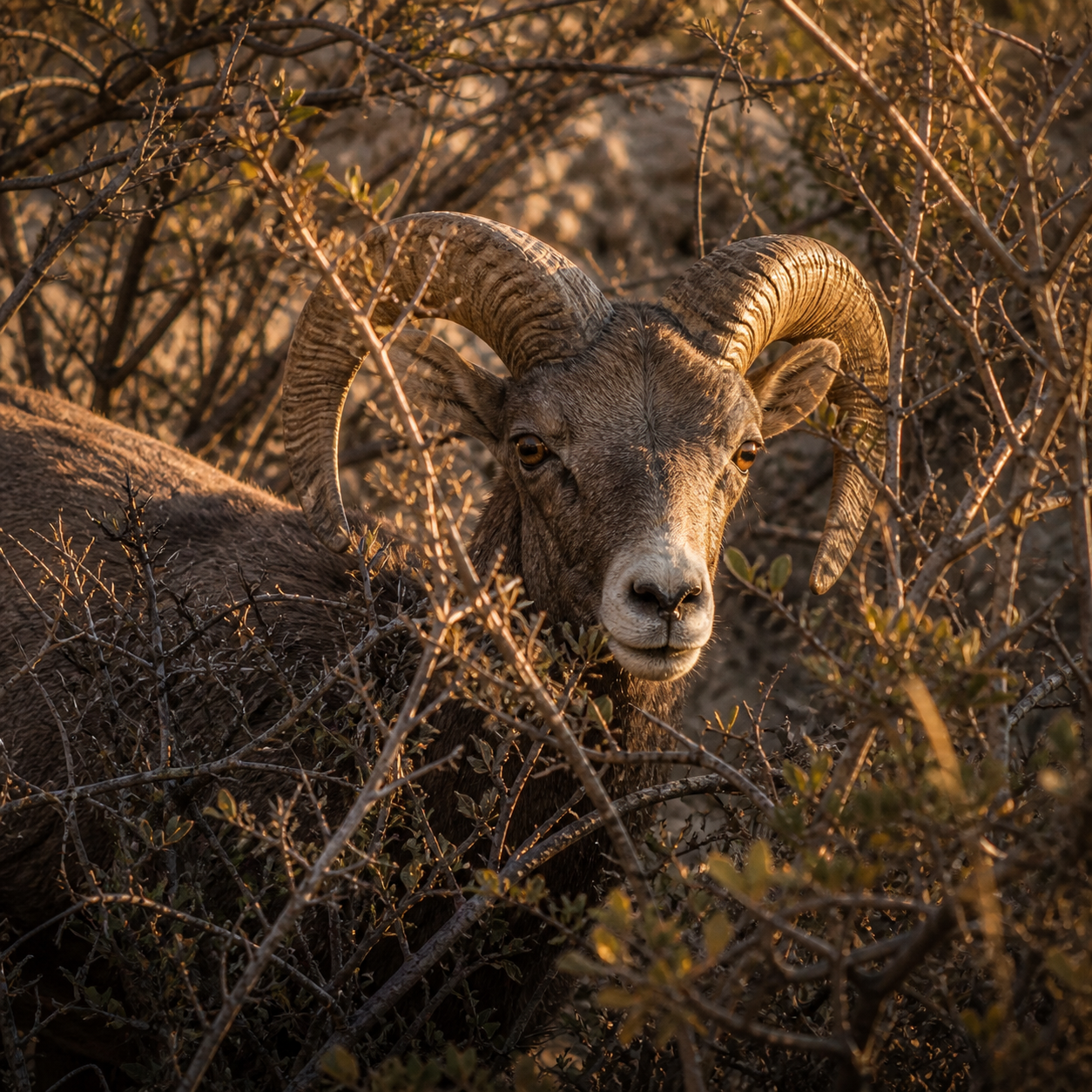
- “Abraham looked up and saw a ram” (verse 13). The substitute appears. The Hebrew is vayisa Avraham et einav vayar, “and Abraham lifted up his eyes and saw,” the same construction the patriarch has used at decisive moments before (Genesis 13:14, 18:2, 22:4). The lifted eye sees what God has provided. The ram caught in the thicket becomes the burnt offering “instead of his son” (tachat beno). The substitution is permanent. From this moment forward in the Hebrew Bible, ram-substitution is the canonical alternative to the offering of the firstborn son.
Influence callout: Tim Mackie
Mackie’s reading of the substitution motif notes how the chapter establishes a pattern that the rest of the Hebrew Bible will develop. The firstborn of every Israelite household is, by Exodus 13:13 and 34:20, redeemed by a substitute (a lamb). The Levitical sacrificial system runs on the principle that an animal substitute receives what would otherwise fall on the offerer. Genesis 22 is the seed of that whole theology. The Christian tradition reads the pattern forward to the cross, where the Son is offered (and not substituted) so that no further substitution is needed. The typological reading does real work, and the New Testament is explicit about it (Romans 8:32 echoes the language of “did not spare his own son”; Hebrews 11:17 to 19 names Abraham’s faith as a kind of resurrection-faith). The chapter is the deep root of the substitutionary motif throughout Scripture.
- The mountain is named Yahweh-yireh (verse 14): “the LORD will provide” or “the LORD will see.” The ambiguity of the verb (which we tracked through verse 8) is now formalized as a place-name. The proverb that follows (“on the mount of the LORD it shall be provided”) preserves the same ambiguity. The mountain is the place where God provides because the mountain is the place where God sees. By tradition, this mountain (Moriah) is later identified with the temple mount in Jerusalem (2 Chronicles 3:1). The site of the Akedah and the site of the temple are, in Jewish tradition, the same site. The mountain where God provided the ram becomes the mountain where the people of Israel will offer their sacrifices for the next thousand years.
Influence callout: Ray Vander Laan
Vander Laan’s geographic teaching makes Mount Moriah a meaningful place to name. The temple mount in Jerusalem (Mount Moriah, per 2 Chronicles 3:1) is, in this reading, the place where Abraham bound Isaac, where Solomon built the first temple, where the daily sacrifices were offered for centuries, and where (in the Christian reading) Jesus would later be crucified just outside the city walls on the same ridge system. The geography is the theology. The mountain of substitution is the mountain of sacrifice is the mountain of cross.
- Verses 15 to 18 record the renewed covenant blessing. “By myself I have sworn.” The Hebrew construction is unusual; God’s swearing by his own name is the strongest oath formula in the Hebrew Bible (the writer of Hebrews picks this up in 6:13 to 18: “Since he had no one greater by whom to swear, he swore by himself”). The blessing has three parts: offspring as numerous as the stars and the sand (the dual-image we tracked from chapters 13 and 15), the offspring possessing the gate of their enemies, and the climactic line: “by your offspring shall all the nations of the earth gain blessing for themselves.”
- The closing line of the blessing (verse 18) is the strongest statement of the Abrahamic universal blessing in the Hebrew Bible. Genesis 12:3 had the blessing in passive form (“in you all the families of the earth shall be blessed”). Genesis 22:18 names it in stronger form, with the explicit cause attached (“because you have obeyed my voice”). Paul will quote this verse, in this form, in Galatians 3:8: “the scripture, foreseeing that God would justify the gentiles by faith, declared the gospel beforehand to Abraham, saying, ‘All the gentiles shall be blessed in you.’” The chapter’s renewed covenant is the gospel-in-advance, formalized.
- Verse 19 closes the chapter with stark restraint: “So Abraham returned to his young men, and they arose and went together to Beer-sheba; and Abraham lived at Beer-sheba.” The narrator does not record Isaac returning. The chapter only mentions Abraham and the young men. Many Jewish and Christian readers have noticed this absence. Some midrashic traditions say Isaac went to study with the angels for several years; others say he went directly to his mother Sarah, who died (in chapter 23) of grief upon hearing what had happened. Either reading is reading-into the silence. What the text records is that Abraham returns alone, names the place, and goes to Beer-sheba. Isaac, in the Hebrew Bible, will not speak again until chapter 24 (where he goes out to meditate in the field). The boy who was bound becomes, for a time, silent.
Reflection prompts
- The chapter opens with the second lech-lecha in the Bible, and the first one closes with it. The patriarchal cycle begins with surrendering the past and ends with surrendering the future. Where in your life is God currently asking the second lech-lecha, the surrender of something promised, not just the leaving of something inherited? What does it cost you to walk that road before you know where it ends?
- Abraham answers Isaac’s question with the chapter’s deepest line: “God himself will provide the lamb.” He does not yet know what the answer means. Where in your life have you found yourself speaking words to someone you love whose meaning is more true than you yet understand? What would it look like to keep walking on the basis of the words, even before they have resolved into something you can fully see?
- The mountain is named Yahweh-yireh: the LORD will see / the LORD will provide. The seeing and the providing are not separable. Where in your life is there a place you can call by both names, where being seen by God and being provided for by God turned out to be the same thing?