
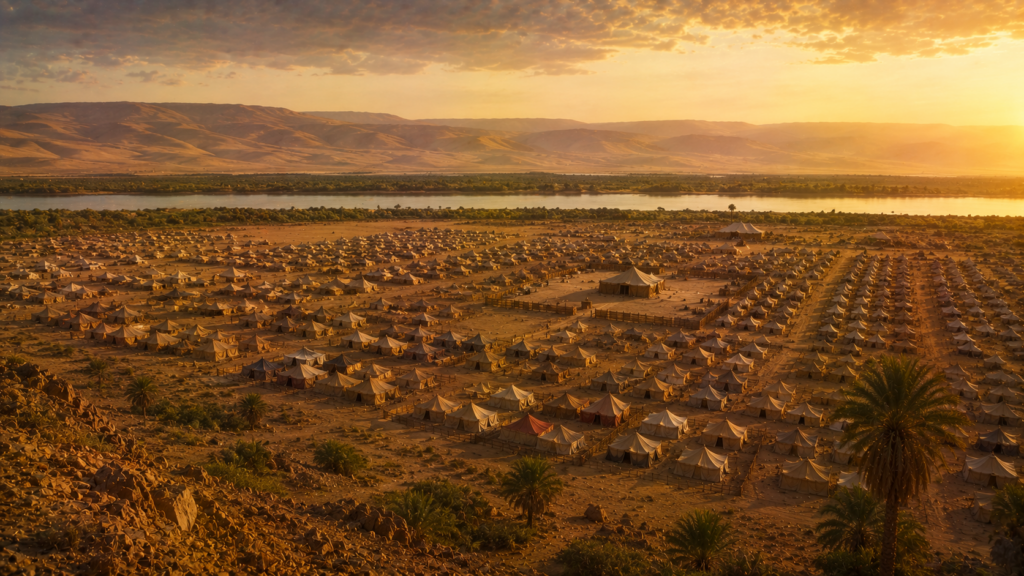
Chapter 26 is the structural keystone of the whole book. Nearly forty years after the first census of chapter 1, God orders a second, and it counts a different people: the generation born or grown up in the wilderness, standing now on the plains of Moab across from the land. The two censuses frame the entire book, and the difference between them is the story Numbers has been telling. The first counted the generation that came out of Egypt and would refuse the land; this one counts the generation that will enter it. Between the two lists, an entire generation has died, exactly as God said, and a new one has risen in its place (see the two generations).
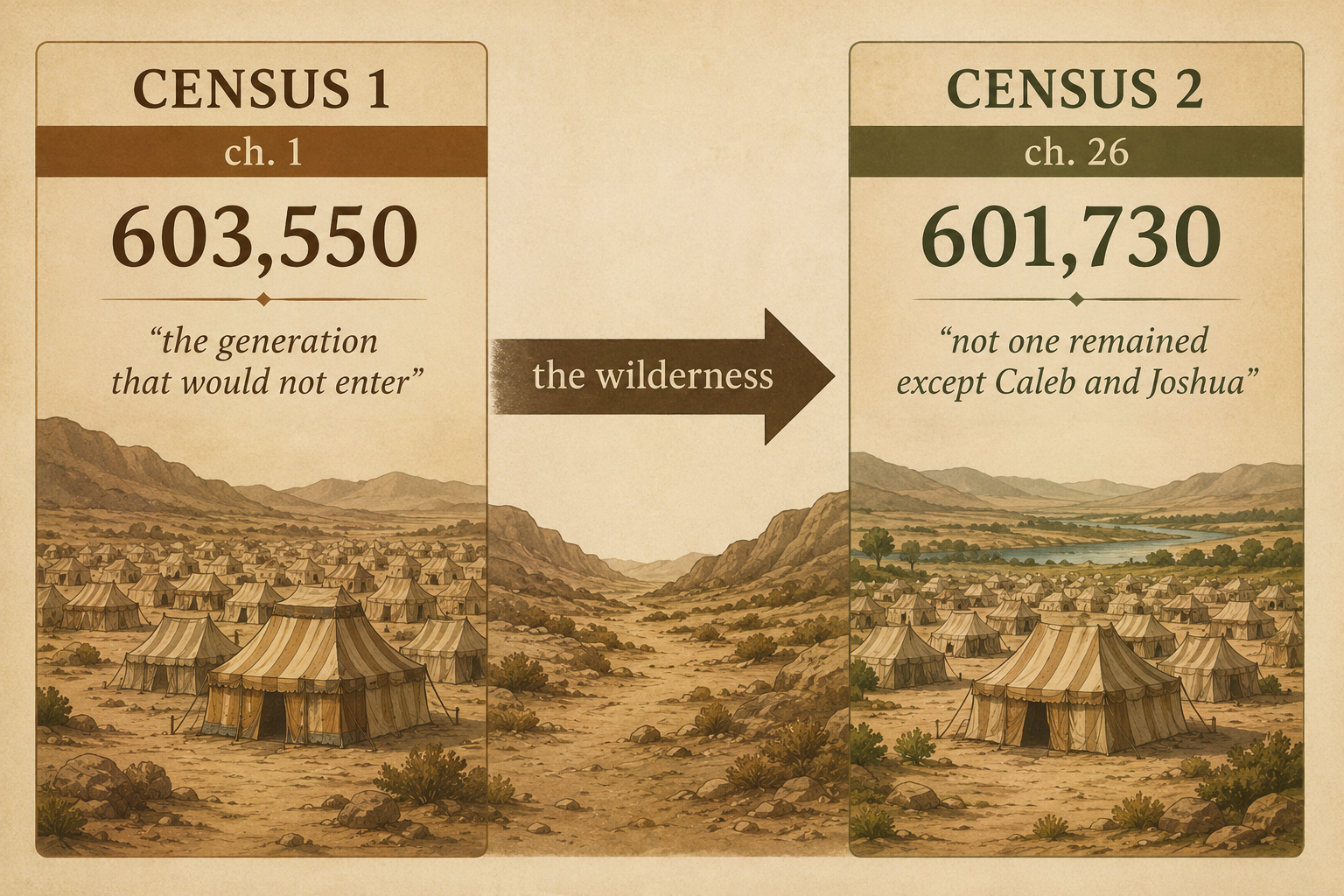
The chapter says so explicitly, and the verse that does it is the hinge of the book: among these there was not one of those who were counted by Moses and Aaron, for the LORD had said they would die in the wilderness; not one was left except Caleb and Joshua. The death-of-the-old is complete; the birth-of-the-new is counted. And the purpose of this census is telling. The first muster was for war; this one is for inheritance, dividing the land the new generation is about to receive. The mood has turned from death toward the future.
A · Numbers 26:1-51 · A new generation counted
² “Take a census of all the congregation of the children of Israel, from twenty years old and upward, by their fathers’ houses, all who are able to go out to war in Israel.”
- Take a census (vv. 1-2). The command echoes chapter 1 almost word for word: count the men twenty and up, able for war, by their ancestral houses. The same verb, paqad, “to muster, number, attend to,” runs through both censuses (see the word study in chapter 1). The deliberate repetition is the point. The reader is meant to set the two lists side by side and feel the gap of forty years and one whole generation between them.
- The same tribes, new numbers (vv. 5-50). Tribe by tribe the new generation is counted, and the totals have shifted: some tribes grew, some shrank (Simeon, prominent in the Baal-Peor sin, has dropped sharply), and the grand total comes to 601,730, slightly fewer than the 603,550 of chapter 1. The nation has survived the wilderness without growing; it has been sustained, not multiplied, through the years of judgment. God kept them alive, but the wilderness exacted its toll.
- Among these are the daughters of Zelophehad (v. 33). The census pauses to name a man who had no sons, only daughters: Mahlah, Noah, Hoglah, Milcah, and Tirzah. The detail seems minor, but it is a deliberate seed. In a census taken to divide land among male heirs, the text flags a household with none, and the next chapter will take up the question their case raises. Even in the dry arithmetic of the count, the book is watching for those the system might leave out.
Word study: nachalah (נַחֲלָה), “inheritance,” and a census that changed its purpose
The first census (chapter 1) mustered an army; this one apportions an inheritance. The chapter states it plainly: the land shall be divided… according to the number of names (vv. 53-54), and the word that governs the division is nachalah, “inheritance, heritage, allotted possession.” The same counting that once organized a fighting force now organizes the gift of the land. The shift is the whole book in a single word. The generation God numbered for war refused to fight and died; the generation God numbers here is counted not chiefly to wage war but to receive what God is giving. Nachalah names land held not by conquest-right but by gift and promise, passed down through families as God’s bequest to his people. The Levites, notably, are counted again and again have no nachalah of land, because the LORD is their inheritance (chapter 18). The census that began the book as a war-muster ends, in its second iteration, as an inheritance-roll: the new generation counted for a gift rather than only for a battle.
B · Numbers 26:52-65 · Not one remained
⁶⁴ But among these there was not a man of those who were counted by Moses and Aaron the priest, who counted the children of Israel in the wilderness of Sinai. ⁶⁵ For Yahweh had said of them, “They shall surely die in the wilderness.” There was not left a man of them, except Caleb the son of Jephunneh, and Joshua the son of Nun.
- The land shall be divided by lot (vv. 52-56). The land will be apportioned by lot (goral) and by size: larger tribes receive larger allotments, but the lot, cast before God, decides which territory falls to whom. The arrangement holds together fairness (proportion to need) and trust (the outcome left to God rather than to human bargaining). The new generation will receive the land as both a measured allotment and a gift from God’s hand.
- Not one… except Caleb and Joshua (vv. 64-65). Here is the hinge of the entire book, stated as plain fact. Every person counted in chapter 1 is gone, dead in the wilderness as God said, with exactly two exceptions: Caleb and Joshua, the two spies who trusted God when the other ten spread fear (chapters 13 to 14). The verdict of chapter 14 has been carried out to the last person. The line that divides the generation that died from the generation that lives is, once again, faith. The dividing line was never age or biology; it was trust.
- The verse holds judgment and grace together, the book’s signature combination. The judgment is total: the old generation is entirely gone. And the grace is total too: the nation still exists, counted and ready, the promise intact, the land within reach. God did not abandon the project when the first generation refused it; he carried it through the wilderness in their children. The two who believed lived to see the day. The promise outlasted the failure of those who forfeited it.
Influence callout: Dennis Olson and the death of the old, the birth of the new
This is the chapter Olson built his reading of Numbers around (see the two generations). The two censuses, he argues, are not tedious administrative bookends but the literary frame that interprets everything between them. Chapter 1 counts the generation that will die; chapter 26 counts the generation that will live; and the death-and-birth between them is the book’s true subject. Verse 64 is the structural fulcrum: not one was left. The first half of the book moved toward this death; the second half moves out from this birth toward the land. Olson’s insight turns Numbers from a disorganized miscellany into a coherent and pastorally pointed story: God’s purposes survive the failure of a generation, there is always a next generation, and the promise is carried forward even through judgment. The same pattern, the old self dying so the new can live, runs through the New Testament’s vision of dying and rising with Christ (Romans 6). Numbers 26 is its first great national enactment: an old order buried in the wilderness, a new one counted for the inheritance.
Reflection prompts
- The same counting that once mustered an army now apportions an inheritance. The generation counted to fight refused; the generation counted to receive will enter. Where are you so braced for battle that you have forgotten you are mainly being given a gift?
- “Not one remained except Caleb and Joshua.” The two who trusted lived to see what the others forfeited. Forty years is a long time to keep believing a promise. Where are you being asked to keep trusting God across a long delay?
- The promise survived the failure of an entire generation. Where do you need to hear that God has not abandoned a good purpose just because the people who first received it stumbled, and that he may be carrying it forward through those who come after?
Frameworks at play in this chapter: the two generations, wilderness and liminality.