
With the Balaam cycle (chapters 22 to 24), the camera pulls back from Israel’s camp to a hilltop across the valley, where a terrified king and a famous diviner plot against a people who never even know it is happening. Balak king of Moab, watching Israel’s victories pile up, hires Balaam son of Beor, an internationally renowned seer-for-hire, to curse Israel. The whole drama turns on one question: can a paid curse override the blessing of God? The answer the next three chapters give, again and again, is no. The Abrahamic promise stands: I will bless those who bless you, and the one who curses you I will curse (Genesis 12:3). Balaam will open his mouth to curse and blessing will come out, four times.
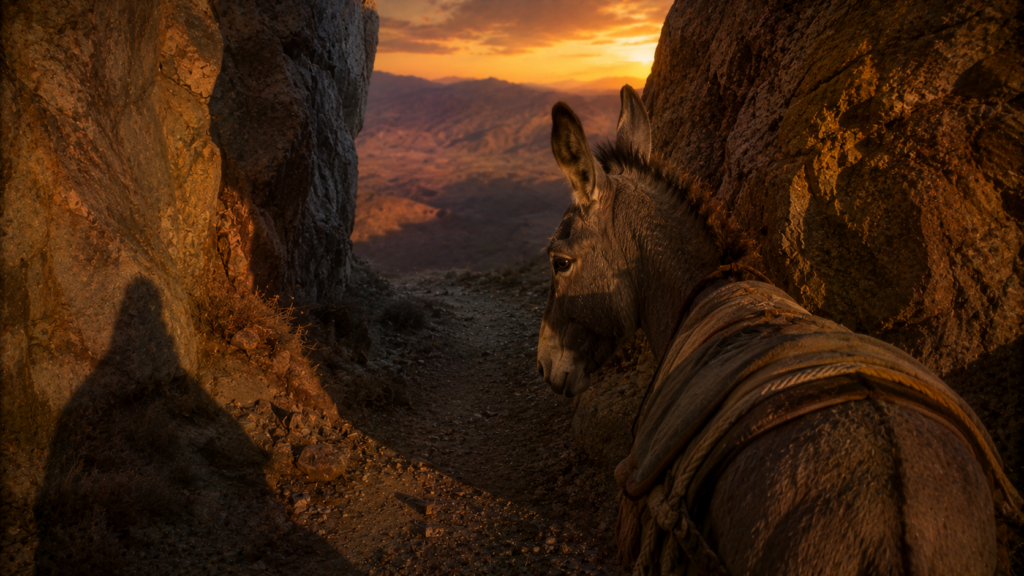
Chapter 22 sets the stage, and it does so with one of the Bible’s great comic and humbling scenes. The seer celebrated across the ancient world for his vision cannot see what his own donkey sees: the angel of YHWH standing in the road with a drawn sword. The animal saves the prophet’s life three times and gets beaten for it, until God opens the donkey’s mouth to rebuke him. The most famous seer in the story is the blindest character in it. Before Balaam ever speaks an oracle, the narrative has quietly established who is really in control.
A · Numbers 22:1-20 · The summons, and a blessing that cannot be cursed
⁶ “Please come now therefore curse this people for me, for they are too mighty for me. Perhaps I shall prevail, that we may strike them, and that I may drive them out of the land; for I know that he whom you bless is blessed, and he whom you curse is cursed.” … ¹² God said to Balaam, “You shall not go with them. You shall not curse the people, for they are blessed.”
- Curse this people for me (v. 6). Balak’s strategy is not military but spiritual: he cannot defeat Israel with armies, so he tries to hire supernatural power against them. He treats blessing and curse as commodities that a skilled professional can deploy for a fee. The whole ancient world believed in the power of the expert curse, and Balaam was, by reputation, the best money could buy.
- You shall not curse them, for they are blessed (v. 12). God’s answer is flat and final. Israel is blessed, and that settles it. The blessing is not a temporary mood God might be talked out of; it is the standing reality of this people’s relationship to him (see the olive tree on the irrevocability of Israel’s election: the gifts and the calling of God are irrevocable, Romans 11:29). A curse for hire cannot touch a people God has blessed. Balak has misunderstood the universe he lives in.
- I cannot go beyond the word of YHWH (vv. 18-20). Balaam, for all his greed (and the New Testament is blunt about his greed, 2 Peter 2:15), keeps insisting he can only say what God gives him to say. God finally permits him to go, but on a tight leash: only the word which I tell you, that you shall do. The diviner who sells curses for gold has been conscripted; he will go to Moab, but he will function as God’s mouthpiece, not Balak’s. The hired gun has been disarmed before he arrives.
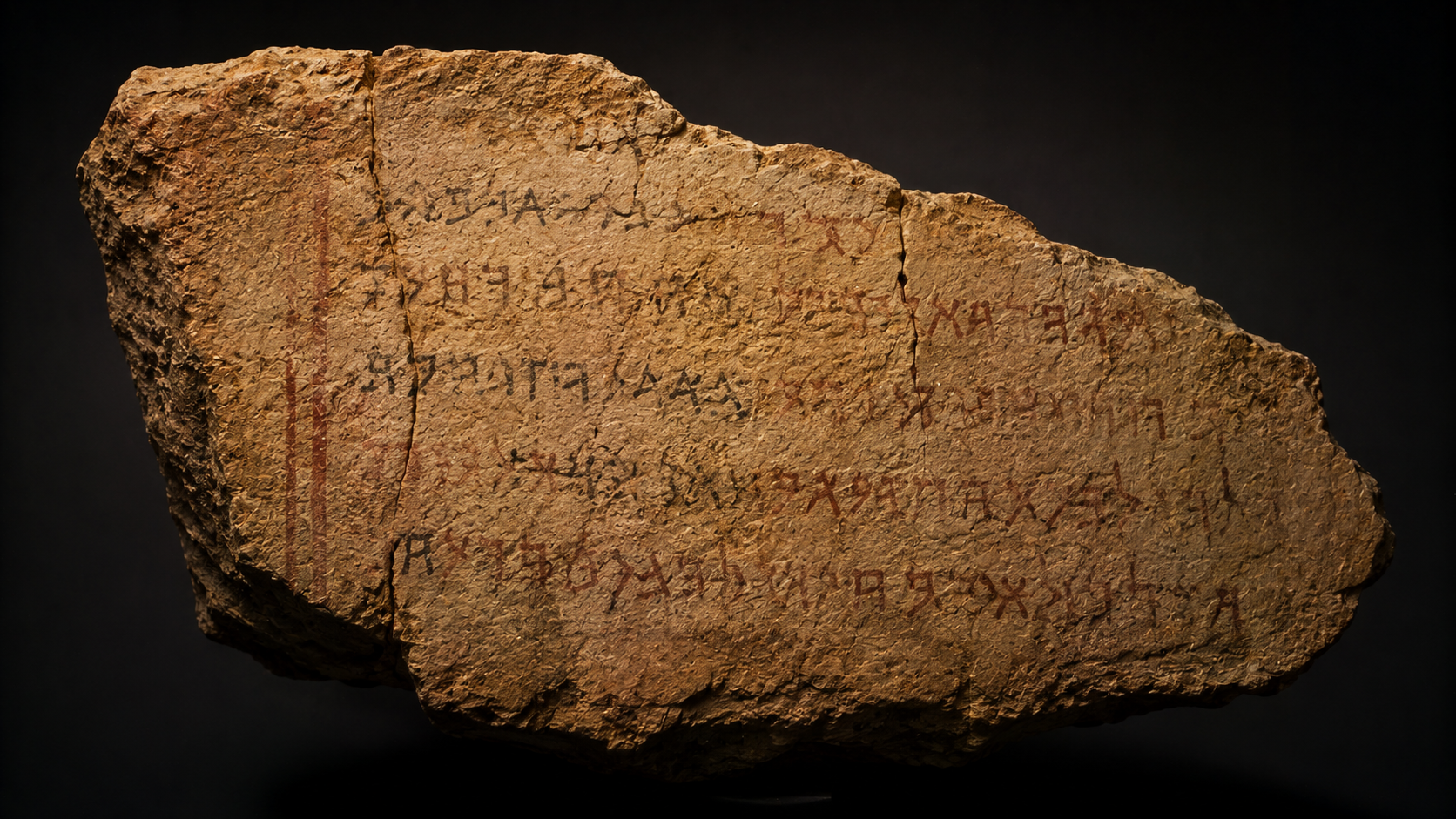
Influence callout: the Deir ‘Alla inscription (a biblical figure in the ancient record)
Balaam son of Beor is one of the rare biblical figures attested outside the Bible. In 1967, excavators at Tell Deir ‘Alla in the Jordan Valley found fragments of an ancient plaster wall inscription, dated to roughly the eighth or ninth century BCE, that opens by describing the visions of Balaam son of Beor, the seer of the gods. The text is not the biblical story; it is an independent local tradition about the same renowned seer, remembered in the very region where the biblical Balaam operated. For a site that reads Scripture in its ancient Near Eastern world, this is striking confirmation that Balaam was a real and famous figure in the religious imagination of Transjordan, exactly the sort of internationally-known diviner a frightened king like Balak would send for. (Jo Ann Hackett’s study of the Deir ‘Alla text and Bryant Wood’s survey of the evidence are the standard entry points.) The Bible is not inventing a folk character; it is telling the story of how the most celebrated seer of the region was overruled by the God of Israel and made, against his trade and his will, to bless the people he was paid to curse.
B · Numbers 22:21-35 · The seer and his donkey
²⁸ Yahweh opened the mouth of the donkey, and she said to Balaam, “What have I done to you, that you have struck me these three times?”
- The donkey saw the angel; Balaam did not (vv. 22-27). On the road, the angel of YHWH stands with a drawn sword, and the donkey sees what the seer cannot. Three times the animal swerves, balks, and finally lies down to avoid the angel, and three times Balaam, blind to the danger, beats her for it. The irony is the chapter’s whole point: the man whose profession is seeing the divine is the only one present who cannot see it. The dumb beast is the true seer.
- The donkey spoke (vv. 28-30). God opens the donkey’s mouth, and she protests her treatment. It is a moment of pointed comedy: the prophet carries on an argument with his donkey and loses it, never once registering how strange it is that his animal is talking. The scene deflates Balaam completely. If God can make a donkey speak his word, then making a pagan diviner bless Israel is no great feat. The mouthpiece is incidental; the word is God’s.
- Then YHWH opened Balaam’s eyes (v. 31). Only after the donkey has seen, spoken, and saved his life does God open Balaam’s eyes to the angel. Balaam, the great seer, receives his sight last of all, after his donkey. He bows, confesses I have sinned, and is sent on with the leash tightened once more: only the word that I speak to you, that you shall speak. The New Testament remembers the scene precisely for its reversal: a donkey, an animal without speech, spoke with a human voice and restrained the prophet’s madness (2 Peter 2:16).
C · Numbers 22:36-41 · On God’s leash
³⁸ Balaam said to Balak, “Behold, I have come to you. Do I have any power at all to say anything? I will speak the word that God puts in my mouth.”
- Do I have any power at all to say anything? (v. 38). Balaam arrives, and even his greeting to the eager king is a disclaimer. He can speak only what God gives him. Balak has paid for a curse and is about to receive, from his own hired prophet, a blessing he cannot stop. The chapter ends with the trap set, not for Israel, but for Balak: he has summoned a mouth that God now controls.
- The scene quietly subverts every assumption of ancient religion. Balak believes the divine can be manipulated by the right expert, the right altars, the right fee. The God of Israel cannot be hired, bribed, or aimed. He blesses whom he blesses, and no professional, no ritual, no king’s gold can reverse it (see the divine council: the powers and the diviners of the nations are real to the biblical writers, and they are utterly subordinate to YHWH).
- Israel, meanwhile, knows nothing of any of this. The people are encamped in the valley, unaware that a king is plotting their destruction and that God is turning every curse into a blessing over their heads. It is one of Scripture’s tenderest pictures of providence: the people of God protected by a grace they cannot see, on a hilltop they will never visit, in a language they do not hear. The blessing holds whether or not they know it is being defended.
Reflection prompts
- Balak thinks blessing and curse can be bought and aimed like weapons. Where do you treat God’s favor as something to be managed or manipulated, rather than received as a gift that cannot be hired?
- The famous seer is out-seen by his donkey, and his eyes are opened last of all. Where might confidence in your own insight be the very thing blinding you to what God is plainly showing through humbler sources?
- Israel was being blessed and defended on a hilltop it never saw, in a drama it never knew. Where might God be protecting you through grace you cannot see and have not earned? How does that change how you read a season that feels exposed or uncertain?
Frameworks at play in this chapter: the divine council, the olive tree, wilderness and liminality.