

Hebrews 8 introduces the new covenant as the book’s central interpretive lens. After chapter 7’s development of the Melchizedek priesthood, chapter 8 turns to what kind of covenant the Melchizedek priest is mediating. The answer: the new covenant promised at Jeremiah 31:31-34. The chapter contains the longest single Hebrew Bible quotation in the entire New Testament, Jer 31:31-34 reproduced in full across vv. 8-12. The author of Hebrews is not making the new covenant a side argument; he is making it the structural lens through which the book’s whole atonement theology will be read.
The chapter must be read inside the new covenant framework, which develops the longer-arc theology of the new covenant’s place in canonical history. What chapter 8 specifically does is anchor the new covenant in Christ’s heavenly ministry (vv. 1-6) and then quote Jeremiah 31 in full (vv. 7-12) as the controlling Hebrew Bible text. The chapter is the new covenant manifesto of the book.
The chapter’s most often-misread single verse is at the close (v. 13): what is becoming obsolete and growing old is ready to vanish away. The standard supersessionist read takes this as evidence that the Old Testament is obsolete. The chapter’s actual argument is more precise: what is becoming obsolete (Greek to palaioumenon, the thing that is being aged, a present passive participle, ongoing) is the priestly-sacrificial administration the first covenant established. The verse is not declaring the Torah’s substance abolished; it is not declaring Israel’s covenant relationship abolished; it is naming the temporary administrative dimension of the priestly-sacrificial mediation as aging out because Christ has now embodied what it was always pointing toward. The site reads this with the Solomon-lane / Paul Within Judaism reading throughout.
A · Hebrews 8:1-6 · Christ’s heavenly ministry, the better covenant
¹ Now in the things which we are saying, the main point is this: We have such a high priest, who sat down on the right hand of the throne of the Majesty in the heavens, ² a servant of the sanctuary, and of the true tabernacle, which the Lord pitched, not man. ³ For every high priest is appointed to offer both gifts and sacrifices. Therefore it is necessary that this high priest also have something to offer. ⁴ For if he were on earth, he would not be a priest at all, seeing there are priests who offer the gifts according to the law; ⁵ who serve a copy and shadow of the heavenly things, even as Moses was warned by God when he was about to make the tabernacle, for he said, “See, you shall make everything according to the pattern that was shown to you on the mountain.” ⁶ But now he has obtained a more excellent ministry, by so much as he is also the mediator of a better covenant, which on better promises has been given as law.
- Now in the things which we are saying, the main point is this (v. 1). The chapter’s opening signpost. The Greek kephalaion (main point, summary, principal matter) names this as the chapter the rest of the book has been preparing for. After the Christology of chapters 1-2, the warnings of 3-4, the qualifications and Melchizedek introduction of 5-7, the author now names what the whole argument has been moving toward.
- We have such a high priest, who sat down on the right hand of the throne of the Majesty in the heavens (v. 1). The chapter cites Psalm 110:1 yet again (after 1:3, 1:13, 5:6, 7:17, 7:21). The verb ekathisen (sat down) is the same word from 1:3, Christ, having completed his atoning work, sat down. Levitical priests stood during their service; Christ sits, because the work is complete. The Greek en dexia tou thronou (at the right hand of the throne) names the position of unique authority the Davidic king occupies.
- A servant of the sanctuary, and of the true tabernacle, which the Lord pitched, not man (v. 2). The chapter’s first reference to the heavenly sanctuary. The Greek tōn hagiōn leitourgos kai tēs skēnēs tēs alēthinēs, minister of the sanctuary and of the true tabernacle. The true (Greek alēthinēs) does not mean the only real one; it means the original of which the earthly is the copy. The Greek hēn epēxen ho kyrios, ouk anthrōpos (which the Lord pitched, not man) names the heavenly tabernacle’s divine construction. The chapter is not Platonizing the tabernacle (the earthly version is not a shadow-image of the only real heavenly version, dismissable as merely-physical); it is reading the earthly tabernacle as a true and faithful copy of an equally real heavenly pattern. The tabernacle as cosmic temple framework reads forward from this verse.
- For every high priest is appointed to offer both gifts and sacrifices. Therefore it is necessary that this high priest also have something to offer (v. 3). The chapter’s logical move. The high priestly office requires an offering. Christ, as high priest, must therefore have an offering. The chapter is preparing the argument of chapters 9-10: Christ’s offering is himself, presented in the heavenly sanctuary.
- For if he were on earth, he would not be a priest at all, seeing there are priests who offer the gifts according to the law (v. 4). The chapter’s spatial argument. Christ’s priestly office is not an earthly office. The Levitical priests already occupy the earthly priesthood by Mosaic law. Christ’s office is exercised in the heavenly sanctuary, a different space, a different jurisdiction. The verse is not dismissing the Levitical priests as illegitimate; it is naming the spatial division of priestly labor: Levitical priests serve the earthly tabernacle; Christ serves the heavenly one.
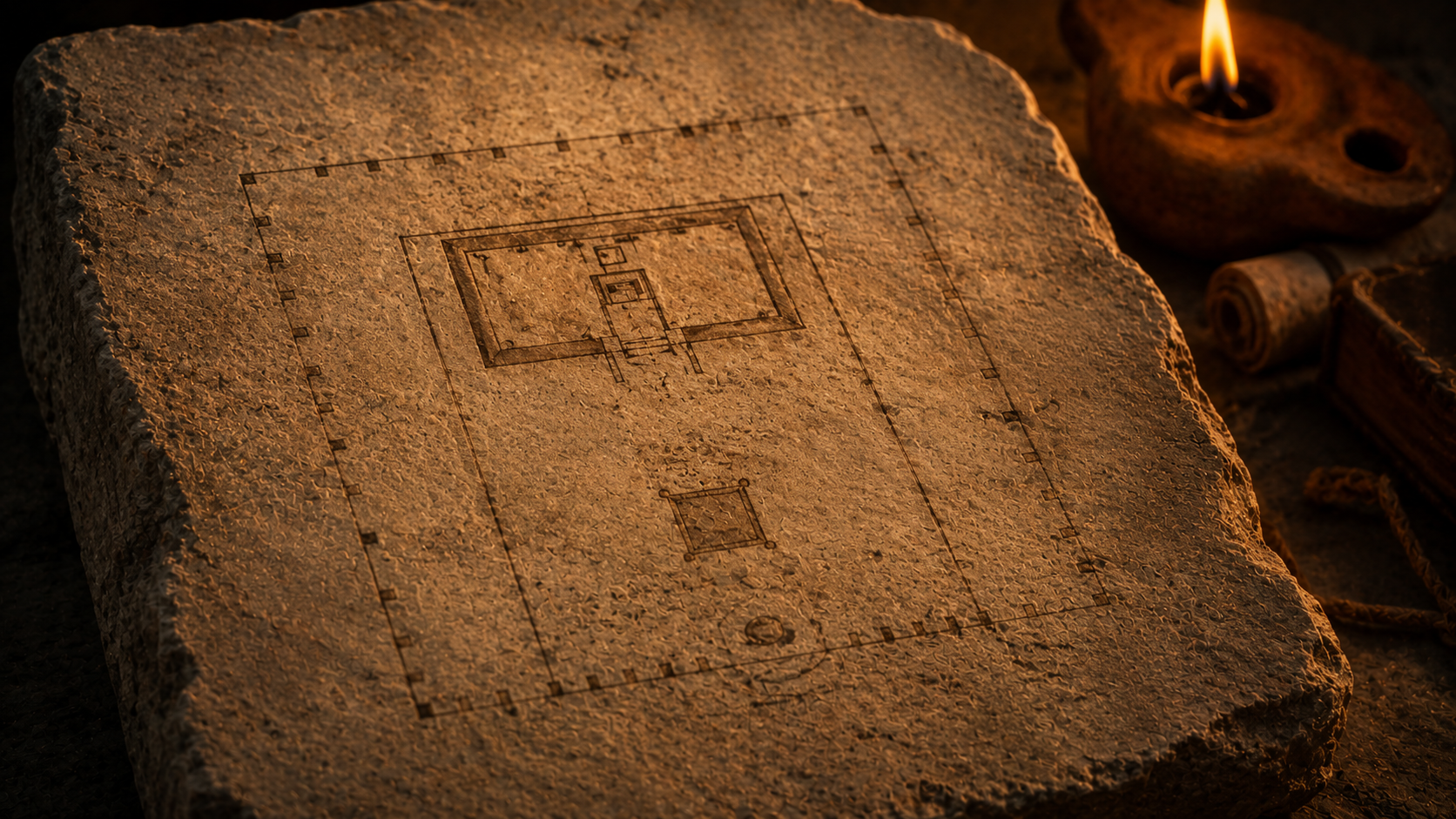
- Who serve a copy and shadow of the heavenly things (v. 5). The chapter’s most theologically loaded phrase. The Greek hypodeigmati kai skia tōn epouraniōn, a copy and a shadow of the heavenly things. The two words are not dismissive. Hypodeigma (copy, model, sketch) names a faithful representation, not a flawed imitation. Skia (shadow) is more ambiguous, in some Greek philosophical contexts it can mean a less-real version, but in the Hebrew Bible’s wisdom tradition it often names a foreshadowing pointer to a future reality. The author of Hebrews is using both words to name the Levitical tabernacle’s true correspondence with a real heavenly pattern. The earthly tabernacle was not a Platonic shadow of an only-real-form; it was a faithful copy made according to a divine pattern.
- Even as Moses was warned by God when he was about to make the tabernacle, for he said, “See, you shall make everything according to the pattern that was shown to you on the mountain” (v. 5, citing Ex 25:40). The chapter cites Exodus 25:40, Moses’s specific instruction to build the tabernacle *exactly according to the pattern (Hebrew tavnit; Greek typos) shown on the mountain*. The verse anchors the chapter’s argument: the earthly tabernacle was not invented by humans; it was copied from a divine pattern. The heavenly pattern, therefore, is real; the earthly tabernacle truly represents it; Christ’s heavenly ministry is the original of which the Levitical earthly ministry was the true copy.
- But now he has obtained a more excellent ministry, by so much as he is also the mediator of a better covenant, which on better promises has been given as law (v. 6). The chapter’s introduction of better covenant (Greek kreittonos diathēkēs) and better promises (Greek kreittosi epangeliais). Christ’s ministry is more excellent (Greek diaphorōteras leitourgias), more distinct, more differentiated, more elevated, than the Levitical priests’ ministry. The Greek engagement of mediator is mesitēs, the go-between, the one who stands in the middle. The whole later New Testament’s vocabulary of Christ as mediator (1 Tim 2:5; Heb 9:15; 12:24) reads forward from this verse.
B · Hebrews 8:7-13 · Jeremiah 31 quoted in full
⁷ For if that first covenant had been faultless, then no place would have been sought for a second. ⁸ For finding fault with them, he said, “Behold, the days come,” says the Lord, “that I will make a new covenant with the house of Israel and with the house of Judah; ⁹ not according to the covenant that I made with their fathers, in the day that I took them by the hand to lead them out of the land of Egypt; for they didn’t continue in my covenant, and I disregarded them,” says the Lord. ¹⁰ “For this is the covenant that I will make with the house of Israel after those days,” says the Lord; “I will put my laws into their mind, I will also write them on their heart. I will be their God, and they will be my people. ¹¹ They will not teach every man his fellow citizen, and every man his brother, saying, ‘Know the Lord,’ for all will know me, from their least to their greatest. ¹² For I will be merciful to their unrighteousness. I will remember their sins and lawless deeds no more.” ¹³ In that he says, “A new covenant”, he has made the first old. But that which is becoming old and grows aged is near to vanishing away.
- For if that first covenant had been faultless, then no place would have been sought for a second (v. 7). The chapter’s logical move. The Hebrew Bible itself announced a new covenant (Jer 31:31). If the first covenant had been completely sufficient on its own, no second would have been promised. The author is reading the Hebrew Bible’s own prophetic self-awareness: the prophets recognized the need for the new covenant; the new covenant is not a Christian invention but a Hebrew Bible promise now fulfilled.
- For finding fault with them, he said (v. 8). The Greek memphomenos gar autous legei, for finding fault with them, he says. Important: with them (Greek autous, masculine plural accusative), not with the covenant. The author is precise. YHWH found fault with the people, not with the covenant itself. The first covenant was faithful; the people’s fidelity to it was the problem. The chapter’s careful reading honors the Hebrew Bible’s own diagnosis: the wilderness generation, the period of the judges, the divided kingdom’s idolatry, and the exile were not the covenant’s failures but Israel’s failure to keep the covenant. The Solomon-lane reading takes this very seriously: the chapter does not blame Torah; it acknowledges, with Jer 31, that what was needed was Torah written on the heart, not Torah replaced.
- Behold, the days come, says the Lord, that I will make a new covenant with the house of Israel and with the house of Judah (v. 8, citing Jer 31:31). The chapter begins the longest single Hebrew Bible quotation in the entire New Testament. The quotation is unchanged from the Septuagint reading of Jer 31:31-34. The author is not paraphrasing or summarizing; he is reproducing the text in full, allowing the prophet’s own words to do the theological work.
- With the house of Israel and with the house of Judah (v. 8). The chapter’s most important single phrase for refusing supersessionism. The new covenant is not with a new people; it is with Israel and Judah, the same covenant family the prophets always addressed. The chapter is not arguing that the church has replaced Israel; it is arguing that the new covenant promised to Israel has now arrived and that Gentile believers are grafted in to it (the Pauline image of Rom 11:17-24). The whole new covenant framework and Paul Within Judaism framework read with this verse as the textual foundation.
- Not according to the covenant that I made with their fathers, in the day that I took them by the hand to lead them out of the land of Egypt (v. 9). The chapter cites Jer 31:32. The new covenant is not according to the Sinai covenant in its specific mode of administration. But the verse is not dismissing the Sinai covenant; it is naming the contrast in administrative form. The Sinai covenant was exterior (tablets of stone, external commands); the new covenant is interior (Torah written on the heart). The substance of Torah is preserved; what changes is how it is borne in the people.
- For they didn’t continue in my covenant (v. 9). YHWH’s own diagnosis. The people broke (Greek ouk enemeinan, did not remain in) the covenant. The covenant was not at fault; the people’s not-remaining-in-it was. The chapter is preserving the Hebrew Bible’s honest covenant-grammar.
- For this is the covenant that I will make with the house of Israel after those days (v. 10). The chapter cites Jer 31:33. The new covenant’s distinctive feature is the writing of Torah on the heart: I will put my laws into their mind, I will also write them on their heart. The Hebrew Bible itself names what changes in the new covenant, not the content of Torah, but its location. Torah is now internal, not just external. The whole later Paul Within Judaism lane reads this verse carefully: the Torah itself is preserved; the capacity to keep it is transformed.
- I will be their God, and they will be my people (v. 10). The classic covenant formula of the Hebrew Bible (Lev 26:12; Jer 7:23; Ezek 11:20; 14:11; 36:28; 37:23, 27). The new covenant deepens and re-affirms the same covenant relationship Sinai established. The chapter is not announcing a different covenant relationship; it is announcing the deepened realization of the same one.
- They will not teach every man his fellow citizen, and every man his brother, saying, “Know the Lord,” for all will know me, from their least to their greatest (v. 11, citing Jer 31:34). The new covenant’s universal interior knowledge promise. The Hebrew Bible promises that all will know YHWH, directly, internally, without need of intermediated teaching. The verse is the chapter’s most eschatologically not-yet promise. The contemporary church does not fully realize this (Christians still teach one another about YHWH; not all yet know him from the least to the greatest). The promise is real but eschatologically incomplete; we live in the already / not yet tension.
- For I will be merciful to their unrighteousness. I will remember their sins and lawless deeds no more (v. 12, citing Jer 31:34). The chapter’s forgiveness promise. The Hebrew Bible’s own diagnosis (vv. 8-9) was that the people did not continue in the covenant. The new covenant resolves this through YHWH’s forgiveness, he will not remember their sins. The Greek ou mē mnēsthō eti is a double negative, emphatic: not at all will I remember. The verse is the canonical foundation of the New Testament’s whole theology of the forgiveness of sins in the new covenant.
- In that he says, “A new covenant”, he has made the first old (v. 13). The chapter’s interpretive move. The very naming of a new covenant implies that the prior covenant is old. The Greek pepalaiōken (perfect tense, he has made aged) is a legal-administrative move: YHWH has officially designated the prior covenant’s administration as old (Greek palaios), not worthless, not invalid, but aged in the sense that its administrative dimension has been succeeded by the new.
- But that which is becoming old and grows aged is near to vanishing away (v. 13). The chapter’s most often-misread closing phrase. The Greek to de palaioumenon kai gēraskon engys aphanismou, the thing that is becoming aged and growing old is near to vanishing away. Critical careful reading: – The verb palaioumenon is present passive participle, the thing that is being aged, an ongoing process, not the thing that was abolished. – The verb gēraskon is present active participle, growing old, an ongoing process. – The noun engys aphanismou, near to vanishing, close to disappearing. The verse is not declaring the thing already disappeared. – What is becoming old? In context (the chapter’s argument has been about the priestly-sacrificial administration of the Sinai covenant, exercised in the earthly tabernacle), the aging-thing is that specific administrative arrangement, the daily sacrifices, the annual Day of Atonement, the temple service, not the moral substance of Torah, not the covenant relationship with Israel, not the Hebrew Bible’s theological content. – The author is acknowledging that the Levitical sacrificial system, once Christ has accomplished the eschatological kipper, is administratively in the process of aging out. The system that was holy and good (Rom 7:12) was also temporary, awaiting the eschatological priest. With his arrival, the priestly-sacrificial administration begins its aging.
Word study: kreittōn (κρείττων), “better, superior”
The Greek adjective kreittōn is Hebrews’s signature Christological superlative. It appears thirteen times in the book, more than in all the other New Testament writings combined. The author uses it of Christ’s better than status: better than angels (1:4), a better hope (7:19), a better covenant (7:22; 8:6), better promises (8:6), better sacrifices (9:23), better possessions (10:34), a better country (11:16), a better resurrection (11:35), better things (11:40), and a better word than Abel’s blood (12:24). The cumulative force of the word is overwhelming. But here is the chapter’s most careful note: the kreittōn (better) is Christological honor-amplification within the Hebrew Bible’s own categories, not Jewish-people supersessionism. Christ is better in the sense that he is the climactic inheritor of the offices and persons who came before him, not in the sense that those who came before were failures. The Levitical priests, the Sinai covenant, the wilderness saints, the prophets, none of them are bad in Hebrews’s argument. They are the earlier movements of the same single story the author is reading toward its climactic Christological end. The whole Solomon-lane / Paul Within Judaism reading of Hebrews depends on holding this nuance carefully.
Influence callout: Marty Solomon (Bema podcast; the chapter as the canonical climax, not the canonical rupture)
Solomon’s reading of Hebrews 8 in the Bema podcast Hebrews series is the chapter’s most important contemporary corrective against the supersessionist read. Solomon’s central argument: the chapter is not declaring Israel’s covenant relationship obsolete; it is announcing the climactic Christological fulfillment of the new covenant Jeremiah himself promised would come. The new covenant, as Jeremiah named it, is with the house of Israel and the house of Judah (Jer 31:31, quoted at Heb 8:8), not with a new people who have replaced Israel. The Gentile audience receiving this sermon is being grafted in to a covenant that was always with Israel first and for the nations through Israel. Solomon’s pastoral payoff: the modern church’s long history of supersessionist readings of Hebrews 8 has fed actively antisemitic theology in the Christian tradition, with terrible historical consequences. The chapter does not support that reading. The author of Hebrews quotes Jeremiah 31 in full because he wants the audience to hear the prophet’s own grammar, and the prophet’s grammar is with Israel. The book’s better than superlatives are Christological, not anti-Jewish. The site reads this with Solomon’s lane consistently. Where the modern evangelical-Reformed tradition has often drifted into supersessionism, the Bema podcast and the broader Paul Within Judaism scholarship keep returning Hebrews 8 to its actual Jewish context.
Reflection prompts
- The chapter quotes Jeremiah 31 in full, the longest Hebrew Bible quotation in the New Testament. The promise of the new covenant is with Israel and Judah, not with a new people who have replaced Israel. Where in your own reading of Hebrews has the new covenant become a replacement category rather than a fulfillment category?
- The chapter’s what is becoming obsolete (v. 13) is the priestly-sacrificial administration, not the Torah’s substance. The verb is present participle ongoing, not past tense abolished. Where in your own reading of the Old Testament has the temporary administrative dimension of the law been mistaken for the whole content of Torah?
- The new covenant’s distinctive feature is Torah written on the heart (v. 10), the substance of the law preserved, the capacity to keep it transformed. Where in your own life has the gospel become the abolition of moral obligation rather than the interior empowering of the moral obligation that was always good?
Frameworks at play in this chapter: the new covenant, the Melchizedek priesthood, the kipper / atonement framework, the tabernacle as cosmic temple, Paul within Judaism, gospel allegiance.