

Leviticus 25 is one of the Hebrew Bible’s most consequential single chapters. The chapter sets out two interlocking institutions: the Sabbath year (Hebrew shemittah), occurring every seventh year, when the land rests and debts are released; and the Jubilee year (Hebrew yovel), occurring every fiftieth year, when ancestral land returns to its original family, indentured Israelites go free, and the land rests for a second consecutive year (the forty-ninth was the sabbath year; the fiftieth is the Jubilee). The chapter is the most concentrated single statement in the Hebrew Bible of what the economy looks like when YHWH owns the land.
The chapter must be read inside the jubilee year framework, which develops the longer-arc theology of the Jubilee and traces its afterlife through Isaiah 61, Luke 4, the Acts community, and the entire Christian social-ethical tradition. What this commentary does on top of the framework is walk through the chapter’s specific provisions and note the chapter’s deepest theological move: the land is mine, and you are foreigners and sojourners with me (v. 23). The whole chapter is the working-out of that one verse.
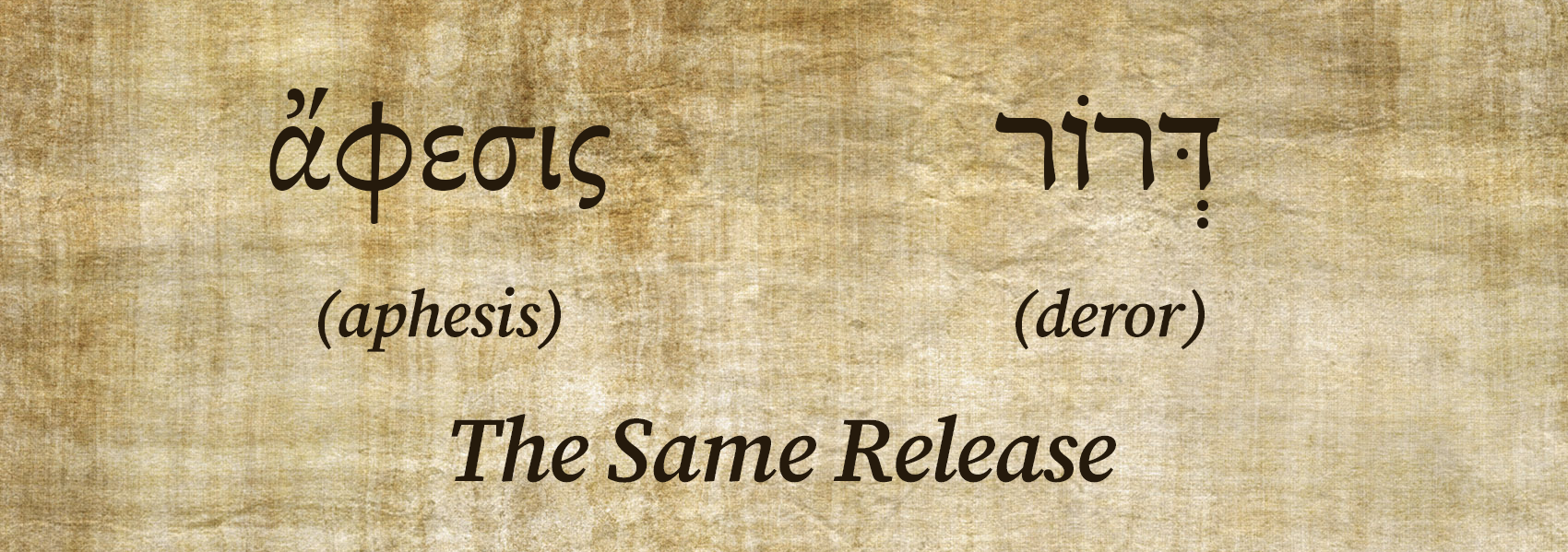
The chapter is also the foundation of Jesus’s first recorded sermon. At Luke 4:16-21, in the Nazareth synagogue, Jesus reads from Isaiah 61:1-2 (the Spirit of the Lord is upon me … to proclaim the year of the Lord’s favor) and announces today this Scripture has been fulfilled in your hearing. The year of the Lord’s favor (Greek eniauton kyriou dekton, the LXX translation of the Hebrew shenat-ratson la-YHWH) is the Jubilee year. Jesus’s first sermon, in Luke’s gospel, is the inauguration of the Jubilee. The whole later New Testament theology of aphesis (release, forgiveness — the same Greek word used for both forgiveness of sins at Mt 26:28 and release of captives at Lk 4:18) gathers around this chapter.
A · Leviticus 25:1-7 · The Sabbath year
¹ Yahweh said to Moses in Mount Sinai, ² “Speak to the children of Israel, and tell them, ‘When you come into the land which I give you, then the land shall keep a Sabbath to Yahweh. ³ Six years you shall sow your field, and six years you shall prune your vineyard, and gather in its fruits; ⁴ but in the seventh year there shall be a Sabbath of solemn rest for the land, a Sabbath to Yahweh. You shall not sow your field nor prune your vineyard. ⁵ What grows of itself in your harvest you shall not reap, and the grapes of your undressed vine you shall not gather. It shall be a year of solemn rest for the land. ⁶ The Sabbath of the land shall be for food for you; for yourself, for your servant, for your maid, for your hired servant, and for your stranger, who lives as a foreigner with you. ⁷ For your livestock also, and for the animals that are in your land, shall all its increase be for food.
- When you come into the land which I give you, then the land shall keep a Sabbath to Yahweh (v. 2). The chapter’s first principle. The land itself keeps a Sabbath. The chapter is treating the land as a worshipping participant in the covenant relationship. The Hebrew Bible’s broader theology of the land’s voice (Gen 4:10, your brother’s blood cries to me from the ground; Lev 18:25, 28, the land vomits; Hos 4:1-3, the land mourns) is consistent. The chapter is teaching that the land has its own Sabbath observance: it rests every seventh year, regardless of whether the household needs the rest.
- Six years you shall sow your field … but in the seventh year there shall be a Sabbath of solemn rest for the land (vv. 3-4). The Hebrew is shabbat shabbaton yihyeh la-aretz, a Sabbath of sabbaths shall be for the land. The intensified phrase parallels the weekly Sabbath’s intensified form (Ex 31:15) and the Day of Atonement’s intensified rest (Lev 16:31, 23:32). The chapter is teaching that the land’s seventh year is its Yom Kippur: its deepest possible rest, lasting an entire year.
- The Sabbath of the land shall be for food for you; for yourself, for your servant, for your maid, for your hired servant, and for your stranger (v. 6). The chapter’s striking pastoral provision. The land’s self-sown produce during the Sabbath year is not the household’s exclusive property; it is shared with servants, hired workers, and the stranger. The chapter is treating the Sabbath year as a broader-table year: the household’s gates open to those who would otherwise be excluded from the harvest. The whole later Hebrew Bible’s vision of all eating together on the mountain of YHWH (Isa 25:6-8) reads forward from this verse.
B · Leviticus 25:8-22 · The Jubilee year
⁸ “‘You shall count off seven Sabbaths of years, seven times seven years; and there shall be to you the days of seven Sabbaths of years, even forty-nine years. ⁹ Then you shall sound the loud trumpet on the tenth day of the seventh month. On the Day of Atonement you shall sound the trumpet throughout all your land. ¹⁰ You shall make the fiftieth year holy, and proclaim liberty throughout the land to all its inhabitants. It shall be a jubilee to you; and each of you shall return to his own property, and each of you shall return to his family. ¹¹ That fiftieth year shall be a jubilee to you. In it you shall not sow, neither reap that which grows of itself, nor gather from the undressed vines. ¹² For it is a jubilee; it shall be holy to you. You shall eat of its increase out of the field. ¹³ “‘In this Year of Jubilee each of you shall return to his property. ¹⁴ “‘If you sell anything to your neighbor, or buy from your neighbor, you shall not wrong one another. ¹⁵ According to the number of years after the Jubilee you shall buy from your neighbor. According to the number of years of the crops he shall sell to you. ¹⁶ According to the length of the years you shall increase its price, and according to the shortness of the years you shall diminish its price; for he is selling the number of the crops to you. ¹⁷ You shall not wrong one another; but you shall fear your God: for I am Yahweh your God. ¹⁸ “‘Therefore you shall do my statutes, and keep my ordinances and do them; and you shall dwell in the land in safety. ¹⁹ The land shall yield its fruit, and you shall eat your fill, and dwell therein in safety. ²⁰ If you said, “What shall we eat the seventh year? Behold, we shall not sow, nor gather in our increase;” ²¹ then I will command my blessing on you in the sixth year, and it shall bear fruit for the three years. ²² You shall sow the eighth year, and eat of the fruits, the old store; until the ninth year, until its fruits come in, you shall eat the old store.
- Seven Sabbaths of years, seven times seven years; and there shall be to you the days of seven Sabbaths of years, even forty-nine years (v. 8). The chapter’s forty-nine-year counting parallels the seven-weeks-plus-one counting that leads to Pentecost (Lev 23:15-16). The Jubilee is the Sabbath’s seventh-Sabbath: the deepest rest the calendar allows, occurring once in every life-generation.
- You shall sound the loud trumpet on the tenth day of the seventh month. On the Day of Atonement you shall sound the trumpet throughout all your land (v. 9). The chapter places the Jubilee’s announcement on the Day of Atonement. The whole national reset begins on the day of the year’s deepest spiritual cleansing. The shofar’s blast on Yom Kippur in the Jubilee year proclaims liberty throughout the land. The whole later Hebrew Bible’s image of the trumpet of liberty (Isa 27:13, the trumpet that gathers the exiles; Joel 2:1; Zeph 1:14-16) reads forward from this verse.
- Proclaim liberty throughout the land to all its inhabitants (v. 10). The chapter’s most famous single phrase. The Hebrew is u-qratem deror ba-aretz le-khol-yoshveha. The word deror (liberty, release) is the Hebrew Bible’s word for the freeing of slaves and the release of property. The phrase is famously inscribed on the Liberty Bell in Philadelphia. The whole later Hebrew Bible’s prophetic vocabulary of deror (Isa 61:1, the deror the suffering servant proclaims; Jer 34:8-17, the deror Zedekiah proclaims and then revokes) reads forward from this verse.
- Each of you shall return to his own property, and each of you shall return to his family (v. 10). The chapter’s double return. The Jubilee restores both property (the ancestral land allocation) and family belonging (the indentured servant returns home). The chapter is teaching that generational dispossession is not allowed to accumulate indefinitely. Every fifty years, the property reset and the family reunification break the cycle.
- In this Year of Jubilee each of you shall return to his property (v. 13). The chapter’s most economically radical provision. The Hebrew is teshuvu ish el-achuzato. The word achuzah means possession, holding; it is the standard Hebrew Bible word for ancestral land. Every Israelite household is returned to its original tribal allocation. The chapter is teaching that land in Israel is not transferable in perpetuity. The whole later Hebrew Bible’s narrative of Naboth’s vineyard (1 Kings 21:1-3, Naboth’s refusal to sell his achuzah to Ahab) reads forward from this verse. The whole prophetic critique of land-accumulation (Isa 5:8, woe to those who join house to house, who add field to field; Mic 2:1-2) reads forward from this verse.
- If you said, “What shall we eat the seventh year? Behold, we shall not sow, nor gather in our increase;” then I will command my blessing on you in the sixth year, and it shall bear fruit for the three years (vv. 20-21). The chapter anticipates the practical worry. The household will ask: how can we afford a year of not sowing, much less two consecutive years (the forty-ninth and the Jubilee)? YHWH’s answer: the sixth year’s harvest will be triple. The chapter is teaching that the Sabbath system’s promised provision is YHWH’s responsibility, not the household’s anxious management. The whole later Sermon on the Mount’s do not be anxious about your life … your heavenly Father knows that you need them all (Mt 6:25-34) reads forward from this verse.
C · Leviticus 25:23-55 · Property, debt, and slavery rules
²³ “‘The land shall not be sold in perpetuity, for the land is mine; for you are strangers and live as foreigners with me. ²⁴ In all the land of your possession you shall grant a redemption for the land. ²⁵ “‘If your brother becomes poor, and sells some of his possession, then his kinsman who is next to him shall come, and redeem that which his brother has sold. ²⁶ If a man has no one to redeem it, and he becomes prosperous and finds sufficient means to redeem it; ²⁷ then let him reckon the years since its sale, and restore the surplus to the man to whom he sold it; and he shall return to his property. ²⁸ But if he isn’t able to get it back for himself, then what he has sold shall remain in the hand of him who has bought it until the Year of Jubilee: and in the Jubilee it shall be released, and he shall return to his property. […] ³⁵ “‘If your brother has become poor, and his hand can’t support him among you; then you shall uphold him. He shall live with you like an alien and a temporary resident. ³⁶ Take no interest from him or profit, but fear your God; that your brother may live among you. ³⁷ You shall not lend him your money at interest, nor give him your food for profit. ³⁸ I am Yahweh your God, who brought you out of the land of Egypt, to give you the land of Canaan, and to be your God. ³⁹ “‘If your brother has grown poor among you, and sells himself to you; you shall not make him to serve as a slave. ⁴⁰ As a hired servant, and as a temporary resident, he shall be with you; he shall serve with you until the Year of Jubilee: ⁴¹ then he shall go out from you, he and his children with him, and shall return to his own family, and to the possession of his fathers shall he return. ⁴² For they are my servants, whom I brought out of the land of Egypt. They shall not be sold as slaves. ⁴³ You shall not rule over him with harshness, but shall fear your God. […] ⁵⁵ For to me the children of Israel are servants; they are my servants whom I brought out of the land of Egypt. I am Yahweh your God.’”
- The land shall not be sold in perpetuity, for the land is mine; for you are strangers and live as foreigners with me (v. 23). The chapter’s most theologically loaded single verse. The Hebrew is ki li ha-aretz, ki gerim ve-toshavim atem immadi. Two claims: – The land is mine (YHWH speaking): the land belongs to YHWH, not to the household that lives on it. – You are strangers and sojourners with me: the Israelite households are tenants, not owners. They live on the land as YHWH’s guests. The chapter is overturning the assumption — common in modern Western property frameworks — that the owner has absolute control over what is theirs. In the Hebrew Bible’s framework, no Israelite is the absolute owner of land. The land is YHWH’s; the household holds it as a long-term lease from him; the Jubilee enforces the lease’s actual terms. The whole later Hebrew Bible’s vision of YHWH as the source of all wealth (1 Chron 29:11-14; Ps 24:1, the earth is YHWH’s and the fullness thereof) reads forward from this verse. The whole later Christian theology of stewardship rather than ownership (Matthew 25:14-30, the parable of the talents; 1 Cor 4:7, what do you have that you did not receive?) reads forward from this verse.
- If your brother becomes poor, and sells some of his possession, then his kinsman who is next to him shall come, and redeem that which his brother has sold (v. 25). The chapter’s go’el (redeemer-kinsman) provision. The Hebrew is u-va goalo ha-qarov elav ve-ga’al et-mimkar achiv. The closest male relative has the obligation to buy back the brother’s lost land. The whole later Hebrew Bible narrative of Boaz redeeming Ruth’s land (Ruth 4:1-12, the go’el ha-qarov drama) presupposes this chapter. The whole later New Testament theology of Christ as our kinsman-redeemer (Heb 2:11-18; the Greek agorazo, to buy back, at 1 Cor 6:20 and 7:23) reads forward from this verse.
- If your brother has become poor, and his hand can’t support him among you; then you shall uphold him (v. 35). The chapter’s anti-poverty command. The Hebrew is vehechezaqta bo (you shall strengthen him). The chapter is not commanding charity in the modern emotional sense; it is commanding concrete economic upholding of the poor brother. The whole later Hebrew Bible prophetic critique of the wealthy who fail to uphold the poor (Amos 2:6-7; Mic 2:1-2; Isa 1:23) reads forward from this verse.
- Take no interest from him or profit, but fear your God; that your brother may live among you (v. 36). The chapter’s no-interest rule on loans to fellow Israelites. The Hebrew is al-tiqqach me’itto neshekh ve-tarbit. Two words: neshekh (interest, literally “a bite”) and tarbit (increase, profit). Both are prohibited on loans to a brother. The whole later Hebrew Bible’s anti-usury tradition (Ex 22:25; Deut 23:19-20; Ps 15:5; Ezek 18:8, 17; 22:12) reads forward from this verse. The medieval Christian church’s long centuries of prohibiting usury (until the early modern era’s exceptions) was a direct application of this verse. The chapter is teaching that lending at interest among the covenant community is a structural betrayal.
- If your brother has grown poor among you, and sells himself to you; you shall not make him to serve as a slave (v. 39). The chapter’s Israelite-slave provision. An Israelite who sells himself (the only entrance to indentured servitude in the chapter — there is no provision for taking an Israelite as a slave) is to be treated as a hired servant, not as a permanent slave. He works until the Year of Jubilee (v. 40) and then returns home, he and his children with him (v. 41). The chapter is teaching that no Israelite is the property of another Israelite for the long term.
- For they are my servants, whom I brought out of the land of Egypt. They shall not be sold as slaves (v. 42). The chapter’s deepest theological grounding for the slavery provisions. The Hebrew is ki-avadai hem asher hotzeti otam me-eretz mitzrayim, lo yimakheru mimkeret aved. The reasoning is Exodus-grounded: the Israelites belong to YHWH, who rescued them from slavery in Egypt; they cannot now be re-enslaved by their fellow Israelites. The chapter is teaching that the Exodus’s logic permanently shapes Israel’s internal economic relationships. The whole later New Testament theology of you were bought with a price; do not become slaves of human masters (1 Cor 7:23) reads forward from this verse.
Word study: deror (דְּרוֹר) — “liberty, release, manumission”
The Hebrew deror names the release that the Jubilee proclaims. The word’s primary semantic field is the freeing of slaves and the release of debts. The chapter’s u-qratem deror ba-aretz le-khol-yoshveha (you shall proclaim deror throughout the land to all its inhabitants, v. 10) is the verse the Liberty Bell quotes. The same word deror appears at Isa 61:1, the verse Jesus reads in the Nazareth synagogue: the Spirit of the Lord YHWH is upon me … to proclaim liberty to the captives (Hebrew liqro li-shvuyim deror). The Septuagint translates deror as aphesis (release, forgiveness). The same Greek word aphesis is the standard New Testament word for forgiveness of sins (Mt 26:28, for the forgiveness of sins, Greek eis aphesin hamartion; Acts 2:38; Eph 1:7). The whole Hebrew Bible’s Jubilee-language and the New Testament’s forgiveness-language are the same word. To forgive sins is, in the Greek of the New Testament, to perform a deror — a Jubilee-style release. The chapter is the foundation of the gospel’s deepest vocabulary.
Where this lands: The Jubilee Jesus inaugurated
Most Christians do not know what the Jubilee actually is. Most have read Leviticus 25 quickly or not at all. Most have heard the word Jubilee used loosely, sometimes for an anniversary, sometimes for a music festival, sometimes for a vague sense of celebration. The chapter is teaching what the Jubilee actually is: every fifty years, the land returns to its original family, the indentured slaves go free, and the land rests for a second consecutive year. It is the most ambitious social-economic reset in the entire Hebrew Bible.
When Jesus stands up in the Nazareth synagogue (Lk 4:16-21) and reads from Isaiah 61, he is reading Jubilee language. To proclaim liberty (deror) to the captives. To proclaim the year of the Lord’s favor. He stops the reading at the year of the Lord’s favor (skipping the day of vengeance of our God, which would have followed). And then he says: today this Scripture has been fulfilled in your hearing. Jesus’s first sermon, in Luke’s gospel, is an announcement that the Jubilee has now begun.
If you have grown up hearing the gospel as primarily about individual forgiveness of sins so you can go to heaven when you die, the chapter is asking you to hear it again, in its actual Levitical vocabulary. The Greek aphesis (forgiveness) is the same word as the Hebrew deror (Jubilee-release). When Jesus says your sins are forgiven, he is performing a Jubilee on the soul. When the early church practices holding everything in common (Acts 2:44-47; 4:32-37), they are performing a Jubilee on the community’s economic life. When Paul collects funds for the equality of the saints (2 Cor 8:13-15), he is performing a Jubilee across the ancient Mediterranean.
The application is uncomfortable for any Christian community whose actual economic-social practice has no Jubilee shape at all. If your community’s wealth stays where it accumulates, if your community’s debts are never released, if your community’s poor never come back to property and family, if the good news you proclaim never reaches the captives and the poor with concrete material force — then the chapter is asking whether the Jubilee Jesus inaugurated has actually been received in your community’s structures. The chapter does not let the year of the Lord’s favor be reduced to a private spiritual event. It is for the land, for the captives, for the poor, for the indebted. Every fifty years, the chapter would have you reset. Most modern Christian communities have never reset anything. The chapter’s voice into that gap is sharp.
Influence callout: Walter Brueggemann (The Land; the chapter as the Hebrew Bible’s most ambitious economic-theological vision)
Brueggemann’s The Land (1977; revised edition 2002) is the foundational modern theological treatment of Leviticus 25. Brueggemann argues that the chapter is the Hebrew Bible’s most concentrated articulation of land as covenantal gift, not commodity. The chapter is teaching three interlocking claims:
Brueggemann’s pastoral payoff: every modern empire’s economic logic looks more like Egypt than like the chapter. The whole later prophetic tradition’s critique of Israel becoming the new Egypt (the recurring prophetic indictment) takes its measure from Leviticus 25. Brueggemann’s reading has shaped a generation of Christian social-ethical theology (Christopher Wright, Sandra Richter, the Jubilee Year movement around debt relief for the global poor in the year 2000). The site’s reading of the chapter is built on Brueggemann’s foundation. The companion jubilee year framework develops the longer-arc theology of the Jubilee’s afterlife from this chapter forward.
Reflection prompts
- The chapter teaches that the land is YHWH’s; you are sojourners with me (v. 23). The Hebrew Bible’s whole property theology is built on this verse. Where in your own assumptions about what is yours has absolute ownership replaced tenancy under YHWH? What would the chapter’s posture change in your relationship to your home, your finances, your savings?
- The chapter requires no-interest lending to a brother (v. 36). The covenant community does not extract profit from its own members in distress. Where in your own community — church, family, friendship circle — has profit extraction replaced upholding? What would the chapter require?
- The Jubilee is the substance of Jesus’s first sermon. The Greek aphesis (forgiveness) is the same word as the Hebrew deror (Jubilee-release). Where in your own understanding of the gospel has it been narrowed to individual forgiveness of sins, when the chapter’s vocabulary is captives, poor, indebted, dispossessed? What would re-grounding it look like?
Frameworks at play in this chapter: the jubilee year, the festival calendar, the cry of the oppressed, Paul Within Judaism, gospel allegiance.