
Genesis 14 is unlike anything that comes before or after it in the Abram cycle. The narrator switches registers. We have been reading family stories: a call, a journey, a famine, a separation. Suddenly we are in geopolitical history. Four Mesopotamian kings march west, defeat a coalition of five city-state kings in the Jordan plain, sack Sodom, and carry off Lot in the spoil. Abram, who has been a tent-dwelling nomad for the past two chapters, becomes a tactical commander. He pursues with 318 of his own household, defeats the coalition at night, and brings Lot, the women, the goods, and a host of other captives back home.
Then, on the way home, two kings come out to meet him. The chapter pivots from war narrative to encounter narrative.
The first king, Bera of Sodom, is the king Abram has just rescued. The second king, Melchizedek of Salem, has not been mentioned before and will not be mentioned again until Psalm 110 picks him up a thousand years later, and then Hebrews 7 develops him into a Christological figure. Melchizedek is one of the most strange and consequential cameos in the Hebrew Bible.
The chapter wants you to compare the two encounters. With Melchizedek, Abram receives bread and wine, a blessing, and the name of God Most High; he gives a tenth in response. With Bera, Abram refuses to take a single thread or sandal-strap of Sodom’s recovered loot. Two kings, two offers, two answers. Abram has just become a wealthy military hero, and the chapter is showing us, in a single afternoon, what shape his wealth will take going forward. Receive blessing from God’s priest. Refuse compromise from a king of compromise. The covenant family is being formed.
→ Read the divine council framework for the background on what’s happening when “El Elyon, possessor of heaven and earth” gets named in the same breath as Yahweh. The chapter is doing more than name-checking a local deity.
A · Genesis 14:1–12 · The war of the kings
¹ In the days of Amraphel, king of Shinar; Arioch, king of Ellasar; Chedorlaomer, king of Elam; and Tidal, king of Goiim, ² they made war with Bera, king of Sodom; Birsha, king of Gomorrah; Shinab, king of Admah; Shemeber, king of Zeboiim; and the king of Bela (also called Zoar). ³ All these joined together in the valley of Siddim (also called the Salt Sea). ⁴ They served Chedorlaomer twelve years, and in the thirteenth year they rebelled. ⁵ In the fourteenth year Chedorlaomer and the kings who were with him came and struck the Rephaim in Ashteroth Karnaim, the Zuzim in Ham, the Emim in Shaveh Kiriathaim, ⁶ and the Horites in their Mount Seir, to Elparan, which is by the wilderness. ⁷ They returned, and came to En Mishpat (also called Kadesh), and struck all the country of the Amalekites, and also the Amorites, that lived in Hazazon Tamar. ⁸ The king of Sodom, and the king of Gomorrah, the king of Admah, the king of Zeboiim, and the king of Bela (also called Zoar) went out; and they set the battle in array against them in the valley of Siddim ⁹ against Chedorlaomer king of Elam, and Tidal king of Goiim, and Amraphel king of Shinar, and Arioch king of Ellasar; four kings against the five. ¹⁰ Now the valley of Siddim was full of tar pits; and the kings of Sodom and Gomorrah fled, and some fell there. Those who remained fled to the hills. ¹¹ They took all the goods of Sodom and Gomorrah, and all their food, and went their way. ¹² They took Lot, Abram’s brother’s son, who lived in Sodom, and his goods, and departed. (Genesis 14:1–12, World English Bible)
- The opening verses read like a snippet from a Mesopotamian campaign annal. Names of kings, names of cities, names of regions, twelve years of vassal status, a rebellion in year thirteen, a punitive expedition in year fourteen. The narrator is dropping us into the politics of the early second millennium BC, a world of small city-state coalitions and the periodic intervention of larger imperial powers from Mesopotamia.
- Most of these kings have not been securely identified in extra-biblical records, though scholars have proposed various candidates. Amraphel of Shinar (Babylon) was once equated with Hammurabi, but most current scholars consider that linkage shaky. Chedorlaomer is plausibly Elamite (the name pattern matches). The point of the listing is not external verification but literary scope. The narrator is telling us that what happens to Lot is happening inside the convulsions of geopolitics. The covenant family lives in the real world.
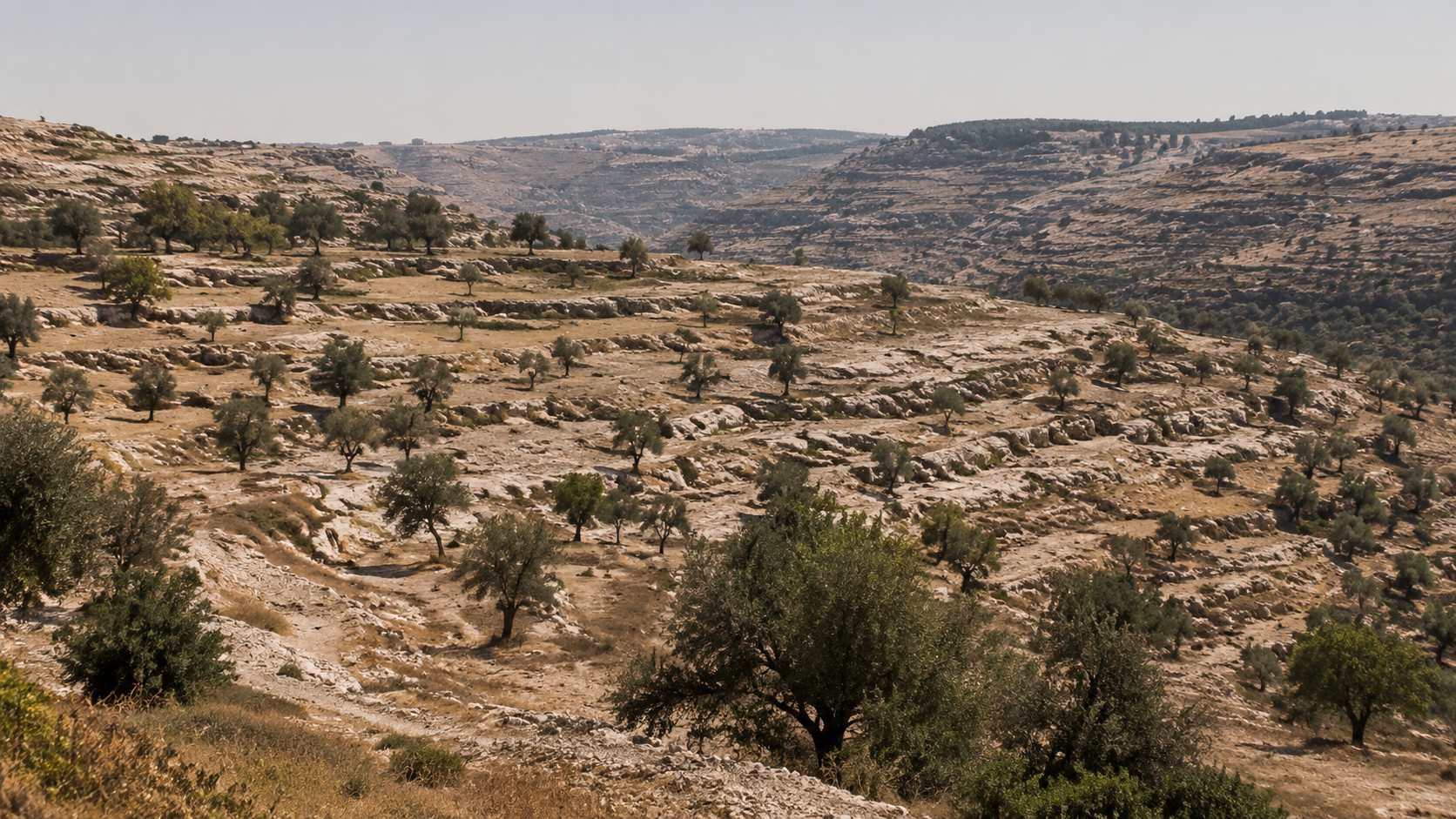
- The geography of the eastern campaign in verses 5 to 7 traces a roughly north-to-south sweep down the Transjordan and into the Negev: from Ashteroth Karnaim in northern Bashan, through Mount Seir (Edomite territory), to Kadesh and Hazazon Tamar (En Gedi). The four-king coalition is not just attacking Sodom; they are subjugating the entire eastern flank of the land before turning on the rebellious cities of the plain. This is a serious campaign by the standards of the period.
Influence callout: John Walton
Walton’s ANE work is helpful here. The “vassal-rebellion-punitive-expedition” pattern was the standard rhythm of early second-millennium Mesopotamian politics. A larger power demanded tribute; a smaller coalition complied for a few years; a coalition rebelled; the larger power sent a campaign to reassert dominance and collect tribute (often with interest, in the form of plunder). Genesis 14, read in that frame, is not a strange anomaly but a recognizable historical scenario, dropped into the patriarchal narrative to show that Abram’s family is not insulated from the empire-cycle that already defines the surrounding world.
- The five-king coalition of the plain comprises Sodom, Gomorrah, Admah, Zeboiim, and Bela/Zoar (verse 2). The first four will be destroyed in Genesis 19. Zoar will be the one Lot is allowed to flee to. The chapter, like chapter 13, keeps planting the seeds of what’s coming.
- The valley of Siddim is “full of tar pits” (verse 10). The Hebrew word che’marim refers to bitumen pits, naturally occurring asphalt seeps that are still found around the southern Dead Sea today. The detail explains why the Sodomite forces collapsed: their retreat ran straight into broken ground full of natural tar wells. Some of the kings fell in. The geography of the Dead Sea basin is, in Genesis, an ally of judgment. The same region that will be destroyed by sulfur and fire in chapter 19 is already, in chapter 14, swallowing kings.
- Verse 12 is the line the rest of the chapter turns on: “They took Lot, Abram’s brother’s son, who lived in Sodom.” The narrator names the relationship deliberately. Lot is not just collateral damage in a war Abram doesn’t care about. He is family. The drift toward Sodom that began in chapter 13 has now produced a hostage situation, and the covenant household is implicated in the politics of the cities of the plain.
B · Genesis 14:13–16 · The rescue
¹³ One who had escaped came and told Abram, the Hebrew. At that time, he lived by the oaks of Mamre, the Amorite, brother of Eshcol and brother of Aner; and these were allies of Abram. ¹⁴ When Abram heard that his relative was taken captive, he led out his three hundred eighteen trained men, born in his house, and pursued as far as Dan. ¹⁵ He divided himself against them by night, he and his servants, and struck them, and pursued them to Hobah, which is on the left hand of Damascus. ¹⁶ He brought back all the goods, and also brought back his relative Lot and his goods, and the women also, and the people. (Genesis 14:13–16, World English Bible)
- Abram is named “the Hebrew” for the first time in Scripture (verse 13). The Hebrew is ha-Ivri, a term whose root may be the verb avar, “to cross over,” which would tie the term to Abram’s status as one who has crossed over from the other side of the Euphrates. The label sets him apart in this chapter as ethnically and culturally distinct from the kings around him. He is not one of them. He is a sojourner with allies, not a vassal of an empire.
Word study: ha-Ivri (הָעִבְרִי), “the Hebrew”
The first occurrence of the term in Scripture. The probable etymology is from avar, “to cross over” or “to pass through,” tying the name to Abram’s identity as the one who crossed over from beyond the Euphrates. Genesis 10:21 had already tagged Shem as “the father of all the children of Eber,” locating the lineage. The label here, dropped into a war narrative, marks Abram as an outsider to the empire-system around him. It is a covenant identity, not a tribal one. The Hebrews are not one nation among nations; they are the people who came across.
- Abram is allied with three local Amorites (verse 13): Mamre, Eshcol, and Aner. The Hebrew word for “ally” is literally “covenant lords” (ba’alei berit). Abram has cut a covenant with the local population; this is not just a friendly understanding. The chapter shows the covenant family already operating in real political space, with treaty relationships, with allies who fight beside them.
- Three hundred eighteen trained men, “born in his house” (verse 14). The number has fascinated readers for millennia. One ancient Jewish reading observed that the numerical value of the Hebrew letters in Eliezer (Abram’s chief servant, named in 15:2) is 318. That may or may not be intentional; what matters more is that 318 is a specific, manageable, household-scale fighting force. Abram is not commanding an army. He is leading the men who were born and raised in his household, men whose lives he has shaped, men who fight with him out of loyalty rather than conscription. The covenant family already has a military capability without becoming a militarized empire.
- The pursuit reaches Dan (verse 14). This is one of the small anachronisms in Genesis: the city would not be called Dan until centuries later, when the tribe of Dan migrated and renamed Laish (Judges 18). The narrator (or a later editor) has updated the name for the reader’s geographical orientation. It is not a problem; it is a sign of how the text was lived with and lightly updated as it traveled. Abram chases the coalition all the way to the northern edge of the land.
- “He divided himself against them by night” (verse 15). This is a tactical detail. A surprise night attack against a complacent retreating force, with a smaller and more disciplined unit, is a recognizable strategy from ancient warfare. Gideon will use a similar approach in Judges 7. The chapter does not make Abram a magical victor; it makes him a clever one.
- Verse 16 records the recovery in summary form. Abram brings back the goods, Lot, the goods of Lot, the women, and the rest of the people. The word “people” (ha-am) is significant. He doesn’t just recover his nephew. He recovers the captive population of Sodom and the cities of the plain. By the time he reaches the meeting in verse 17, he has standing as the rescuer of an entire region.
C · Genesis 14:17–24 · Two kings, two offers
¹⁷ The king of Sodom went out to meet him, after his return from the slaughter of Chedorlaomer and the kings who were with him, at the valley of Shaveh (that is, the King’s Valley). ¹⁸ Melchizedek king of Salem brought out bread and wine. He was priest of God Most High. ¹⁹ He blessed him, and said, “Blessed be Abram of God Most High, possessor of heaven and earth. ²⁰ Blessed be God Most High, who has delivered your enemies into your hand.” Abram gave him a tenth of all. ²¹ The king of Sodom said to Abram, “Give me the people, and take the goods for yourself.” ²² Abram said to the king of Sodom, “I have lifted up my hand to Yahweh, God Most High, possessor of heaven and earth, ²³ that I will not take a thread nor a sandal strap nor anything that is yours, lest you should say, ‘I have made Abram rich.’ ²⁴ I will accept nothing from you except that which the young men have eaten, and the portion of the men who went with me: Aner, Eshcol, and Mamre. Let them take their portion.” (Genesis 14:17–24, World English Bible)
- The structure of these verses is one of the cleanest examples of Hebrew literary framing in Genesis. Two kings come to meet Abram. Bera of Sodom is named first (verse 17), but his speech is interrupted; Melchizedek of Salem appears in verse 18, the encounter with Melchizedek runs through verse 20, and only then does Bera get to deliver his line in verse 21. The narrator is using the order to embed Melchizedek inside the meeting, as if the encounter with the priest-king is the key that interprets the encounter with Sodom’s king. Read it that way. Melchizedek frames how Abram answers Bera.
- Melchizedek is introduced with three pieces of information, all loaded. He is the king of Salem (probably Jerusalem, which Psalm 76:2 will later poetically equate with Salem). He brings out bread and wine. He is the priest of El Elyon, “God Most High.” Each of these will matter.
Word study: El Elyon (אֵל עֶלְיוֹן), “God Most High”
El is the generic Northwest Semitic word for “god,” and was also the proper name of the head of the Canaanite pantheon at Ugarit. Elyon means “Most High” or “Highest.” The compound El Elyon is a name used for the highest deity in the cosmology of the surrounding peoples. Melchizedek, a Canaanite priest-king, knows this God by this name. Abram, in his reply (verse 22), takes Melchizedek’s name and pairs it with Yahweh: “Yahweh, El Elyon, possessor of heaven and earth.” Abram is identifying the God Melchizedek already worships with the God who has called him personally. This is one of the earliest moments in Scripture where the universal high God of the nations and the covenant God of the patriarchs are named as the same God.
Influence callout: Tim Mackie
Mackie reads the Melchizedek encounter as the chapter’s theological climax. Melchizedek is a Canaanite priest-king, with no Israelite identity, who already worships the high God whom Abram is coming to know. The narrator places him in Abram’s path not to absorb him into Israelite religion but to show that Yahweh’s reach exceeds Yahweh’s covenant family. There are worshipers of God Most High outside the Abrahamic line. Abram receives the blessing of one of them. The covenant family will not be the whole of God’s work in the world; it will be the means by which God’s work in the world is carried forward.
Influence callout: Michael S. Heiser
Heiser reads this passage in the context of the divine council framework. El Elyon is the high deity who, in the cosmology of the wider ANE, sits at the head of the assembly of elohim. The biblical writers are not denying that this name has a wider currency. They are identifying it. The God whom Melchizedek worships as the high god is, in fact, the same Yahweh who has called Abram. Deuteronomy 32:8 to 9 will later spell this out: Elyon divided the nations, and Yahweh took Israel as his portion. Genesis 14 is the first place in Scripture where the alignment is made explicit.
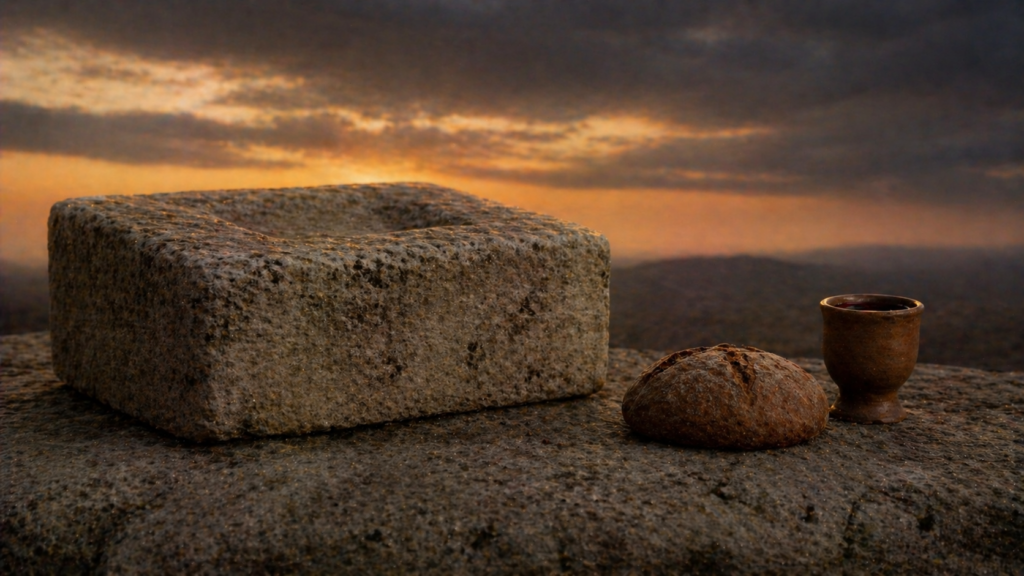
- Bread and wine (verse 18). The text does not editorialize. It simply records what Melchizedek brought out. Christian readers, especially after Hebrews 7, have heard this as a foreshadowing of the eucharist, with Melchizedek as a typological priest-king whose offering anticipates the offering of Christ. The early church fathers ran hard with this reading. The Hebrew Bible itself does not develop the typology, but the symbolic weight of the offering is undeniable: bread and wine are the elements of a covenant meal, and Melchizedek shares them with Abram before pronouncing the blessing.
- The blessing has a particular shape (verses 19 to 20). Two parallel statements: “Blessed be Abram of God Most High” and “Blessed be God Most High.” First, the man is blessed by the deity. Then, the deity is blessed by the man. The Hebrew verb barakh in this context means something like “praised, declared blessed, commended.” Melchizedek invokes God’s blessing on Abram and offers praise to God for what he has accomplished through Abram. The blessing is not a contractual transaction; it is a theological pronouncement.
- “Abram gave him a tenth of all” (verse 20). This is the first explicit mention of tithing in the Bible. It will be picked up in Hebrews 7 to argue Melchizedek’s priestly superiority. The textual fact is small and undramatic: Abram gives a tenth of the recovered goods to the priest who blessed him. There is no command. There is no formula. There is a free-handed response of gratitude in the form of a tenth share. Most ANE temple economies expected a tenth as a baseline contribution to the priesthood; Abram is not inventing a new system. He is honoring the priest who blessed him in the customary way.
Pushback note
Modern stewardship preaching often retrofits Abram’s tithe into a universal Christian formula: “the tithe is biblical, beginning with Abram.” That is a stretched reading. Abram gives a tenth of recovered war spoil, not a tenth of his pastoral income. He gives it once, to a specific priest, in a specific encounter. Treating this as the institution of a perpetual tithing requirement is to make a recurring rule out of a single freely-given gesture. The text is doing something much smaller and much more interesting. It is showing what an Abramic response to a priestly blessing looks like, and it is naming the proportion he chose. Whether that proportion belongs in modern Christian giving is a separate (and reasonable) discussion, but it is not what the chapter is establishing.
- Bera’s offer, when it finally lands in verse 21, is straightforward. “Give me the people, and take the goods for yourself.” It sounds generous. Bera is willing to let Abram keep the wealth he recovered; he just wants his population back. This is plausibly standard ANE ransom etiquette: the rescuer keeps the spoil; the displaced ruler reclaims his subjects.
- Abram’s refusal is more surprising than the offer. “I have lifted up my hand to Yahweh, God Most High, possessor of heaven and earth, that I will not take a thread nor a sandal strap nor anything that is yours, lest you should say, ‘I have made Abram rich.’” He has, apparently, already made the vow before the meeting. The lifted hand is the gesture of an oath. Abram has decided, before he comes face to face with Bera, that nothing of Sodom’s wealth will be folded into his story. He doesn’t take so much as a thread.
- Why? “Lest you should say, ‘I have made Abram rich.’” The reason is integrity. Abram is unwilling to be in a position where the king of Sodom can claim a stake in his prosperity. Bera is already on the path to becoming a byword in Israel’s memory. Abram does not want his wealth, his reputation, or his story to be entangled with a king of a city the narrator has already named as exceedingly wicked.
Influence callout: Walter Brueggemann
Brueggemann reads Abram’s refusal as a small but pointed act of resistance to the empire-cycle. The economy of the cities of the plain runs on conquest and recovered loot. Abram has just rescued the loot. He could insert himself into that economy as a senior partner. He refuses. The covenant family will not consolidate its wealth by integration into Sodom’s economic flow. That refusal will matter, because Sodom’s economy is what Lot has chosen to live inside, and chapters 18 and 19 will show that economy collapsing under the weight of its own injustice. Abram’s preemptive distance is, in retrospect, an act of prophetic clarity.
- Abram does, however, allow his three Amorite allies (Aner, Eshcol, and Mamre) to take their share (verse 24). His refusal is for himself, not a moral imposition on his treaty partners. The chapter is careful: Abram doesn’t impose his vow on others; he just declines, for himself, to be made rich by Sodom. The integrity is personal and public, not coercive.
Reflection prompts
- Two kings come to meet Abram on the same day with two very different offers. He receives blessing from one and refuses goods from the other. What does it look like, in your life, to know which encounters are blessings to receive and which are offers to refuse, before you arrive at the meeting?
- Melchizedek is a worshiper of God Most High who is not part of Abram’s family, his line, or his covenant. He blesses Abram, and Abram receives the blessing. Where in your life are you tempted to assume that legitimate ministry, faithful priesthood, or true witness only happens through the recognized channels of your tradition? What might it cost you to receive bread and wine, and a blessing, from someone outside?
- Abram’s refusal of Sodom’s loot is preemptive. He has lifted his hand and made the vow before he meets the king. What decisions in your life would benefit from being made before you arrive at the negotiating table?