

Chapter 7 holds together two things modern readers struggle to keep in one hand: one of the hardest commands in the Torah and one of its tenderest. It opens by ordering Israel to utterly destroy the seven nations of Canaan, make no covenant with them, show them no mercy, and not intermarry with them (7:1-5). It then explains why Israel exists at all, and the explanation is pure grace: Yahweh didn’t set his love on you… because you were more in number than any people; for you were the fewest of all peoples; but because Yahweh loves you (7:7-8). The two halves are not in tension once you see the logic. The separation exists to guard the love. Israel is being kept, fiercely, from the one thing that could undo it.
That logic is the key to reading the chapter’s violence honestly (see holy war and herem, where these texts get a fuller treatment). The reason given for the herem here is explicitly cultic, not ethnic: for that would turn away your sons from following me, that they may serve other gods (7:4). And the command is immediately hedged, the nations will be driven out little by little (7:22), not annihilated in a day. The chapter is about exclusive loyalty to the one God of the Shema, written in the harsh idiom of ancient conquest.
A · Deuteronomy 7:1-5 · The hard command: drive out the nations
¹ When Yahweh your God brings you into the land where you go to possess it, and casts out many nations before you—the Hittite, the Girgashite, the Amorite, the Canaanite, the Perizzite, the Hivite, and the Jebusite—seven nations greater and mightier than you; ² and when Yahweh your God delivers them up before you, and you strike them, then you shall utterly destroy them. You shall make no covenant with them, nor show mercy to them. ³ You shall not make marriages with them. You shall not give your daughter to his son, nor shall you take his daughter for your son. ⁴ For that would turn away your sons from following me, that they may serve other gods. So Yahweh’s anger would be kindled against you, and he would destroy you quickly. ⁵ But you shall deal with them like this: you shall break down their altars, dash their pillars in pieces, cut down their Asherah poles, and burn their engraved images with fire. (Deuteronomy 7:1–5, World English Bible)
- Seven nations greater and mightier than you… you shall utterly destroy them (verses 1-3). The command is stark: dispossess the seven peoples, devote them to destruction (herem), make no treaty, show no mercy, contract no marriages. Read cold, it is brutal, and the site does not pretend otherwise.
- For that would turn away your sons… to serve other gods (verses 4-5). But the reason given reframes what kind of command this is. The danger named is not the nations’ ethnicity but their gods: intermarriage and treaty would draw Israel into Canaanite worship. The concrete instructions in verse 5 are entirely cultic, break down their altars, dash their pillars, cut down their Asherah poles, burn their images. The target is the religious infrastructure of Canaan.
Pushback note: the herem in Deuteronomy 7
This is hard, and the honest reading (see holy war and herem, which treats these texts at length at chapter 2) holds several things together rather than picking the comfortable one. The command is real and violent. But the chapter itself supplies the controls: the stated reason is to prevent Israel’s apostasy (verse 4), not to exalt Israel’s blood; the practical instructions are about destroying altars and idols (verse 5); the conquest is explicitly gradual, “little by little” (verse 22), which sits awkwardly beside “utterly destroy in a day” and signals that the total-destruction language follows the hyperbolic conventions of ancient Near Eastern war-reporting; and Israel’s own later story shows Canaanites surviving, marrying in (Rahab, Ruth’s Moab), and being absorbed. Deuteronomy frames this as a one-time, bounded judgment within a specific moment of the story, fenced by laws of restraint, never a template for religious violence in any later age. And the canon’s trajectory runs toward a Messiah who tells his followers to love their enemies and dies forgiving his. We read the text without flinching and without weaponizing it.
B · Deuteronomy 7:6-11 · Chosen by love, not greatness
⁶ For you are a holy people to Yahweh your God. Yahweh your God has chosen you to be a people for his own possession, above all peoples who are on the face of the earth. ⁷ Yahweh didn’t set his love on you nor choose you, because you were more in number than any people; for you were the fewest of all peoples; ⁸ but because Yahweh loves you, and because he desires to keep the oath which he swore to your fathers, Yahweh has brought you out with a mighty hand and redeemed you out of the house of bondage, from the hand of Pharaoh king of Egypt. ⁹ Know therefore that Yahweh your God himself is God, the faithful God, who keeps covenant and loving kindness to a thousand generations with those who love him and keep his commandments, ¹⁰ and repays those who hate him to their face, to destroy them. He will not be slack to him who hates him. He will repay him to his face. ¹¹ You shall therefore keep the commandments, the statutes, and the ordinances which I command you today, to do them. (Deuteronomy 7:6–11, World English Bible)
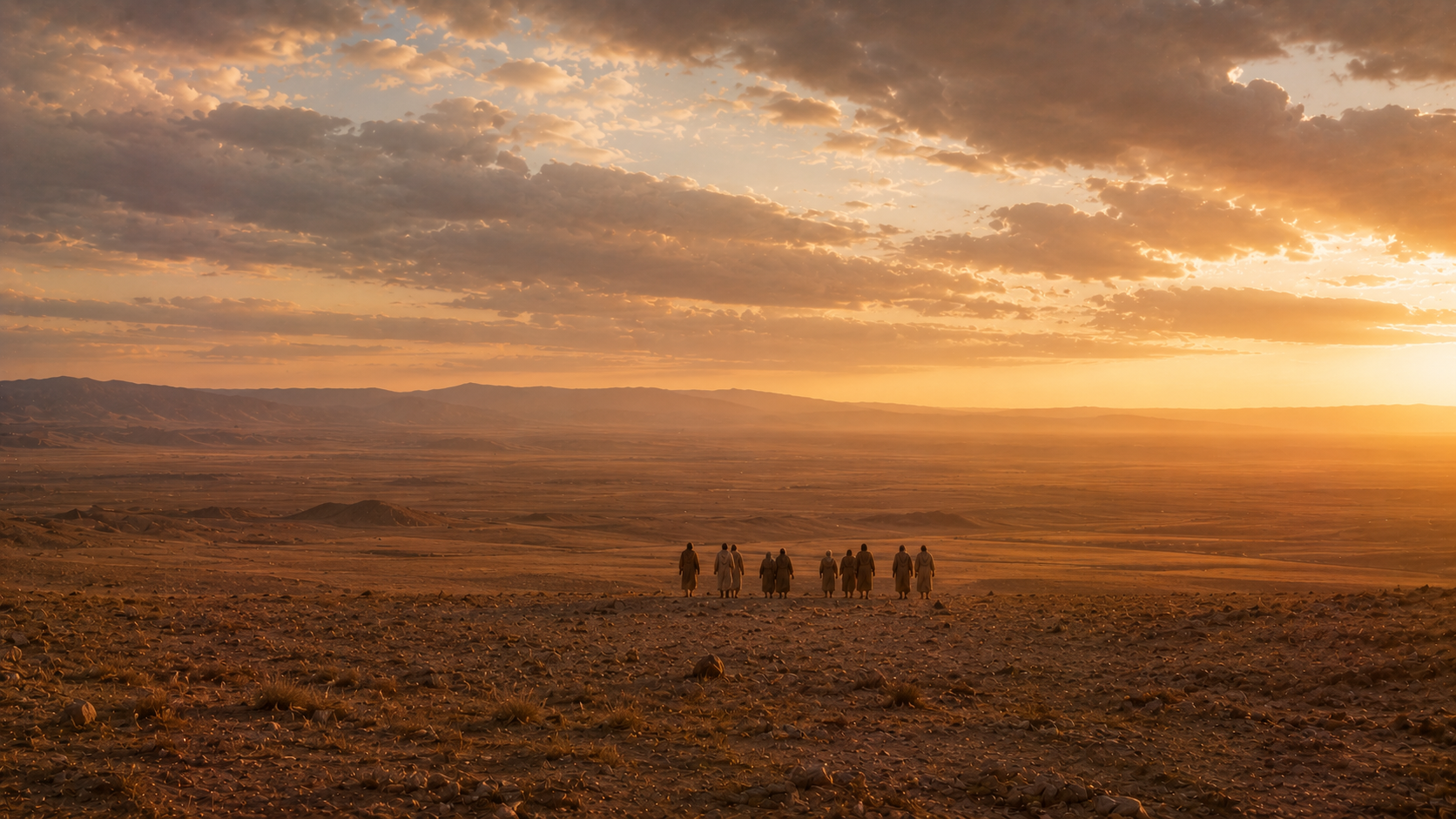
- A people for his own possession, above all peoples (verse 6). Israel is am qadosh, a holy (set-apart) people, and segullah, God’s treasured possession.
Word study: segullah (סְגֻלָּה), “treasured possession”
The word in verse 6 (rendered “his own possession,” “treasured possession,” “his prized possession” across the translations) is segullah, a term for a king’s personal treasure, the private hoard he keeps for himself apart from the crown’s general holdings. Carmen Imes notes that it is less a status to boast in than a job description: to be God’s segullah is to be the people through whom he displays himself to the world (see bearing God’s name). Israel is not God’s favorite the way a parent has a favorite child, to the others’ loss; Israel is God’s treasured possession for the sake of all the peoples (the same nations God allots and oversees; see the divine council). Election is vocation, not privilege.
- Not because you were more in number… but because Yahweh loves you (verses 7-8). Here is the chapter’s beating heart, and one of the most important sentences in the Hebrew Bible about grace.
Influence callout: chosen because the LORD loved you (election as grace)
Deuteronomy goes out of its way to demolish every possible ground of pride. Why did God choose Israel? Not because they were numerous, on the contrary, you were the fewest of all peoples (verse 7). The translations all press the point: God “had his heart set on you” (CSB), “set his affection on you” (NIV), and chose the smallest, the fewest. The only reason given is circular and unbreakable: because Yahweh loves you, and because he desires to keep the oath which he swore to your fathers (verse 8). God loves Israel because God loves Israel. There is no prior merit to point to, and the chapter will say the same about the land in chapter 9 (not because of your righteousness, 9:4-6). This is the deep grammar of grace that runs straight through to the New Testament: election rests on the love and faithfulness of God, never on the worth of the chosen. The God who keeps covenant and loving kindness to a thousand generations (verse 9) is bound by his own chesed, not by Israel’s record.
Where this lands: election as grace, not specialness
American Christianity, especially American evangelicalism, is fluent in the language of being chosen. It often turns this into a flavor of self-importance, as if being elect were a personal upgrade, God picked me and not them. Deuteronomy 7 reads the opposite way. “Yahweh did not set his love on you, nor choose you, because you were more in number than any people; for you were the fewest of all peoples” (7:7). Election in Deut is not a verdict of greater worth; it is the unsentimental decision of a God whose love is just like that. To wear chosenness as littleness is the only way to wear it without falsifying it. The believer who knows they were the fewest of all peoples speaks more softly about being picked. They also love outsiders more freely, because outsiders are who they used to be. The Christian who never quite leaves Deut 7:7 will not be capable of religious arrogance.
C · Deuteronomy 7:12-26 · Faithfulness, fearlessness, and “little by little”
¹² It shall happen, because you listen to these ordinances and keep and do them, that Yahweh your God will keep with you the covenant and the loving kindness which he swore to your fathers. ¹³ He will love you, bless you, and multiply you. He will also bless the fruit of your body and the fruit of your ground, your grain and your new wine and your oil, the increase of your livestock and the young of your flock, in the land which he swore to your fathers to give you. ¹⁴ You will be blessed above all peoples. There won’t be male or female barren among you, or among your livestock. ¹⁵ Yahweh will take away from you all sickness; and he will put none of the evil diseases of Egypt, which you know, on you, but will lay them on all those who hate you. ¹⁶ You shall consume all the peoples whom Yahweh your God shall deliver to you. Your eye shall not pity them. You shall not serve their gods; for that would be a snare to you. ¹⁷ If you shall say in your heart, “These nations are more than I; how can I dispossess them?” ¹⁸ you shall not be afraid of them. You shall remember well what Yahweh your God did to Pharaoh and to all Egypt: ¹⁹ the great trials which your eyes saw, the signs, the wonders, the mighty hand, and the outstretched arm, by which Yahweh your God brought you out. So shall Yahweh your God do to all the peoples of whom you are afraid. ²⁰ Moreover Yahweh your God will send the hornet among them, until those who are left, and hide themselves, perish from before you. ²¹ You shall not be scared of them; for Yahweh your God is among you, a great and awesome God. ²² Yahweh your God will cast out those nations before you little by little. You may not consume them at once, lest the animals of the field increase on you. ²³ But Yahweh your God will deliver them up before you, and will confuse them with a great confusion, until they are destroyed. ²⁴ He will deliver their kings into your hand, and you shall make their name perish from under the sky. No one will be able to stand before you until you have destroyed them. ²⁵ You shall burn the engraved images of their gods with fire. You shall not covet the silver or the gold that is on them, nor take it for yourself, lest you be snared in it; for it is an abomination to Yahweh your God. ²⁶ You shall not bring an abomination into your house and become a devoted thing like it. You shall utterly detest it. You shall utterly abhor it; for it is a devoted thing. (Deuteronomy 7:12–26, World English Bible)
- He will love you, bless you, and multiply you (verses 12-16). Covenant faithfulness flows both ways: as Israel keeps the covenant, God keeps the chesed he swore to the fathers, blessing fruitfulness, harvest, herd, and health. The blessings are concrete and earthy, the flourishing of an actual community in an actual land.
- If you say… “How can I dispossess them?” you shall not be afraid (verses 17-21). The old enemy returns, the fear that lost the first generation at Kadesh (1:28). And the antidote is the same: remember well what Yahweh your God did to Pharaoh. Faith here is memory put to work; you face tomorrow’s giants by recalling yesterday’s sea. Yahweh your God is among you, a great and awesome God.
- Yahweh your God will cast out those nations before you little by little (verses 22-26). One phrase quietly reshapes the whole conquest picture: the dispossession will be gradual, “little by little,” lest the animals of the field increase on you. A sudden, total annihilation would leave the land empty and feral; God’s way is slower and more realistic. The chapter closes by returning to the idols (verses 25-26): burn them, and do not covet the silver and gold on them, lest the cherem, the devoted-to-destruction status of the idol, cling to the one who keeps it (the warning Achan will ignore, to his ruin, in Joshua 7). What is devoted to destruction must not be smuggled home.
Reflection prompts
- The command to “make no covenant” with Canaan’s gods was about guarding an undivided heart. Stripped of its ancient violence, what is the equivalent vigilance for you: what alliances or intimacies quietly pull your loyalty away from God?
- Israel was chosen because it was the fewest, with every ground for pride deliberately removed. Where are you tempted to read God’s favor as a reward for your size, success, or goodness, rather than as sheer love?
- God drove out the nations little by little, not all at once. Where are you frustrated that God is not delivering you from something instantly, and what might be the wisdom in the slower, “little by little” work?
Frameworks at play in this chapter: holy war and herem, the Shema, the divine council, bearing God’s name.