
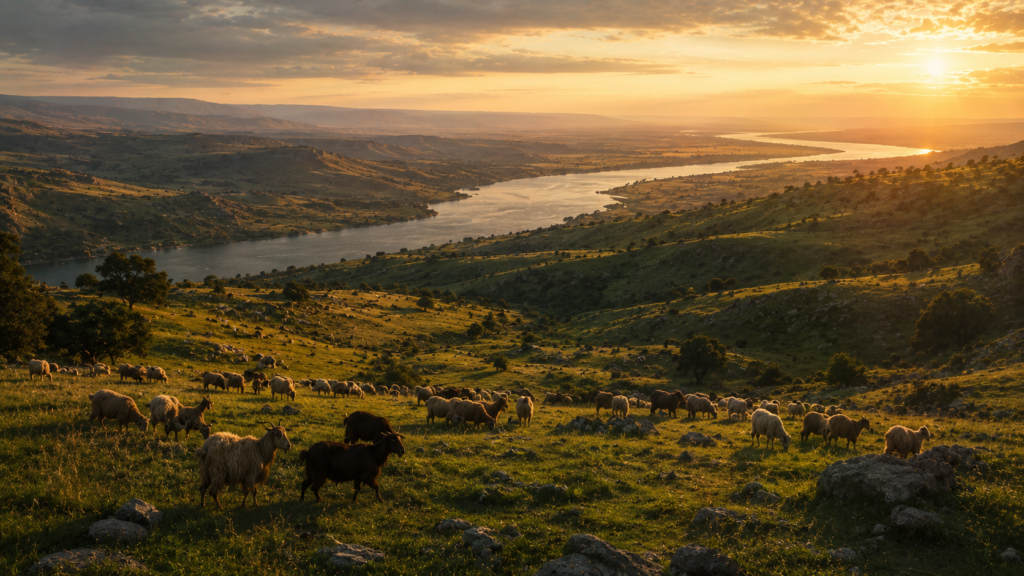
The tribes of Reuben and Gad, rich in livestock, look at the good grazing land east of the Jordan and ask Moses if they can settle there rather than cross into Canaan with everyone else. Moses reacts with alarm, because he has seen this movie before. The last time a group looked at the land and hesitated to enter, it cost the nation forty years and an entire generation (chapters 13 to 14). His sharp question, shall your brothers go to war while you sit here?, names his fear exactly: that these tribes will opt out of the shared fight and discourage everyone else, repeating Kadesh.
The tribes propose a solution that turns the situation around. They will leave their families and flocks east of the Jordan, but they themselves will cross over armed and at the front of the army, and fight alongside their brothers until the whole land is conquered, only then returning home. Moses accepts the deal with a stern warning. The chapter is about solidarity in a shared mission, the danger of settling for less than the full inheritance, and the sober truth that broken commitments have a way of catching up with you.
A · Numbers 32:1-15 · The request, and the shadow of Kadesh
⁶ Moses said to the children of Gad and to the children of Reuben, “Shall your brothers go to war while you sit here? ⁷ Why do you discourage the heart of the children of Israel from going over into the land which Yahweh has given them?”
- A place for livestock (vv. 1-5). The request is reasonable on its face: the land east of the Jordan is excellent for the herds Reuben and Gad possess, so they ask to receive it as their portion and not cross over. There is nothing obviously sinful in the request itself; it is a practical proposal from people with a lot of animals.
- Shall your brothers go to war while you sit here? (v. 6). Moses hears something more dangerous underneath it. His fear is desertion of the common cause: that two tribes will take their comfort and leave the rest of Israel to fight for the land alone. The shared mission requires everyone; for some to settle while others bleed would fracture the nation and, worse, discourage the heart of the others, the precise language of how the spies’ fear had spread (Deuteronomy 1:28, the spies melted the heart of the people).
- You have risen up in your fathers’ place, a brood of sinful men (vv. 8-15). Moses recounts Kadesh at length. He is terrified of a sequel: that this new generation, at the threshold, will repeat the old generation’s refusal and again turn the people away from the land, bringing fresh judgment. The whole confrontation is haunted by the memory of the spies. Moses is not willing to watch the two-generations tragedy play out a second time (see the two generations).
B · Numbers 32:16-42 · The pledge, and the warning
²³ “But if you will not do so, behold, you have sinned against Yahweh; and be sure your sin will find you out.”
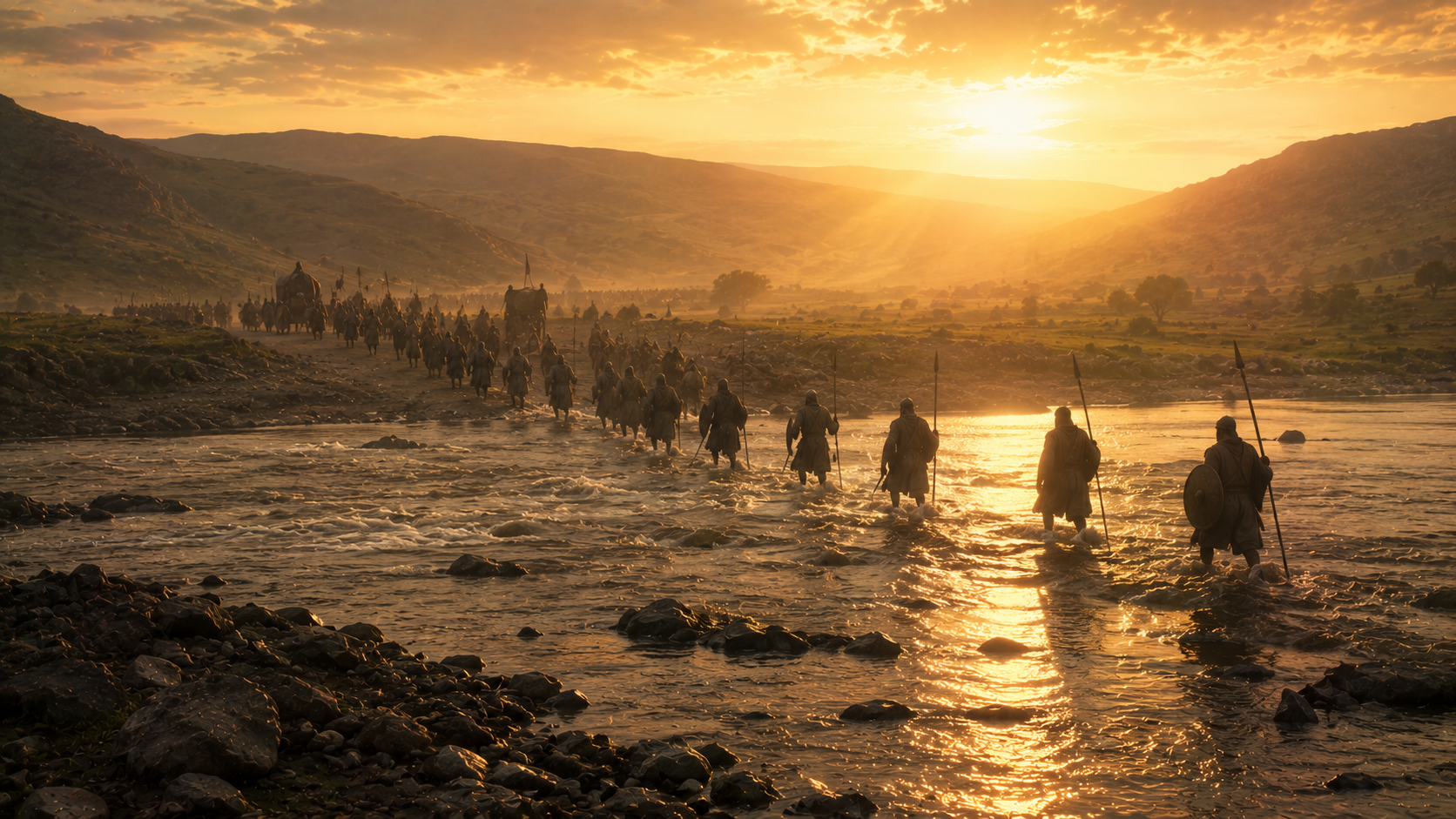
- We will go armed before the children of Israel (vv. 16-19). The tribes answer Moses’s fear directly and well. They will build folds for their flocks and towns for their families here, but they themselves will cross over armed, in the front, and not return to their own homes until every Israelite has received their inheritance. Far from opting out of the fight, they pledge to lead it. They will settle their comfort last, after their brothers are secure. It is the opposite of the Kadesh spirit: solidarity instead of self-protection.
- Be sure your sin will find you out (v. 23). Moses agrees, but binds the agreement with a warning that has become proverbial. If they keep their word, the eastern land is theirs; if they renege, they sin against YHWH, and be sure your sin will find you out. The line treats sin almost as a living pursuer that tracks down the one who committed it. The commitment is real, and so are the consequences of breaking it.
- The danger of stopping short. The chapter invites a careful devotional reflection without overreaching. Moses approved the arrangement, so settling east of the Jordan was not in itself sin, and the eastern tribes kept their word and fought faithfully (Joshua 22). Yet the text and later history carry a quiet caution: the tribes who chose land outside the promised land proper, nearer the borders and the nations, were also the first carried away into exile when Assyria came (1 Chronicles 5:25-26). The pattern is worth noticing gently: there is a spiritual risk in settling for good enough, for the adequate territory just short of the fullness God intended, especially when the choice is driven by what we already own (the herds came first in their request, v. 1). The chapter does not condemn the eastern tribes; it does let their story stand as a question about whether we stop at the edge of the inheritance because the grazing is good enough.
Word study: chata’t timtza (חַטַּאתְכֶם), “your sin will find you out”
The proverb of verse 23 personifies sin as a hunter. The Hebrew literally says your sin will find you, picturing the wrong as an agent that tracks down and locates the one who did it. The same vivid personification appears at the very beginning of the human story, where God warns Cain that sin is crouching at the door, and its desire is for you (Genesis 4:7), sin imagined as a predator at the threshold. The Bible’s realism about consequence runs through both images: sin is not an event that ends when the act is over but a force that follows, that finds you. This is not a denial of grace, the same Scripture is saturated with forgiveness, but a sober insistence that broken faith has effects that pursue the one who broke it. Moses is not threatening; he is describing how the moral universe actually works. A vow abandoned does not simply evaporate; it comes looking for you.
Reflection prompts
- The eastern tribes pledged to fight for their brothers first and settle their own comfort last. Where are you tempted to secure your own ease while others carry a shared burden? What would “armed and at the front” look like for you?
- Moses feared a repeat of an old failure. Sometimes the danger is not a new sin but the same one our predecessors fell to. Is there a pattern in your family, community, or your own life that you are at risk of repeating, and what would break the cycle?
- The eastern tribes settled for excellent land just short of the full inheritance, with their herds driving the choice. Where might “good enough,” especially good enough for what you already own, be quietly keeping you from the fullness God intends?
Frameworks at play in this chapter: the two generations, holy war and herem, wilderness and liminality.