
If Genesis 1–2 told us what we are, Genesis 3 tells us what went wrong. This is the chapter the Christian tradition has called the fall, though the word itself doesn’t appear in the text. Something happens in this garden that ripples through the rest of scripture and through human experience, and the question is exactly what.
This is also a chapter where careful reading matters more than usual. Centuries of theology have layered specific meanings onto Genesis 3: original sin, Satan as the serpent, Genesis 3:15 as direct messianic prophecy. Some of those readings are illuminating. Some import frameworks the original text didn’t necessarily carry. We’ll work the ground carefully, taking the text seriously without flattening it, and naming where we’re reading later tradition back into earlier material.
The chapter unfolds in four movements: the temptation and the eating, God’s interrogation, the consequences, and the exile from the garden.
The chapter is also the first instance of a four-step pattern that will repeat across Genesis 3–11 with increasing intensity: autonomy → fracture → exile → grace. The humans choose to define good and evil for themselves rather than receive God’s definition (autonomy); their relationships with God, with each other, with their own bodies, and with the ground all shatter (fracture); they are sent out from the garden (exile); but God himself clothes them before he sends them (grace). The same four-beat sequence will run through Cain (chapter 4), the flood (chapters 6–9), and Babel (chapter 11). The rest of the Bible is, in one sense, the long working-out of how the grace at the end of each cycle eventually becomes the gospel that breaks the cycle altogether.
A · Genesis 3:1–7 · The serpent, the question, the eating
¹ Now the serpent was more subtle than any animal of the field which Yahweh God had made. He said to the woman, “Has God really said, ‘You shall not eat of any tree of the garden’?” ² The woman said to the serpent, “We may eat fruit from the trees of the garden, ³ but not the fruit of the tree which is in the middle of the garden. God has said, ‘You shall not eat of it. You shall not touch it, lest you die.’” ⁴ The serpent said to the woman, “You won’t really die, ⁵ for God knows that in the day you eat it, your eyes will be opened, and you will be like God, knowing good and evil.” ⁶ When the woman saw that the tree was good for food, and that it was a delight to the eyes, and that the tree was to be desired to make one wise, she took some of its fruit, and ate. Then she gave some to her husband with her, and he ate it, too. ⁷ Their eyes were opened, and they both knew that they were naked. They sewed fig leaves together, and made coverings for themselves.
- The serpent is arum, cunning, shrewd, subtle. Remember: in 2:25 the man and woman were arumim, naked. The Hebrew is playing on the same sound. The shrewdness of the serpent will exploit the vulnerability of the humans. The text is setting up the trap before it’s sprung.
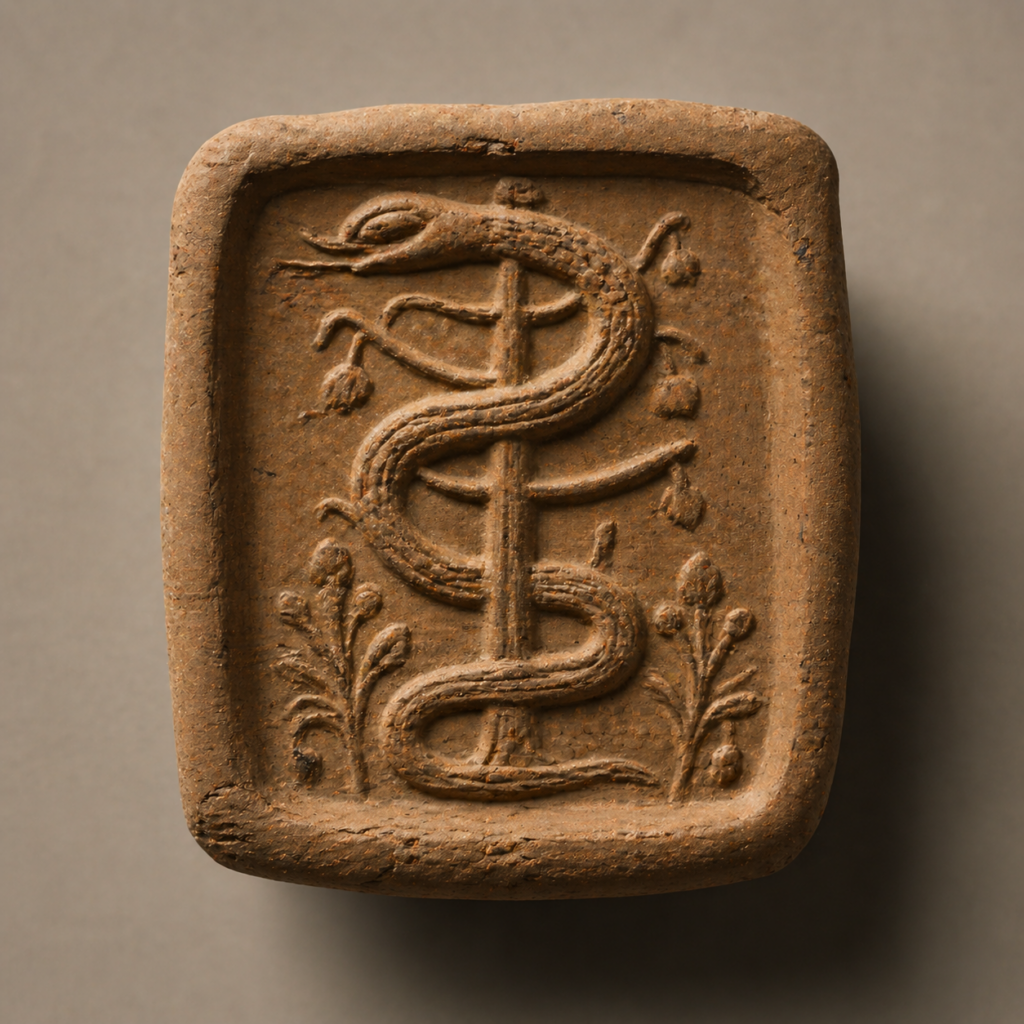
- Who is the serpent? The original text doesn’t identify him with Satan. The serpent is described simply as one of the creatures God made, “more subtle than any animal of the field.” Later Jewish and Christian tradition (especially Wisdom of Solomon, Romans, Revelation) reads the serpent as a manifestation of the satan or the devil, and there’s a coherent intra-biblical case for that reading. But it’s worth noticing what Genesis 3 itself says, and what it doesn’t. In the original text, this is a creature speaking deceptively in the garden. Heiser argues persuasively that the serpent figure here reflects an ANE divine-being category (sometimes related to seraphim, the “fiery ones,” whose iconography was serpent-like) and that the rebellion language is more consistent with a divine council betrayal than with a generic talking snake. Whatever the metaphysics, the function in the narrative is clear: a deceptive voice calls into question the goodness of God.
- Watch the serpent’s strategy. He doesn’t deny the prohibition. He distorts it. “Has God really said, ‘You shall not eat of any tree’?” That’s not what God said. God said you may eat from every tree except one. The serpent reframes God’s open generosity as restrictive prohibition. This is the lie underneath every temptation: that God is fundamentally withholding something from us.
- The woman’s response is interesting. She defends God, but adds a phrase that wasn’t in the original command: “You shall not touch it.” The original prohibition was about eating, not touching. Either she’s added a fence around the law (a common later Jewish practice), or someone else has, perhaps Adam, who was actually present when the command was given. The text doesn’t clarify. But the small expansion shows how easy it is for the boundary to drift, even with good intentions.
- The serpent’s second move: “You won’t really die.” A flat contradiction. And then: “God knows that when you eat it, your eyes will be opened, and you will be like God, knowing good and evil.” This is the clearest articulation of the temptation. It’s not primarily about food, or about knowledge in some abstract sense. It’s about autonomy, about being like God in the specific sense of defining good and evil for ourselves, rather than receiving God’s definition. The temptation is to seize what was meant to be a gift.
The serpent’s wisdom is also the wisdom of empire. ANE iconography pairs serpents with self-rule and royal autonomy: Pharaoh wore a serpent on his crown; Mesopotamian deities of cunning wisdom often carried serpent associations. The voice in the garden is offering Adam and Eve what every empire offers its subjects: the right to define your own good without reference to any higher claim. Read in its Eastern context, the temptation is empire-wisdom dressed as freedom. The serpent is selling autonomy, and autonomy is the foundation on which every later imperial project in Genesis 4 to 11 will be built.
→ Read the Abundance vs. Scarcity framework for the broader pattern this chapter inaugurates. The serpent’s reframing of God’s open generosity (“eat of every tree”) as restriction (“not from any tree”) is the first move of a lie that will run through Genesis 4 (Cain’s jealousy as scarcity reading), Genesis 9 (Noah’s wine as scarcity-driven self-protection), and through the rest of the Bible’s account of the human heart.
Word study: arum / arumim (עָרוּם / עֲרוּמִּים)
Arum means cunning or shrewd. Arumim means naked. Identical sound, different meaning. The text is playing on the homophones: the cunning of the serpent will exploit the nakedness of the humans. Their innocent vulnerability becomes the entry point for shame.
- “She took some of its fruit, and ate.” The text is almost flat about it. There’s no thunder, no warning klaxon. Just the eating. Then: “She gave some to her husband with her, and he ate it, too.” Important: Adam is with her. He’s not off elsewhere. He’s present, silent, complicit. The traditional reading that puts the entire weight on Eve has to ignore the prepositional phrase with her. They eat together. They fall together.
- “Their eyes were opened.” Exactly what the serpent promised. But the result is not divinity. It’s shame. They become aware of their nakedness. Vulnerability that was secure in the garden has become exposed. They sew fig leaves together, the first act of human craft, born of the need to cover what shouldn’t have needed covering. The serpent told the truth about what would happen and lied about what it would mean.
B · Genesis 3:8–13 · God walks, and asks
⁸ They heard Yahweh God’s voice walking in the garden in the cool of the day, and the man and his wife hid themselves from the presence of Yahweh God among the trees of the garden. ⁹ Yahweh God called to the man, and said to him, “Where are you?” ¹⁰ The man said, “I heard your voice in the garden, and I was afraid, because I was naked; and I hid myself.” ¹¹ God said, “Who told you that you were naked? Have you eaten from the tree that I commanded you not to eat from?” ¹² The man said, “The woman whom you gave to be with me, she gave me fruit from the tree, and I ate it.” ¹³ Yahweh God said to the woman, “What have you done?” The woman said, “The serpent deceived me, and I ate.”
- “Walking in the garden in the cool of the day.” The Hebrew suggests a regular pattern; God walked in the garden, perhaps customarily. This wasn’t an alien intrusion. It was the kind of presence the man and woman were used to. What’s new is that they hide.
- “Where are you?” That is the first question in scripture. God isn’t asking because he doesn’t know. He’s asking because they need to be asked. The question pulls them out of the trees, makes them speak, makes them face what they’ve done. This is how God moves toward humans in this story: not with rebuke first, but with a question that invites them to step into the open. The question’s register is relational, not geographical. Where are you in our relationship; where are you with me; where are you now that what you have done is between us. The same divine-question pattern will recur throughout the Hebrew Bible at moments of human rupture: where is your brother Abel? (4:9, to Cain after the murder); where have you come from and where are you going? (Genesis 16:8, to Hagar in the wilderness); what are you doing here, Elijah? (1 Kings 19:9, to the prophet in the cave); is it right for you to be angry? (Jonah 4:4, to the prophet at Nineveh). The Hebrew Bible’s God keeps asking, and the question is consistently relational rather than informational. Genesis 3:9’s where are you? is also worth reading as the seed of the gospel’s whole pursuit-pattern. Humanity hides; God seeks. The man and woman have not yet asked anything; God speaks first. This is not a courtroom interrogation; this is the first move of a pursuing love that the rest of scripture will keep tracing.
- Adam’s answer is layered. “I was afraid.” (Newly, for the first time.) “Because I was naked.” (He says this even though clothing solved the physical problem; the shame is deeper than the body.) “And I hid myself.” The whole sequence is honest about what shame does, it makes us hide from the very presence we were made for.
- God’s follow-up question is precise: “Who told you that you were naked?” The implication is that being naked was never the problem. Awareness of nakedness as shameful is. Shame has been introduced into human experience by the eating. It isn’t something inherent to being a body.
- Then the blame chain. Adam blames “the woman whom you gave to be with me,” passing responsibility both to the woman and, subtly, to God himself. The woman blames the serpent. Each is partly accurate; each is also evasive. Notice that no one yet says simply, “I did it, and I’m sorry.” That’s a longer story.
C · Genesis 3:14–19 · The curses (and what isn’t cursed)
¹⁴ Yahweh God said to the serpent, “Because you have done this, you are cursed above all livestock, and above every animal of the field. You shall go on your belly and you shall eat dust all the days of your life. ¹⁵ I will put hostility between you and the woman, and between your offspring and her offspring. He will bruise your head, and you will bruise his heel.” ¹⁶ To the woman he said, “I will greatly multiply your pain in childbirth. You will bear children in pain. Your desire will be for your husband, and he will rule over you.” ¹⁷ To Adam he said, “Because you have listened to your wife’s voice, and have eaten from the tree, about which I commanded you, saying, ‘You shall not eat of it,’ the ground is cursed for your sake. You will eat from it with much labor all the days of your life. ¹⁸ It will yield thorns and thistles to you; and you will eat the herb of the field. ¹⁹ You will eat bread by the sweat of your face until you return to the ground, for you were taken out of it. For you are dust, and to dust you shall return.”
- Notice carefully what is cursed and what isn’t. The serpent is cursed. The ground is cursed. Neither the woman nor the man is directly cursed. Their lives now contain consequences (pain, conflict, hard labor, mortality), but the curse language is reserved for the serpent and the soil. Humans remain image-bearers, even now. Damaged, exiled, but not cursed.
- Verse 15 has a long history of being read as the protoevangelium, the first announcement of the gospel, with “her offspring” pointing forward to Christ. Christian tradition has read it this way at least since Irenaeus, and there’s a coherent intra-biblical case (Romans 16:20 echoes it). It’s worth holding two things together: in its original context, the verse is most directly about the ongoing hostility between humans and the snake-symbolic forces of chaos that opposed them; and in the larger biblical-theological sweep, it does inaugurate the long story of how God will undo what was done in this garden. We can affirm both without forcing the original text to carry all the Christological weight later texts will.
- To the woman: pain in childbirth and a difficult dynamic with her husband. Note the phrasing: “your desire will be for your husband, and he will rule over you.” The two Hebrew words at the heart of this clause, tshuqah (desire, urgent reaching) and mashal (to rule), are doing specific work. This is descriptive, not prescriptive. The text is naming what will be, not what should be. Patriarchal domination enters the world here as a consequence of the rupture, not as part of God’s original design (which Genesis 1–2 explicitly described as mutual partnership). Reading this verse as a foundation for hierarchy gets the grammar of the text exactly backwards. The verse has been used, especially in Reformed and complementarian theology, to ground male headship as part of the creation order. The text doesn’t support that move. The hierarchy is post-rupture, not original. Watch for the same vocabulary in the next chapter: in Genesis 4:7, sin is said to desire (tshuqah) Cain, and Cain is told he must rule (mashal) over it. The narrator is using the same two words. Whatever Genesis 3:16 describes between the man and the woman is the same disordered grasping that will, in chapter 4, threaten Cain at the door. The first half of the verse is also worth reading more broadly than the standard English pain in childbirth translation suggests. The Hebrew itstsabown covers grief, sorrow, and toil at large (not strictly the physical pain of delivery), and the noun herown (often translated labor in birth-context) elsewhere covers conception more than parturition. A more spacious rendering is something like I will greatly multiply your sorrow in conception, and in painful effort you will bring forth children. Read this way, the verse encompasses the whole grief-laden vocation of bringing forth life in a fractured world: the longing of empty wombs, the fears of pregnancy, the heartbreak of miscarriage and infant loss, the heavy work of raising children among thorns. Genesis 3:16 is not a verse about labor-pain anesthesia debates; it is a verse that names the sorrow wrapped around the entire vocation of bringing forth life east of Eden. There is also a pastoral distinction the chapter helps make. Some of the fractures in 3:16-19 the disciple-community is called to endure with hope (the sorrow around childbearing, the resistance of the ground, mortality itself). Others are to be resisted in faith (the domination of mashal, which the New Testament’s submit to one another and in Christ there is no male and female explicitly works against). Reading Genesis 3:16 as design rather than diagnosis is the mistake the chapter is least set up to bear.
→ Read the vocabulary of humanity framework for the broader case that ish/ishah hierarchy is post-rupture, not original. The Hebrew vocabulary of Genesis 1 to 3 makes this point at the level of the words themselves: before the splitting, the text uses ha-adam (the human creature) with no gendered marker; after the splitting, ish and ishah arrive together, mutually defining; and only after the rupture in 3:16 does the language of rule (mashal) enter the relationship.
- To Adam: the ground is cursed. Work, which was meant to be priestly avad in a sanctuary garden, becomes back-breaking labor in soil that resists him. The harmony between human and earth has been broken. He still tends the ground, but now the ground fights back.
- “You are dust, and to dust you shall return.” The mortality that was implicit becomes explicit. Adam was made from adamah and to adamah he returns. Death isn’t something extra added to humans; it’s the result of being cut off from the tree of life that was always meant to keep them in fellowship with God.
Influence callout: Augustine (Confessions Book XIII; The Literal Meaning of Genesis; City of God Book XIV)
Augustine is, more than any other figure, the lens through which the Christian tradition has read Genesis 3 for sixteen centuries. His reading names original sin (Latin peccatum originale) as the doctrine that Adam’s transgression is transmitted to all his descendants, who inherit both the guilt and the disordered will the chapter records. In Adam all sinned, Augustine reads from Romans 5:12, and the whole Western soteriology runs through that grammar. The framework is not without its readers’ critics (Eastern Orthodox tradition reads Romans 5:12 differently; modern exegetes question whether the Hebrew text supports a transmissible-guilt doctrine), and the chapter itself, taken on its own terms, names rupture and its consequences more than it articulates a transmissible-guilt mechanism. But Augustine’s instinct is also profoundly right: the disordered loves (Latin amor sui, self-love) that the chapter inaugurates do, in fact, run through every later human story the Bible records. Augustine’s deepest reading, in City of God XIV, is that sin is not an alien invasion of an otherwise good will but a redirection of love away from its true object. The fall is not first an act; it is a turning of the affections. The garden was the place of amor Dei, love of God ordering all other loves; the exile is the world of amor sui, love of self disordering them. The chapter, on Augustine’s reading, is the canonical staging of the question every human will face: which love rules my loves? Modern Christian readers do not have to accept the full Augustinian apparatus to receive the deeper pastoral note Augustine catches: the chapter’s tragedy is not first a legal infraction; it is a redirection of the heart.
- A note on what’s often called original sin. The Christian tradition since Augustine has read this chapter as the moment when guilt and corruption are imputed to all humanity through Adam, transmitted across generations. The doctrine has shaped Western Christianity deeply and has its own theological coherence. But it’s a development of the text, not the text’s own claim. Genesis 3 names rupture and its consequences (death, exile, hard labor, conflict, shame). It doesn’t articulate a transmissible-guilt doctrine. The chapter is foundational to the Christian story. The Augustinian framework is one reading layered onto it, not the text’s own self-description.
D · Genesis 3:20–24 · Naming, clothing, exile
²⁰ The man called his wife Eve, because she would be the mother of all the living. ²¹ Yahweh God made garments of animal skins for Adam and for his wife, and clothed them. ²² Yahweh God said, “Behold, the man has become like one of us, knowing good and evil. Now, lest he reach out his hand, and also take of the tree of life, and eat, and live forever,” ²³ Therefore Yahweh God sent him out from the garden of Eden, to till the ground from which he was taken. ²⁴ So he drove out the man; and he placed cherubim at the east of the garden of Eden, and a flaming sword which turned every way, to guard the way to the tree of life.
- The first thing the man does after the curse pronouncements is name his wife. He calls her Chavah, Eve, meaning “life” or “living one.” This is striking. After all that’s happened, in the middle of the wreckage, he names her after life. Genesis is showing us that the human vocation of image-bearing isn’t lost. Adam still names. He still discerns. The image is damaged, not erased.
- “Yahweh God made garments of animal skins for Adam and for his wife, and clothed them.” This is one of the tenderest moments in the chapter. The fig leaves they sewed for themselves were inadequate. God himself addresses the shame they couldn’t address on their own. The cost is implicit: an animal dies so that the humans can be covered. Some readers see this as the first sacrifice; others read it more simply as God meeting them in their need. Either way, the picture is of a God who clothes the ones who couldn’t clothe themselves.
- “The man has become like one of us, knowing good and evil.” The plural again, divine council language we saw in Genesis 1. And the statement is not entirely accusatory. Something has happened that mimics divinity: the humans now have yada of good and evil. They’ve taken on something they weren’t meant to have. The decision to bar the tree of life isn’t pure punishment. It’s mercy. To live forever in a state cut off from God would be the worst kind of curse. Death, in a strange way, becomes a limit set in love.
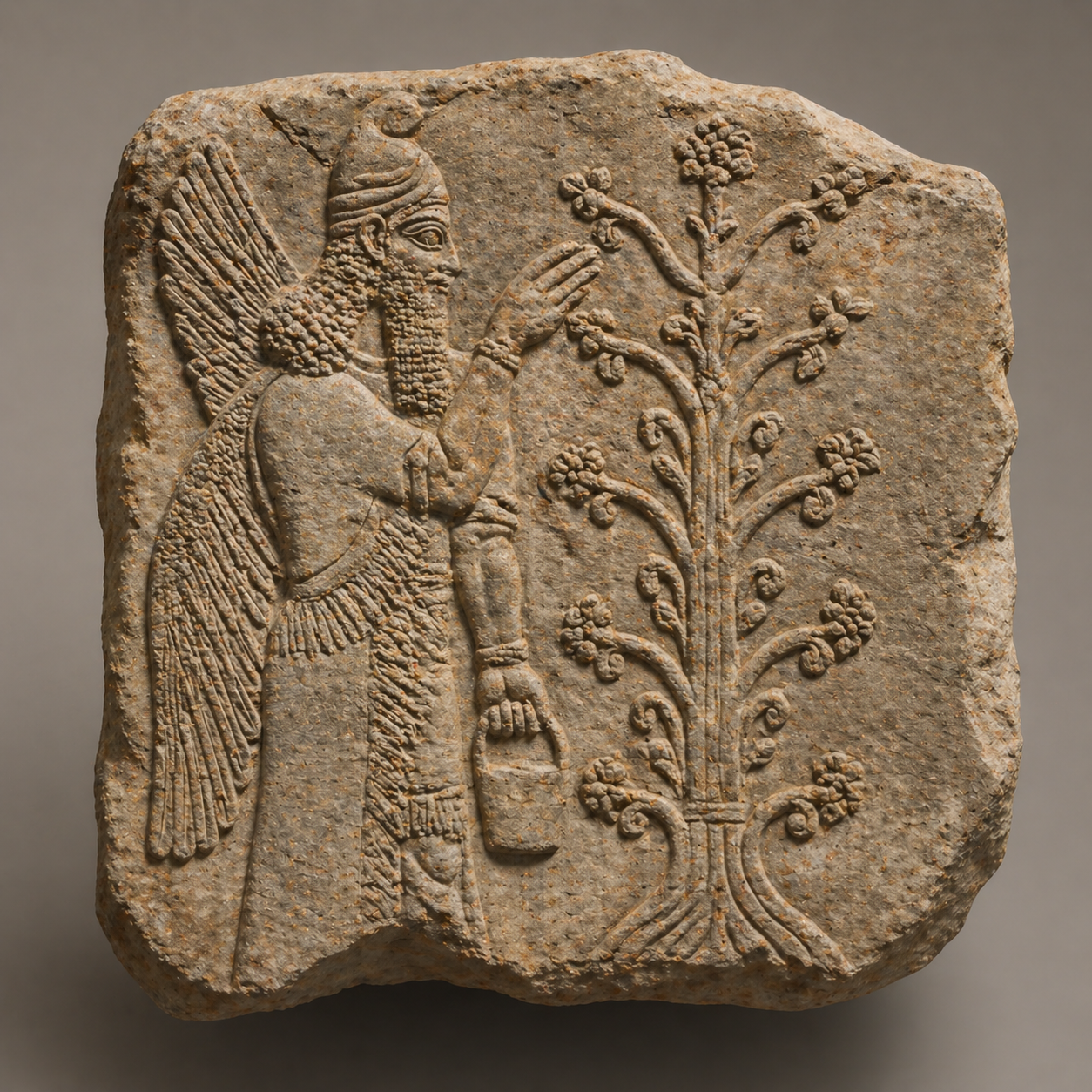
- “He drove out the man; and he placed cherubim at the east of the garden of Eden, and a flaming sword.” East again. The direction of departure from God’s presence. Cherubim will reappear flanking the ark in Exodus and standing sentinel in the temple, the same beings whose images guarded Eden now stand guard over every later sanctuary. The exile from Eden is an exile from the first temple, and the rest of scripture will be the long story of how God brings exiles home.
Influence callout: John Walton (exile from the cosmic temple)
Walton reads Genesis 3’s expulsion as the first exile from the sanctuary. The garden was the inner sanctum of the cosmic temple (per his reading of Genesis 1-2); the humans’ eating of the forbidden tree was the priestly violation that disqualifies them from continued sanctuary service; the cherubim guarding the eastern gate are the same cherubim that will later guard the ark and the inner curtain of the tabernacle (Ex 25:18-22; 26:31). The pattern Walton highlights is the Hebrew Bible’s long arc: humanity exiled from the sanctuary in Genesis 3, then a chosen people called to a portable sanctuary in Exodus 25-40, then a permanent sanctuary in 1 Kings 6-8, then exile from THAT sanctuary in Ezekiel 10 (the kavod departing), then return to a rebuilt sanctuary (Ezra-Nehemiah), then the Word becoming flesh and tabernacling among us in John 1:14, then the believer-as-temple in 1 Cor 3:16 and Eph 2:21-22, then the climactic dwelling of God with humans in Revelation 21:3. The whole Bible, on Walton’s reading, is one long story of sanctuary lost and sanctuary recovered. Genesis 3 is where the story begins to need telling.
→ Read the cosmic temple framework for more on Eden as the original sanctuary and the implications of that for the rest of the biblical story.
- The chapter ends with a closed door. But the closed door is also a hinge. From Genesis 4 forward, the question that drives the rest of the Bible is: how can image-bearers, exiled from the garden, return to the presence of God and the tree of life? Every covenant, every priesthood, every tabernacle, every temple, every prophet, and ultimately the incarnation, are answers to this question. Genesis 3 doesn’t end the story. It starts it.
Reflection prompts
- The serpent’s first move was reframing God’s open generosity (“eat from any tree except one”) as restrictive prohibition (“did God really say you couldn’t eat from any tree?”). Where in your own life do you experience God’s gifts as restrictions? What changes when you reread them as generosity?
- The first sin ends with the humans hiding behind trees and stitching fig leaves to cover their shame. The fig leaves of the modern world are not literal foliage. They are work, achievement, image, busyness, religion, control, humor, and the careful management of how others see us. Where are you currently using your own resources to hide what you’re afraid would be exposed? What would it look like to come out from behind the trees?
- After the rupture, God still walks in the garden, still asks the question, still clothes them. What does it tell you about God that the first response to human failure in the Bible is provision rather than punishment?